

The green head, pale neck ring and gray body of a Rouen drake can look familiar to anyone who has watched Mallards at a pond. Then the bird turns sideways, and the broad, deep body changes the impression. Shared-looking colors do not mean identical birds.
The Livestock Conservancy describes the Rouen’s development from French farm ducks and later selection in England. Breeders emphasized size and a substantial, horizontal form. The history helps explain why plumage alone leaves out so much of the breed’s identity.
Rouen can mean more than one outline
The Conservancy distinguishes the large Standard Rouen from the trimmer Production Rouen. The exhibition form has a particularly deep body and keel; the production type is lighter and more upright. A photograph of one is therefore a poor promise of the eventual shape of every duck sold under the Rouen name.
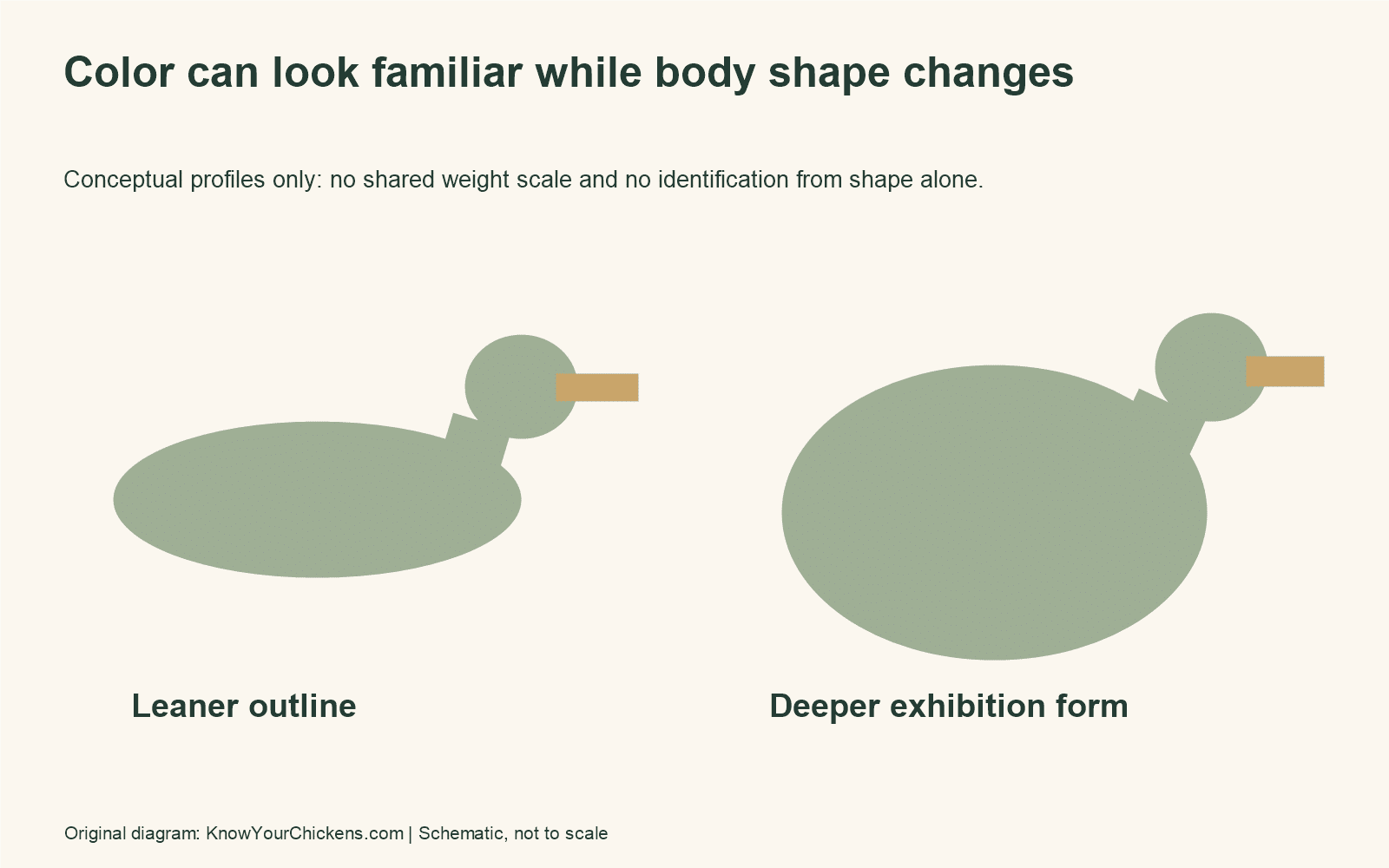
That difference matters when comparing hatchery descriptions, show photographs and adult birds at a breeder’s property. Ask which type is being offered. A label can be accurate while the buyer’s mental picture comes from a different strain.
Size has consequences on the ground
Our large-duck overview considers the practical side of heavy birds. For a Rouen, inspect the routes between shelter, water and feeding areas at ground level. A deep-bodied bird needs usable access, not merely a doorway that looks wide enough in a product photograph.
The Conservancy specifically highlights foot injury and predator vulnerability in heavy Rouens. Our bumblefoot article discusses foot problems more broadly; for an individual duck, lameness deserves an appropriate examination rather than an assumption that awkward movement is normal for a large breed.
The familiar Mallard color pattern is a good starting point for noticing a Rouen. The rest of the picture comes from body type, background and how the living bird moves. Our duck-type overview separates domestic breeds from wild species before a pond-side resemblance becomes a mistaken care decision.


