
A Cayuga can look almost uniformly black in one position and flash green, blue or purple as the light changes. The moving sheen is part of the breed’s appeal, and one reason a single flat photograph can understate its appearance.
The Livestock Conservancy describes black plumage with an iridescent sheen and a history in New York’s Finger Lakes region. Birds introduced to Cayuga County around 1840 helped establish the name; American Poultry Association recognition followed in 1874.
The photograph depends on the light
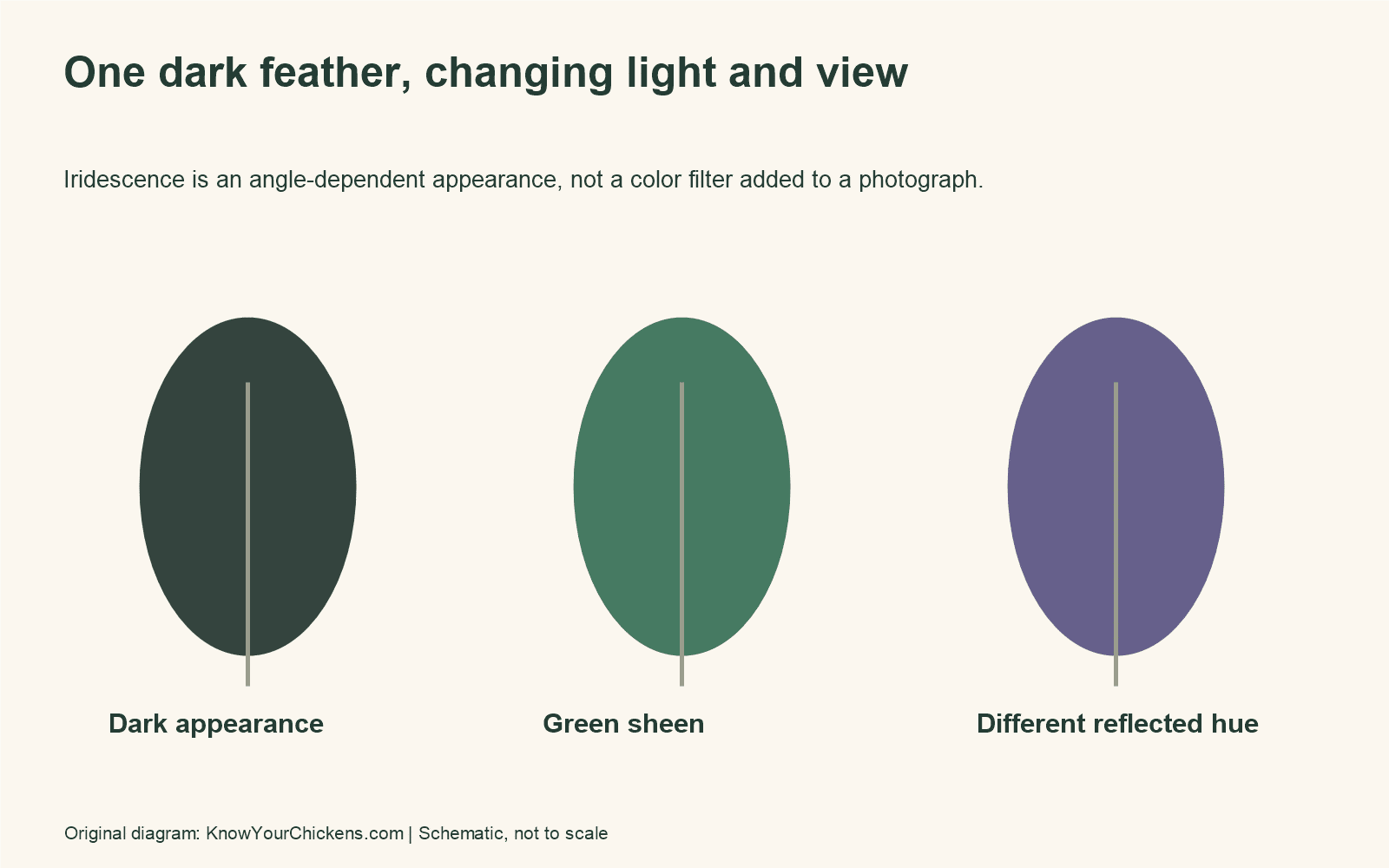
Iridescence is an angle-dependent appearance. The diagram illustrates that changing relationship conceptually; it is not a measurement of a particular feather. A dark patch in shade and a glossy patch in sunshine need not represent two separate plumage colors or a newly changed bird.
Older Cayugas can also develop white feathering. Age-related white marks are a different observation from the temporary change in reflected sheen. Compare birds at known ages and under comparable lighting before interpreting a color difference in sales photographs.
The black-egg claim needs a season attached
The breed is also associated with very dark eggs. The Conservancy describes eggs lightening over the laying season, eventually becoming much paler. “Lays black eggs” is therefore an incomplete expectation for every egg from every hen throughout the year.
If egg color is central to a buying decision, ask for a dated sequence from the seller’s actual flock. Our duck-egg comparison covers the broader differences from chicken eggs, while storage guidance remains relevant regardless of shell pigment.
A domestic duck under the sheen
Cayugas belong in the domestic-duck picture, not in a plan to release unwanted birds at a park. Their history and manageable flight do not give them protection from predators. Safe shelter and suitable companions remain part of the commitment.
The best view of a Cayuga is often a short change of angle rather than an edited color boost. Let the bird move in ordinary light: the glossy surface is already doing something interesting.