

There is room along the feeder, yet a hen walks over just after another starts eating. Soon several are taking part in the same meal. A keeper can mistake the cluster for proof that there is only one good feeding spot.
Sometimes the food is genuinely attracting them to one place. Sometimes the activity of another bird helps start the behavior. Alabama Extension describes feeding and foraging as social behaviors: seeing a companion eat can encourage a chicken to begin eating too.
Joining in differs from learning a new skill
Social facilitation is a useful name for this encouragement of an existing behavior. A hen already knows how to peck feed. Her companion’s activity can help bring that behavior forward at a particular moment.
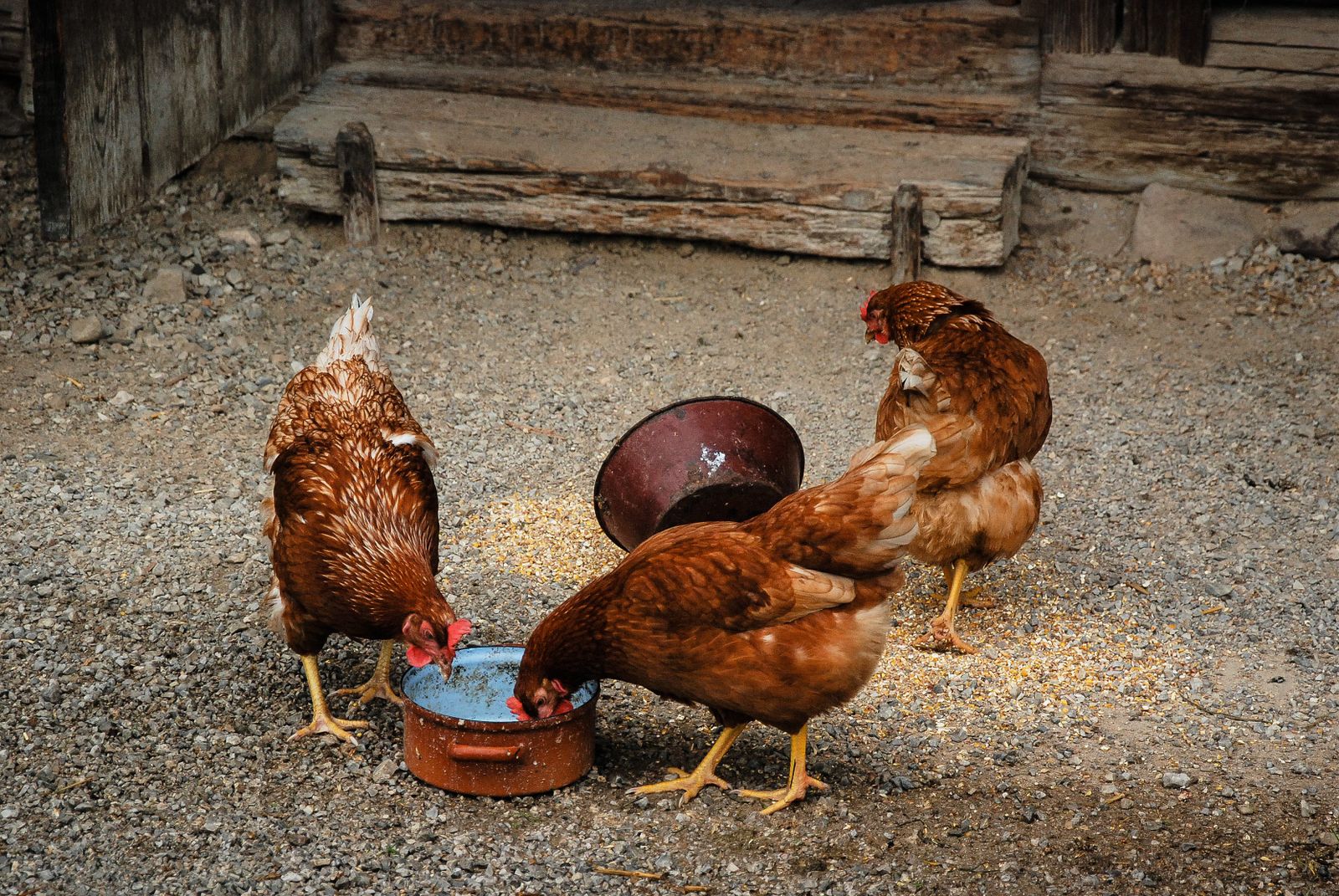
That differs from using “copying” as a complete explanation for everything hens do together. The flock may also be responding to fresh feed, a familiar routine or a disturbance that ended. Watch what happened immediately before the group gathered rather than assigning one cause from a still photograph.
A sociable meal can still contain competition
A cluster alone cannot show whether access is fair. Watch the bird that approaches last: does she eat, wait or leave after another bird turns toward her? In the same scene, several hens may be feeding comfortably while one repeatedly fails to reach the ration.
The University of Kentucky’s feeding guidance emphasizes adequate feeder space. Our feeder discussion considers the equipment, while flock introductions addresses a situation in which the social arrangement can be unsettled.
Watch what happens away from the feeder
Hens can also gather around another bird’s discovery in a patch of litter. Foraging is more than consuming the pellets in front of them; our enrichment article looks at opportunities to explore. A bird with a full feeder may still be motivated to search.
The shared meal is interesting because it brings several influences into one ordinary scene: food, timing, companions and access. Rather than assuming that hens eating together must be crowded—or that a peaceful-looking group must be feeding equally—follow individual birds through the event. Who starts, who joins and who actually gets to eat tell different parts of the story.


