

Finding a suitable carrier becomes much harder when the hen needing it is already unwell. The box that once held a chick may be too small, a pet carrier may have slippery flooring, and an improvised lid may not stay closed during a car journey.
A transport plan is part of access to veterinary care. Contact the receiving clinic first: confirm that it treats chickens, describe the situation, and follow its instructions about urgency, isolation and transport. Suspected contagious illness can change how a bird should arrive at the premises.
The container should reduce avoidable problems
Think about secure containment, ventilation, stable footing and room appropriate to the bird. A large empty space can let an unsteady hen slide around; inadequate ventilation creates a different risk. VCA’s bird-transport guidance emphasizes securing a carrier and avoiding overheating. The carrier should stay upright and secured in the vehicle, away from direct sun and extremes of temperature.
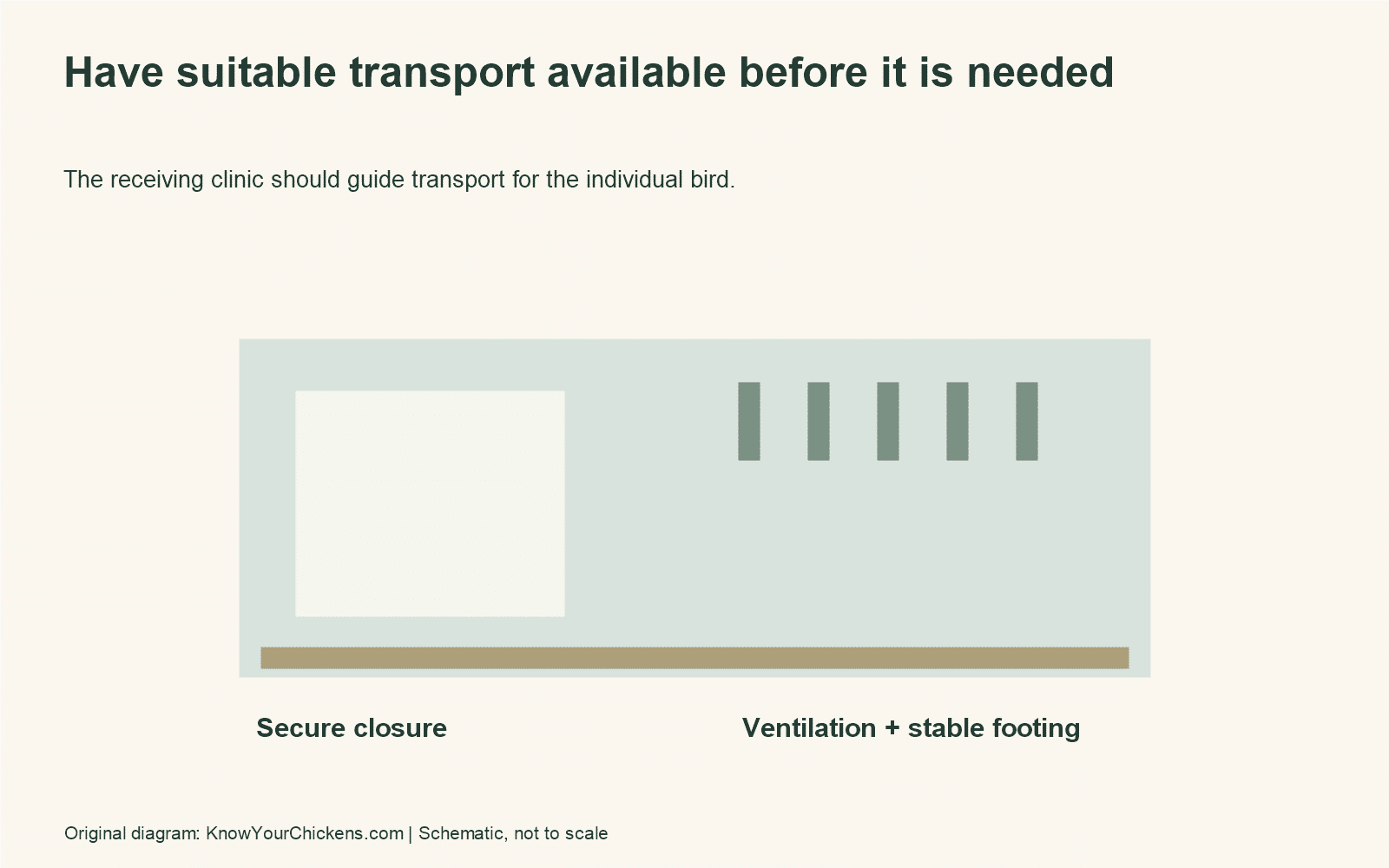
These are planning principles, not a universal clinical setup for every condition. An injured bird may need arrangements directed by the clinic. Do not bind a bird’s chest or pack material tightly around it in an attempt to make the journey safer.
The Merck Veterinary Manual’s backyard-poultry guidance illustrates why seemingly similar problems can need different assessment. Transport should get the hen to the appropriate help rather than become a substitute for identifying what is wrong.
Bring the information that travels poorly in memory
Note when the change began, what the bird has eaten, any treatments given and relevant egg-production changes. Photograph labels of products already used. Medication names and concentrations are more useful than describing a bottle by its color.
Our health overview covers observations to collect, and the foot-health discussion gives one example of a problem that can affect comfortable travel. Clean and store the carrier appropriately afterward so it is ready and does not transfer contamination to another bird. Having it available will not solve the illness, but it removes one avoidable delay when arranging care.