
A colored ring makes two similar pullets easier to tell apart. Weeks later, the same ring may be sitting on a very different leg. Identification equipment needs to be checked as part of the bird, rather than remembered as a job completed on banding day.
The problem is mechanical. A growing or swollen leg can lose the clearance that was present when the band was fitted. Debris can also collect around some bands. Veterinarians at VCA explain that an undersized band can restrict circulation, causing swelling below it. Their article covers birds generally; it should not be used to copy a pet-parrot banding schedule onto poultry.
The number on a chart is a starting point
Poultry bands come in different designs and sizes. A manufacturer’s size chart describes its products, not a guarantee for every individual bird of a named breed. Premier 1 specifically warns about growing birds outgrowing spiral bands. Follow the actual product instructions and assess the individual fit.
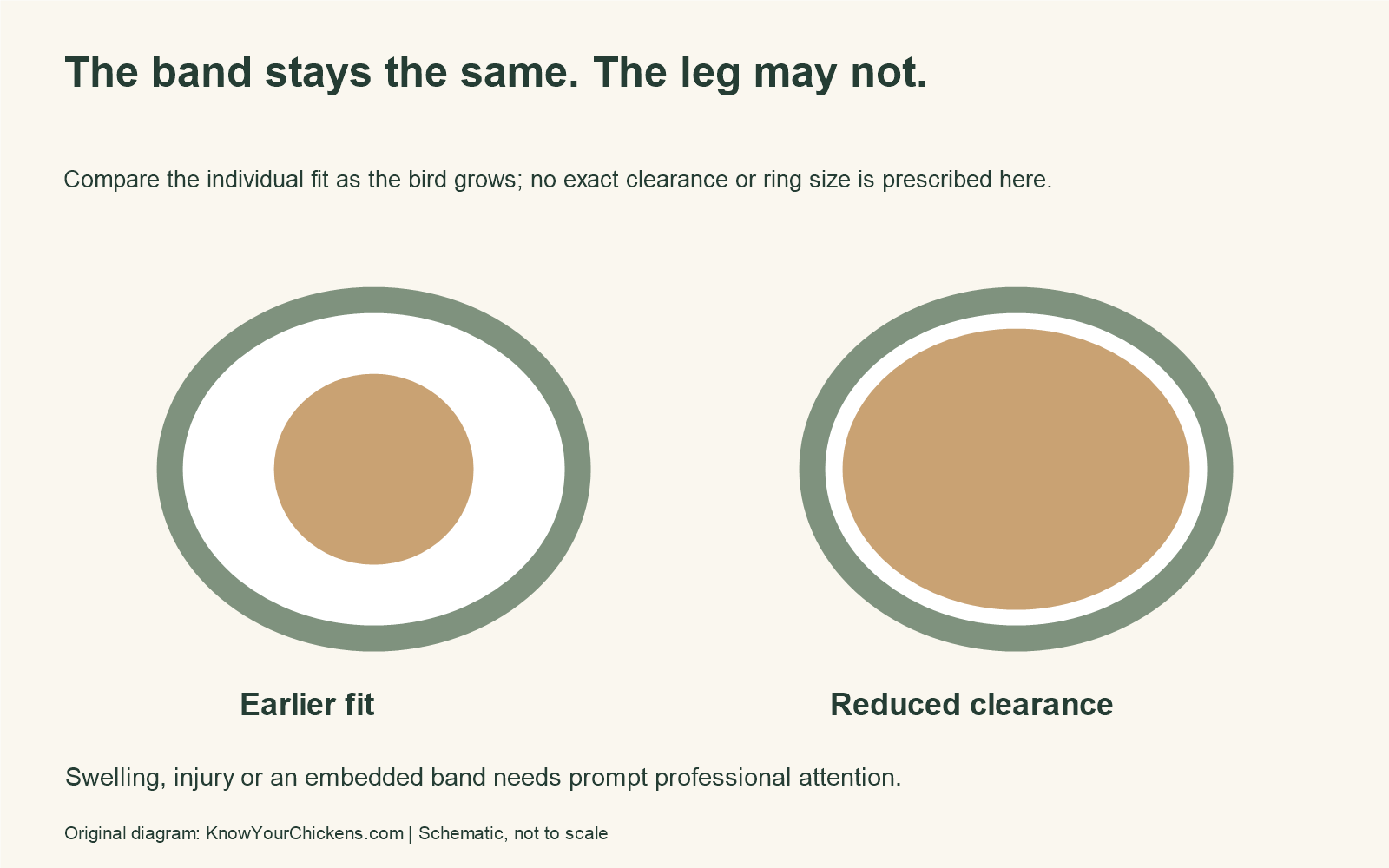
Age changes the question. A ring on a chick is being carried through the growth stages described in our development article. A mature bird with a newly swollen leg needs assessment of the swelling as well as the ring. Both cases can become uncomfortable before a distant flock photograph reveals anything unusual.
Identification should help you notice the individual
Use an identification record that pairs the band with the bird’s photograph and relevant notes. The practical benefit is linking observations—weight changes, laying history or veterinary instructions—to the correct chicken. A color you can no longer read or distinguish has stopped serving that purpose.
If skin is injured, the band appears embedded, or the foot is swollen, get prompt veterinary help. Do not twist a stuck ring or use cutters beside injured tissue without appropriate expertise. The foot-health article covers another source of lameness, but a band should be checked on its own merits rather than assuming every sore foot is bumblefoot.
A useful band is one you can identify and inspect. The small object deserves a place in routine observation precisely because the much larger bird carrying it will not necessarily stay the same.