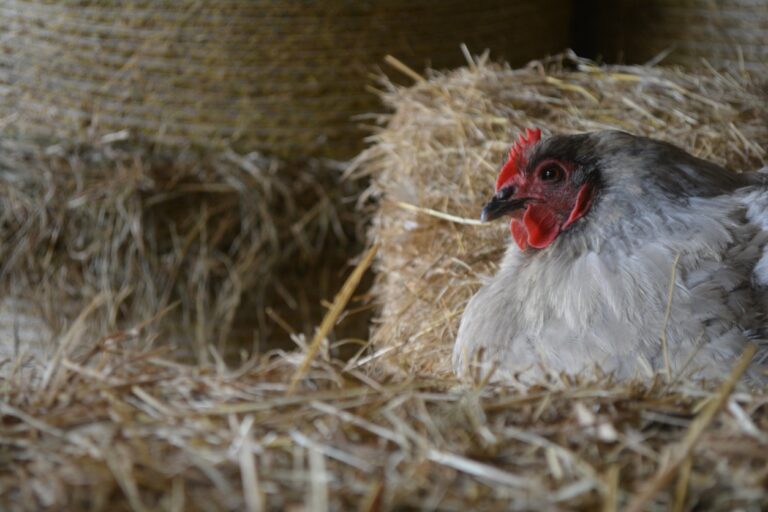

Two blue chickens can produce a chick that grows black feathers. Another offspring may be much paler and splashed with color. For Blue Andalusians, that variation is not automatically evidence that a different rooster reached the breeding pen. It is part of the inheritance behind the blue appearance itself.
The Livestock Conservancy describes the familiar blue-by-blue expectation: roughly one-quarter black, one-half blue and one-quarter splash. These are expected proportions across offspring, not a requirement for every four chicks that hatch.
A gene copy from each parent
In the simplified model, the blue dilution allele is written Bl. A bird with one copy shows the blue effect on the relevant black pigmentation; two copies produce splash, while absence of that dilution produces black in this comparison. Each parent passes one allele to an offspring.
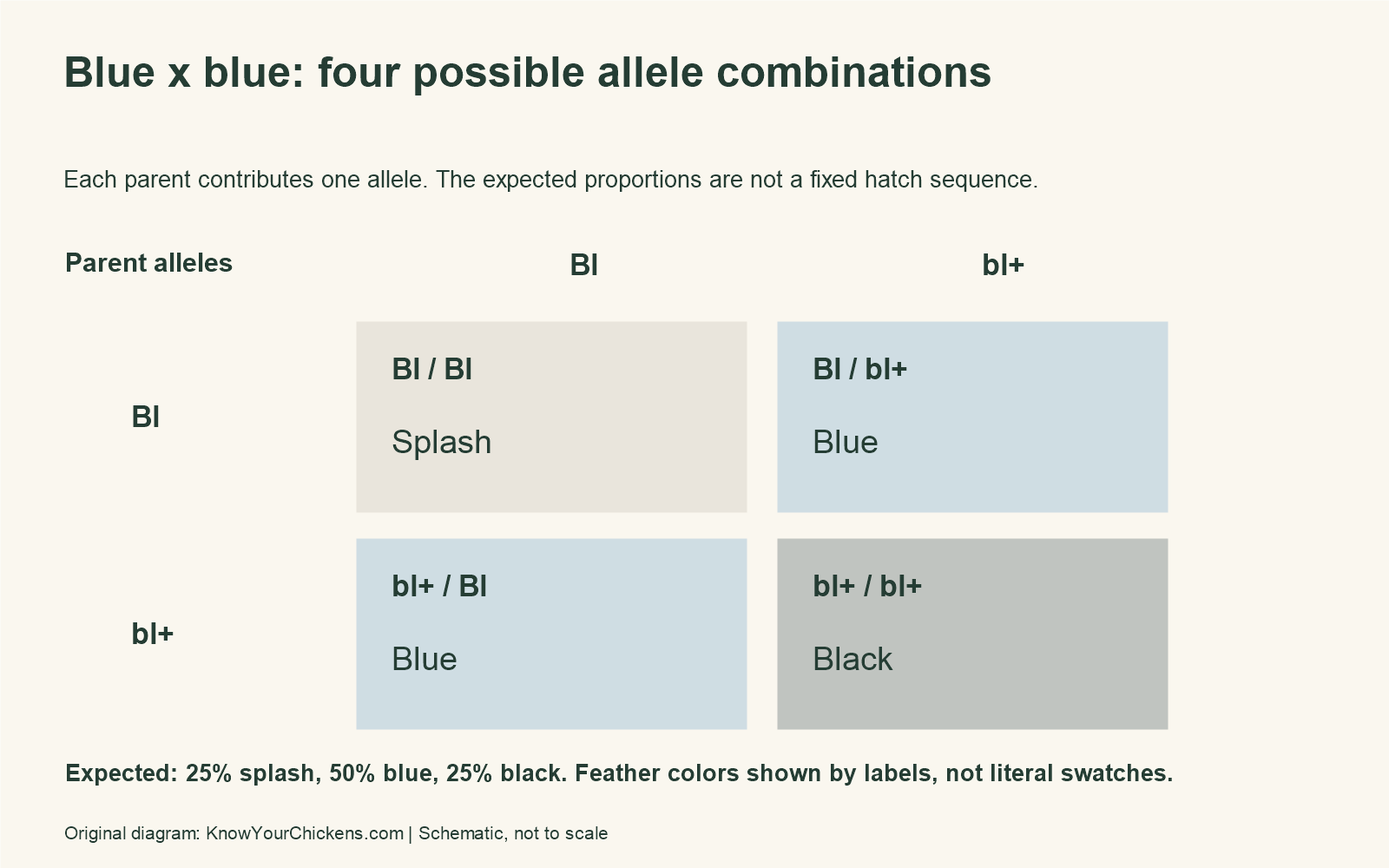
The accompanying grid shows the four equally likely combinations from two blue parents. Two cells lead to the same blue result, which is why the expected proportion is one-half. Poultry Extension genetics guidance explains this blue dilution and the splash effect. Other genes influence the complete appearance; the diagram deliberately follows one inheritance question.
A ratio is not a hatch-day appointment book
If four chicks happen to be blue, the genetic expectation has not been disproved. Each chick is another inheritance event, not the next place in a compulsory sequence of black, blue, blue, splash.
For the same reason, a small hatch with no splash chicks does not demonstrate that splash is impossible from that pairing. Keep records over meaningful numbers and confirm the parents’ identities before interpreting a surprising outcome. Eggs mixed between pens and uncertain parentage introduce different questions from the probabilities shown in the grid.
This is also why a seller’s phrase “blue chicks” deserves clarification. Does it mean chicks from a blue breeding group, or individuals identified as the blue color? Ask what variation can be included and what identification is possible at the age being sold.
Splash is a name, not just white paint
The pale result in this inheritance model is called splash. It should not be casually equated with every white chicken or with all other genes that produce pale plumage. Oklahoma State lists black, splash and blue in its Andalusian account, alongside the breed’s white eggs and active type.
Feather color and egg color are separate subjects. A blue-feathered chicken is not thereby a blue-egg layer; our egg-color guide discusses the shell-pigment question. Similarly, the breeding mechanism here is not the same as every color used in a commercial hybrid’s name.
Color is only part of the bird
Someone preserving Andalusians is selecting more than the right shade. Breed type, condition and the breeding flock’s history matter alongside color. A neat probability diagram cannot tell you whether a particular chick will meet every standard requirement.
The same distinction applies when choosing poultry for a backyard: a color outcome is not a temperament or housing plan. Our breed-selection discussion starts with the flock’s purpose, and the breeder questions help turn a catalog description into a clearer account of the birds available. Blue is an interesting inheritance story precisely because it can reappear in several forms, not because it promises an identical row of offspring.