
A waterer can work perfectly and still leave the flock without water. The failure may be at the other end of the hose—or on the icy path between the house and the coop.
Winter water planning is often reduced to a product comparison. Heated base or heated bowl? Metal or plastic? Those questions matter, but they assume that fresh water can reach the vessel in the first place.
Think from the source outward
Iowa State Extension’s winter-flock advice emphasizes checking water frequently because it can freeze quickly. A useful companion question is what happens when the usual filling routine stops working.
In a household example, the outdoor supply might be unavailable while the kitchen tap still works. Two manageable containers can be more practical than one large bucket that becomes awkward on a slippery slope. That is a planning example, not a plumbing recommendation: winterizing taps and supply lines depends on their design and local conditions.
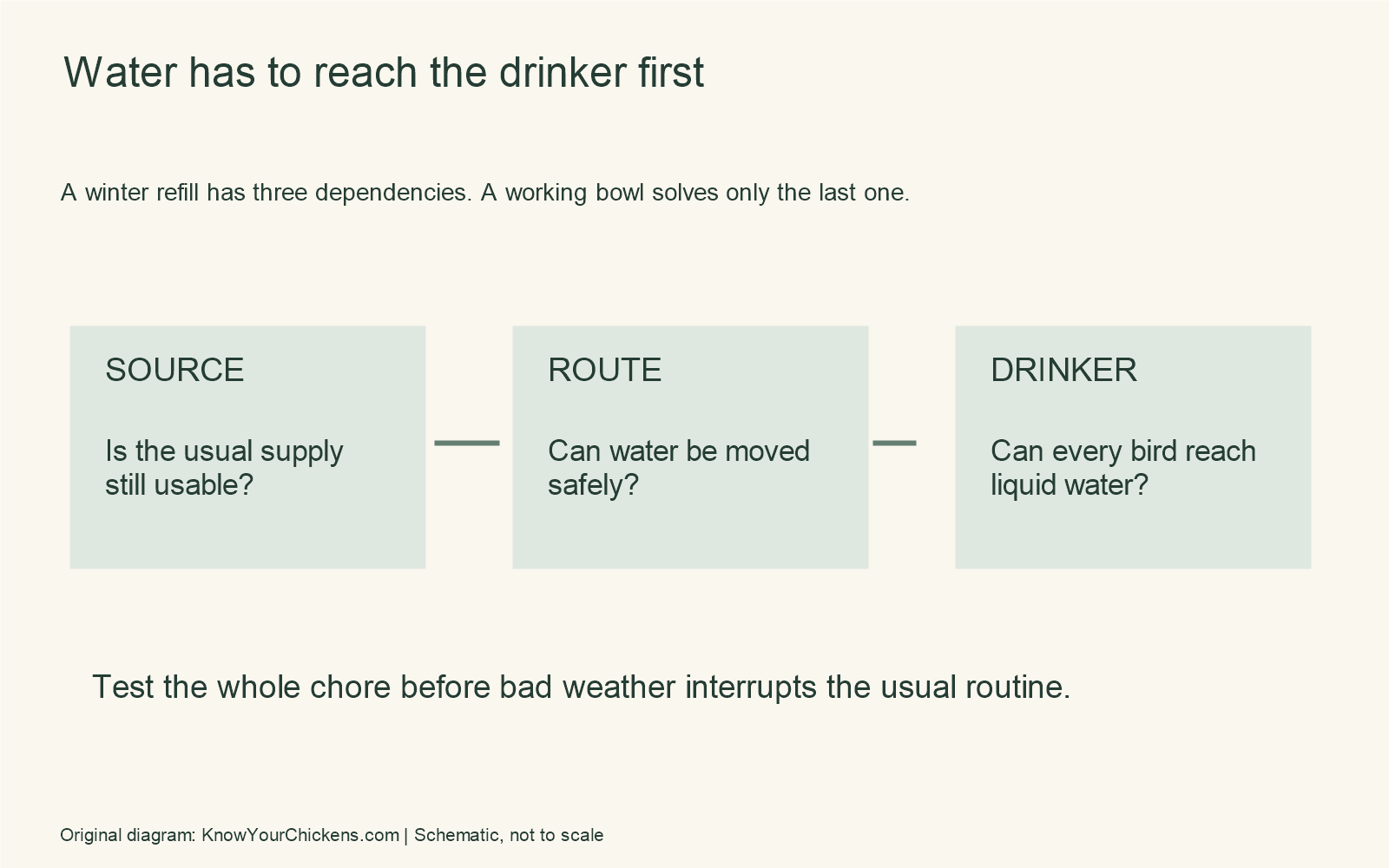
The route has three separate dependencies: a usable source, a safe way to carry or convey water, and an accessible drinker. Testing only the last one leaves two possible failures undiscovered.
The backup should work without the usual shortcut
It is worth rehearsing a refill before bad weather: choose a manageable load, see where it can be set down, and check whether the coop door can be operated without juggling an open container. A spare clean vessel can keep the routine moving while the usual one is being cleaned.
Electrical equipment brings a separate question about power availability and appropriate installation. A device is not a complete contingency if the only backup assumes the same electricity supply. Use equipment according to its instructions and leave wiring changes to a qualified professional.
Our comparison of chicken waterers helps with the vessel itself. The November coop check looks at the building and access around it. Put those two views together and the winter problem becomes clearer: reliable water is a whole chore, not just a bowl that resists ice.