
The chickens may take only a familiar slice of your morning, until you try to leave for the weekend. Then the routine turns into a list of things another person must understand: which latch sticks, where the spare feed is, which hen tends to linger outside, and whom to call if something looks wrong.
The difficult part is often not the volume of work. It is replacing the quiet judgments that an experienced keeper makes without noticing. A useful holiday arrangement transfers those judgments as clearly as possible instead of merely transferring a bucket.
University of Maryland Extension describes flock care as a seven-day commitment. Equipment can simplify parts of it, but the birds do not pause their need for observation while their keeper is away.
The invisible part of an ordinary visit
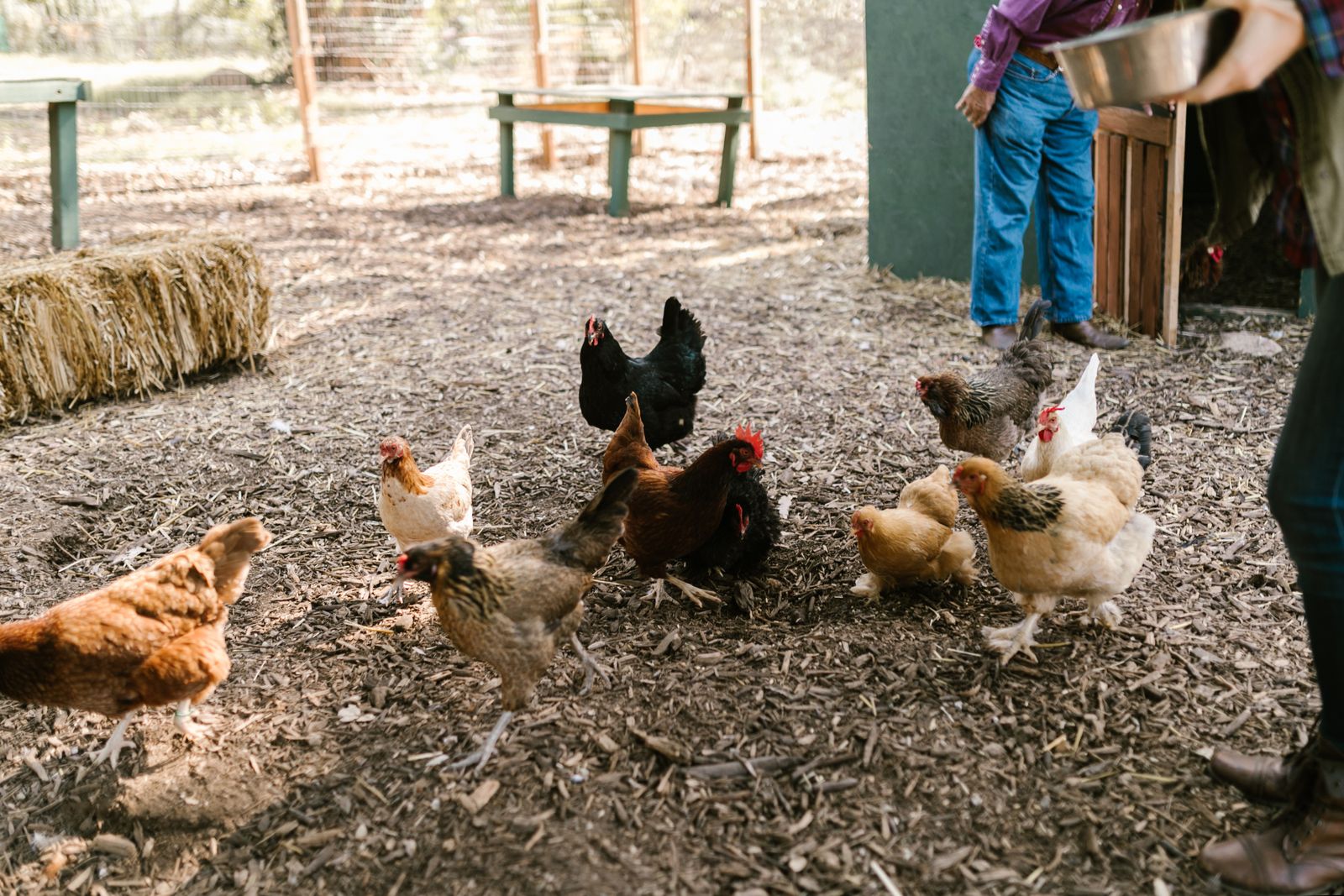
On a normal morning, you probably notice more than whether the feeder contains grain. A bird may be slower to come out, a drinker may be leaking, or the usual count may be one short. Someone unfamiliar with the flock needs a way to recognize those departures from normal.
Make the baseline visible. A current photograph of the birds together, the expected head count, and a description of any known individual needs are more helpful than “they will probably be fine.” If one bird is under veterinary care, written instructions should come from the treating professional rather than a sitter’s improvised interpretation.
The same applies to the enclosure. A latch that feels secure to its owner may not be obvious to a visitor. A person should see the actual closing routine before being responsible for it in poor light or bad weather.
A rehearsal reveals the missing instructions
Let the proposed caretaker do a normal visit while you are still available. Watch what requires an explanation: the shutoff on the water supply, the feed container that looks like a different product, the second gate that must close before the first opens. Those moments identify the information a handover needs.
This is also a chance to discover whether the arrangement is realistic. Someone who can stop by occasionally may not be able to provide the timing your birds and equipment require. Agree on the visits the flock actually needs, and identify a backup person rather than assuming an informal favor will expand automatically if weather changes.
The automatic door does not own the responsibility
An automatic coop door can remove a repetitive opening or closing task, but it cannot decide that a hen has been left outside, that a battery is failing, or that an obstruction has changed how the doorway works. The handover should say who checks those outcomes.
Likewise, a large waterer is not a guarantee of clean, accessible water for the whole absence. A spill, blockage or freezing event can change the situation after the owner leaves. Describe how the caretaker checks access and what the backup supply is.
Decide in advance what an unexpected event should trigger
Leave the poultry-vet contact, your own contact, an alternative decision-maker and the location of a suitable carrier. Agree what the caretaker is authorized to do if you cannot be reached. Avoid making the first discussion about veterinary transport happen while someone is holding an unwell bird.
Include where to find the normal ration and which extras, if any, are permitted. A sitter’s well-meant treat feeding can change the routine without solving any care problem. There is no need for a visitor to create a special menu to make the birds like them.
For people still deciding whether to keep poultry, this recurring arrangement belongs in the real cost of a flock: not only the payment, but finding reliable cover and maintaining it as circumstances change. A successful weekend away rests on a person who can notice and act, with equipment supporting that person rather than supposedly replacing them.