
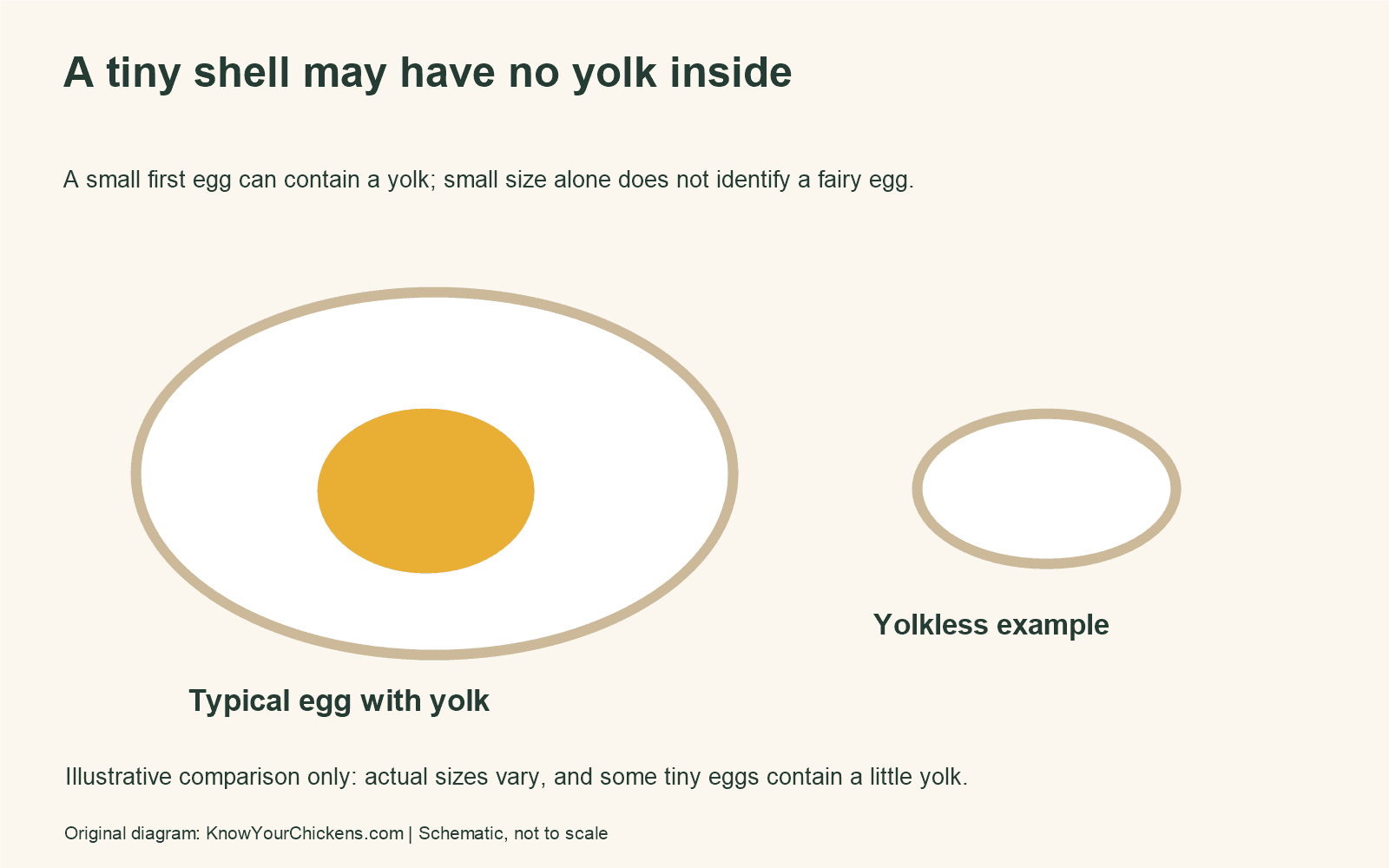
Among the day’s eggs sits one that looks as though it belongs to a much smaller bird. Crack it into a separate bowl and the surprise may continue: there is white, but no recognizable yolk.
These little oddities are often called fairy eggs. The British Hen Welfare Trust describes them as unusually small eggs that often lack a yolk. A tiny egg and a small first egg are not automatically the same thing; a pullet’s early eggs can contain perfectly ordinary yolks.
The wrapping process can start without the usual center
The glands that add white, membranes and shell normally work around a yolk. A yolkless egg shows that an egg-like package can form without that expected center. Its small size is therefore more interesting than a simple miniature version of a large breakfast egg.
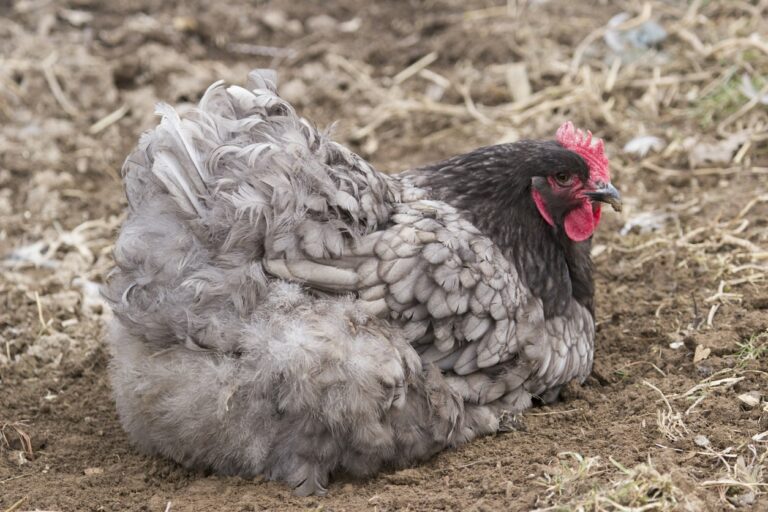
The label does not identify the hen responsible. In a shared nest, finding one tiny egg does not prove that the youngest bird laid it. The Trust notes that fairy eggs can also come from adult hens that otherwise lay normal-sized eggs.
One odd egg and a repeating pattern are different observations
Photograph the egg beside an ordinary one and record the date if you want to follow the pattern. Use an actual size comparison rather than an unsupported guess from a close-up picture. If possible, note which hen laid it without isolating or disturbing the flock solely for a curiosity.
An isolated unusual egg from a bird otherwise behaving normally gives you less reason for alarm than recurring changes alongside poor appetite, straining or reduced activity. Repeated abnormalities deserve a review of the bird and her care, not an automatic assumption that every small egg needs extra calcium. Our calcium-and-grit article explains why supplements have particular jobs.
Small does not certify safety
Calling an egg a fairy egg answers an appearance question, not a storage or contamination question. Apply the same handling precautions used for other eggs and keep uncertain contents separate while assessing them. The egg-storage guide is the relevant place for those decisions.
The unusual little shell is evidence of a variation in formation. It does not change the broader timing described in the start-of-laying article, and it does not need a supernatural explanation. What is inside, whether it happens again, and how the hen is doing are the observations that give the find its meaning.