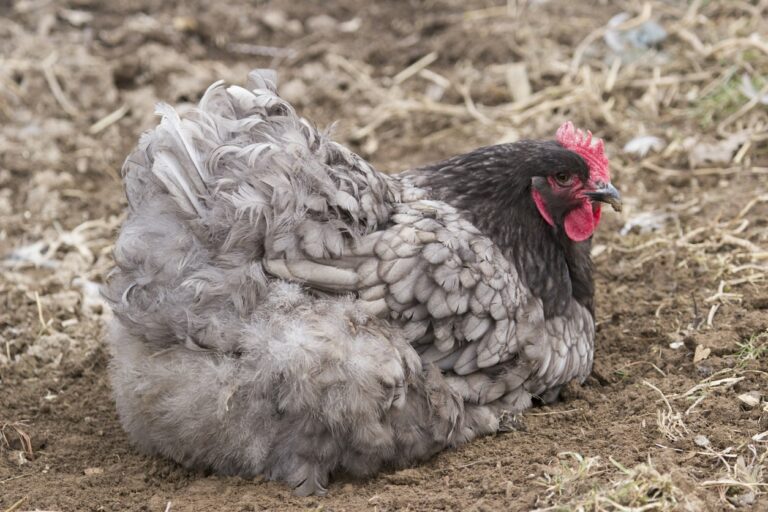

You reach toward a hen and she stops, lowers her body, and holds her wings slightly away from her sides. A moment ago she was walking normally. The sudden change can look like an invitation to pick her up, an injury, or a strange little bow.
In that particular context, a squat is often a social or reproductive posture. It is useful information about the interaction. It is not a diagnosis, and it is not permission to keep pressing down on the bird.
A posture with a social setting
Alabama Cooperative Extension describes crouching and squatting among the submissive behaviors chickens use in their social hierarchy. The same posture can be directed toward a keeper. In a mating interaction, a receptive hen also crouches for the rooster; our account of chicken courtship and mating explains that wider sequence.
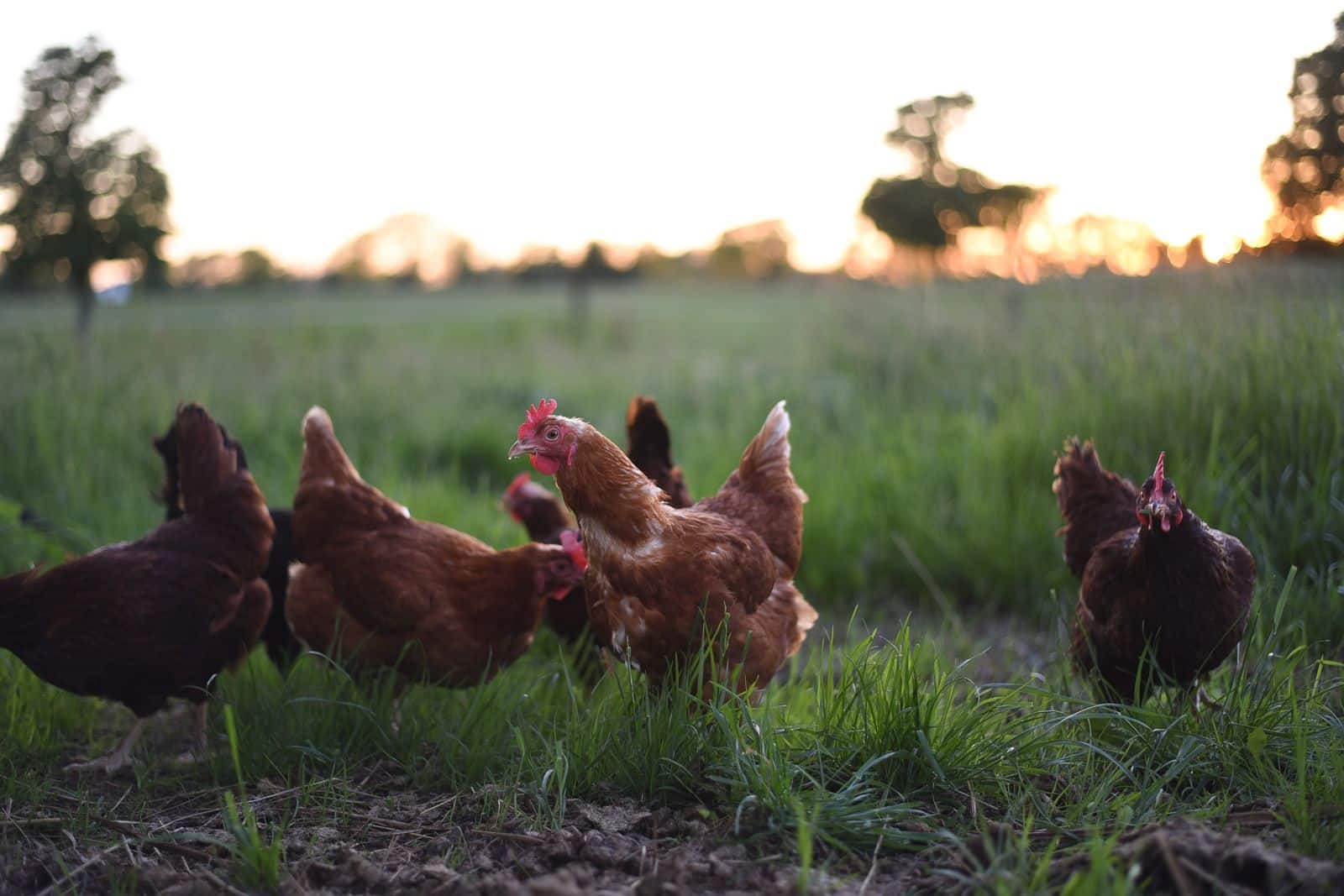
The important distinction is between seeing a posture and knowing every reason behind it. A hen that squats as a person approaches is responding to an interaction. That does not establish that she regards every human as a rooster, or that a particular emotional label explains the response.
What happens before and after matters
Watch the whole short sequence. Did the hen lower herself only when a hand moved over her? Does she get up and walk normally when the person moves away? Does she return to eating and exploring with the flock? Those details help describe the event more accurately than a frozen photograph of a crouching bird.
A hen that stays low, repeatedly strains, cannot walk normally, or withdraws from the group presents a different question. Do not explain persistent weakness away as a friendly squat. The health context belongs with signs of illness in a flock, rather than a body-language interpretation.
It is also easy to attach the posture to a precise laying deadline. A maturing pullet may begin showing reproductive behavior, but a squat cannot tell you the date of her first egg. The changes around the start of laying involve more than one sign, and individuals differ.
The interaction can end quietly
A keeper does not need to complete a ritual each time a hen crouches. Letting her stand again, moving calmly, and leaving her an escape route avoids turning an ordinary approach into repeated restraint. If handling is necessary, support the bird appropriately; the crouch itself is not a secure holding position.
There is no need to test the response over and over for a video. A short observation can answer the interesting question: this hen changes her posture when someone approaches from above. Learning when she does it, and whether she resumes normal activity afterward, is more useful than giving the squat a human meaning it cannot prove.