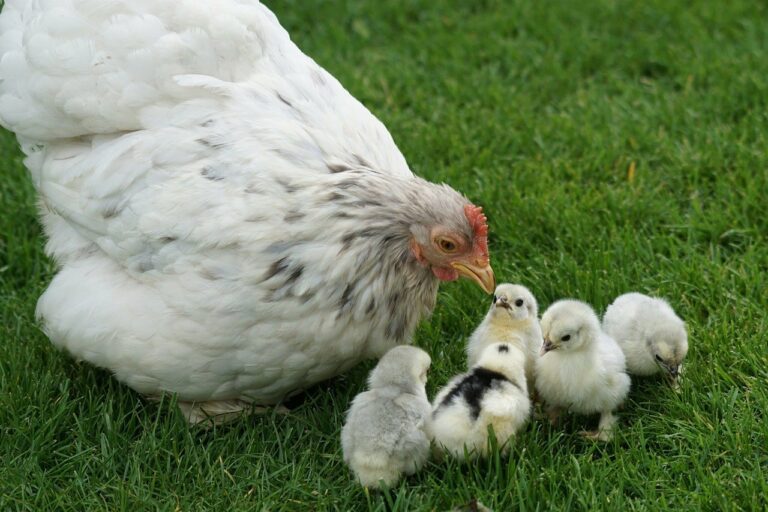

Feathers can preserve a familiar outline while the body underneath changes. A hen may still look rounded in the yard even when her weight is moving away from her own usual range.
That is why repeated measurements and physical assessment answer a different question from appearance. The Maryland factsheet on sickness behavior explains how difficult early illness can be to recognize in chickens. Weight is one observation to add to that picture, not a diagnosis by itself.
Compare the hen with herself
An isolated number has limited meaning without the bird’s identity, age and circumstances. A large breed and a small breed should not be judged against the same target, and a growing pullet should not be expected to remain at one adult baseline. Use a consistent record rather than trying to recall what the bird weighed months ago.
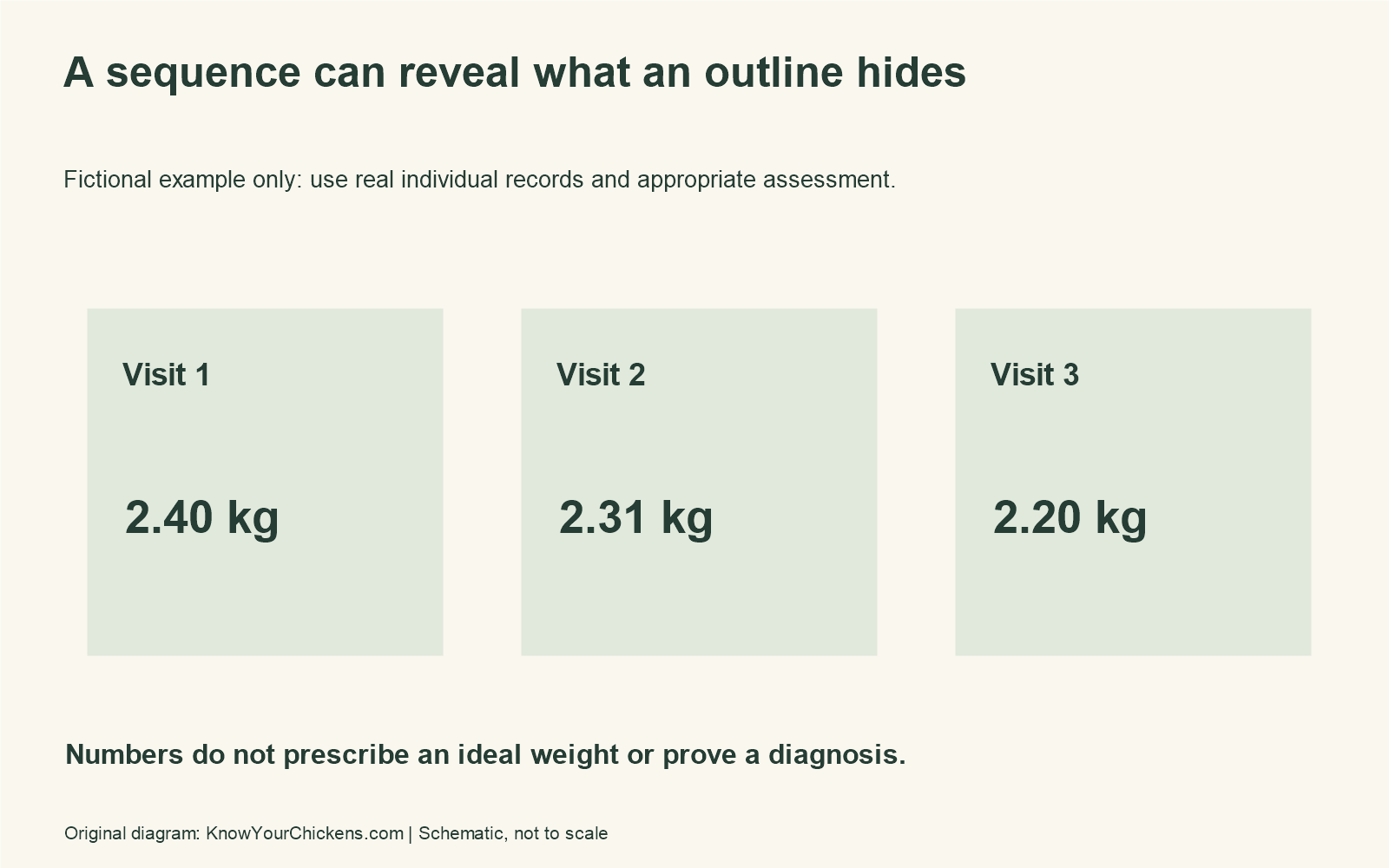
Consistency helps interpretation: the same suitable scale, a secure container or platform, and comparable timing reduce avoidable differences between readings. Keep handling calm and safe. Do not let a bird balance on an unsuitable high surface while trying to capture a number.
A change opens a question
Check whether the bird can access food and water, whether other signs have changed and whether the measurement was reliable. A weight trend alongside poor appetite or reduced activity deserves veterinary assessment. Repeatedly increasing treats without investigating can obscure the underlying problem.
Our feeding article covers the main ration, while care of older hens discusses age-related needs. Neither supplies one ideal weight for every hen.
The illustration is a fictional record, clearly labelled as such. Its purpose is to show why a sequence is easier to assess than an undocumented impression. Actual numbers belong to the individual bird and should be interpreted with her condition, history and professional advice where needed.