

The new arrivals may be below the feeder rather than on it: small birds hopping over bare ground, then flashing white at the sides of their tails as they fly. Across much of North America, that combination points toward Dark-eyed Juncos.
Cornell’s Dark-eyed Junco account describes a widespread winter visitor whose appearance varies substantially across the continent. The neat gray-and-white bird familiar in many eastern yards is not the only version of a junco.
The tail can be more useful than the shade of gray
Some juncos look slate-colored; others show brown, contrasting hoods, or different tones on the sides. Light and posture add still more variation. A quick lift-off can reveal the white outer tail feathers even when a perched bird offers an unhelpfully dark silhouette.
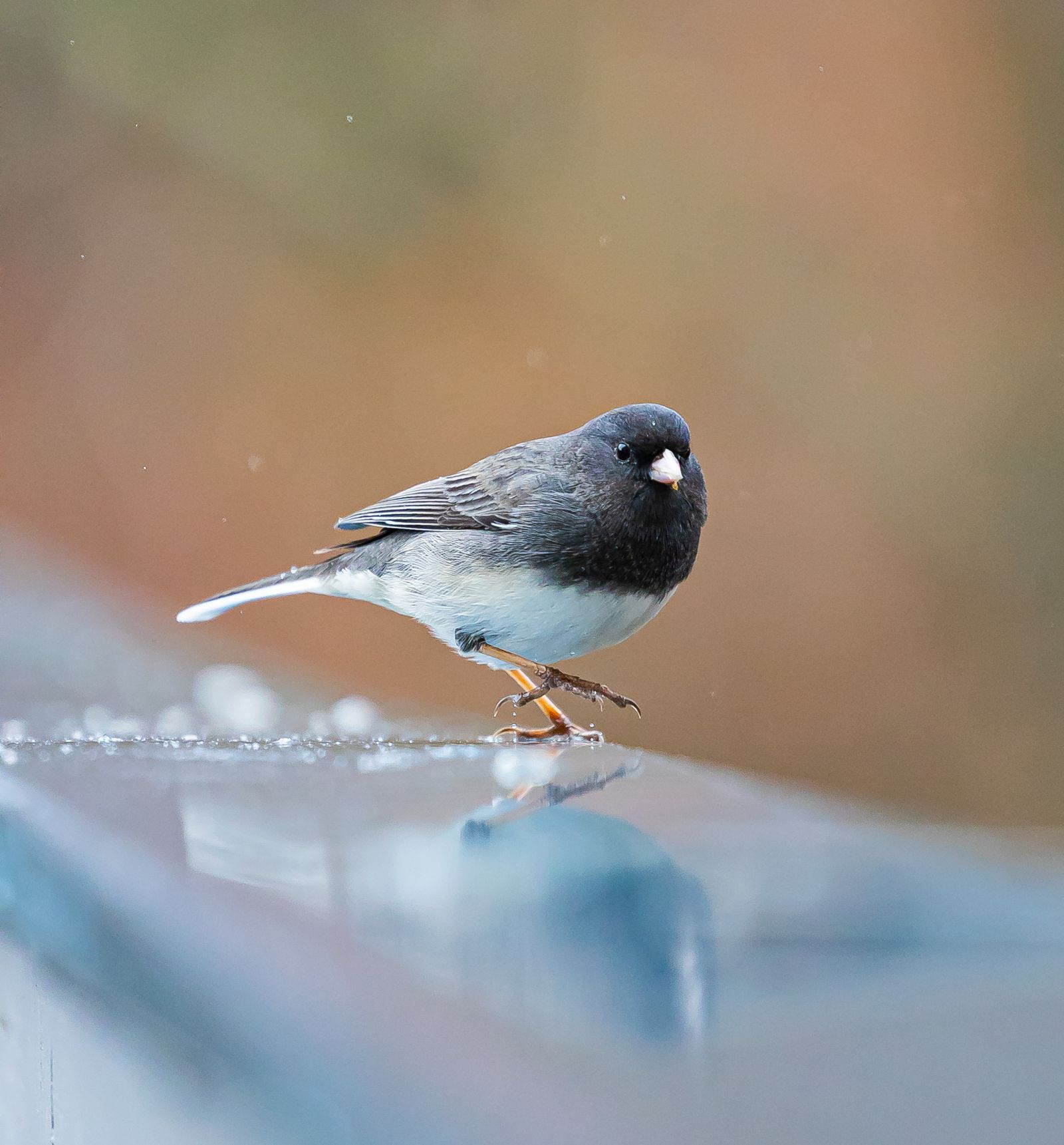
The Canadian Wildlife Federation’s species profile describes the bird’s ground-feeding habits. Watching the leaf litter and the edges of low vegetation can therefore be more productive than concentrating on a high perch.
A short note about location, ground behavior, bill, and tail often beats an immediate guess based only on color. Compare several features with a regional guide; female and immature birds can complicate the picture.
“Snowbird” is a nickname, not a forecast
Juncos are often associated with winter, but one in the garden does not predict a snowstorm next week. Seasonal movements, latitude, elevation, and local habitat shape when people notice them. A November visitor in one region may be a familiar year-round bird somewhere else.
That is what makes a yard notebook worthwhile. Record the first observation and compare it with later visits, rather than turn a single arrival into a weather prediction. Our FeederWatch article explains one way to make repeated observations useful.
For poultry keepers, ground-feeding wild birds should remain outside the chicken feeding area. Enjoying a seasonal visitor does not require sharing the hens’ grain or water; the current poultry biosecurity context makes that distinction particularly relevant this autumn.


