

A large white goose can seem familiar enough to need no breed name. Embden adds one, along with a history of substantial domestic birds that traveled under more than one spelling and label.
Oklahoma State links the breed to Emden in Germany and records the name “Bremens” for birds reaching the United States in 1821. The page also notes uncertainty about the exact ancestry. That distinction matters: a documented import name and date do not establish every suggested cross in a breed’s origin story.
The head gives a useful comparison
The familiar adult features include white plumage, blue eyes and an orange bill and legs. Unlike knob-bearing Chinese geese, the Embden does not have that prominent forehead knob. The illustration highlights this contrast rather than offering a full identification key.
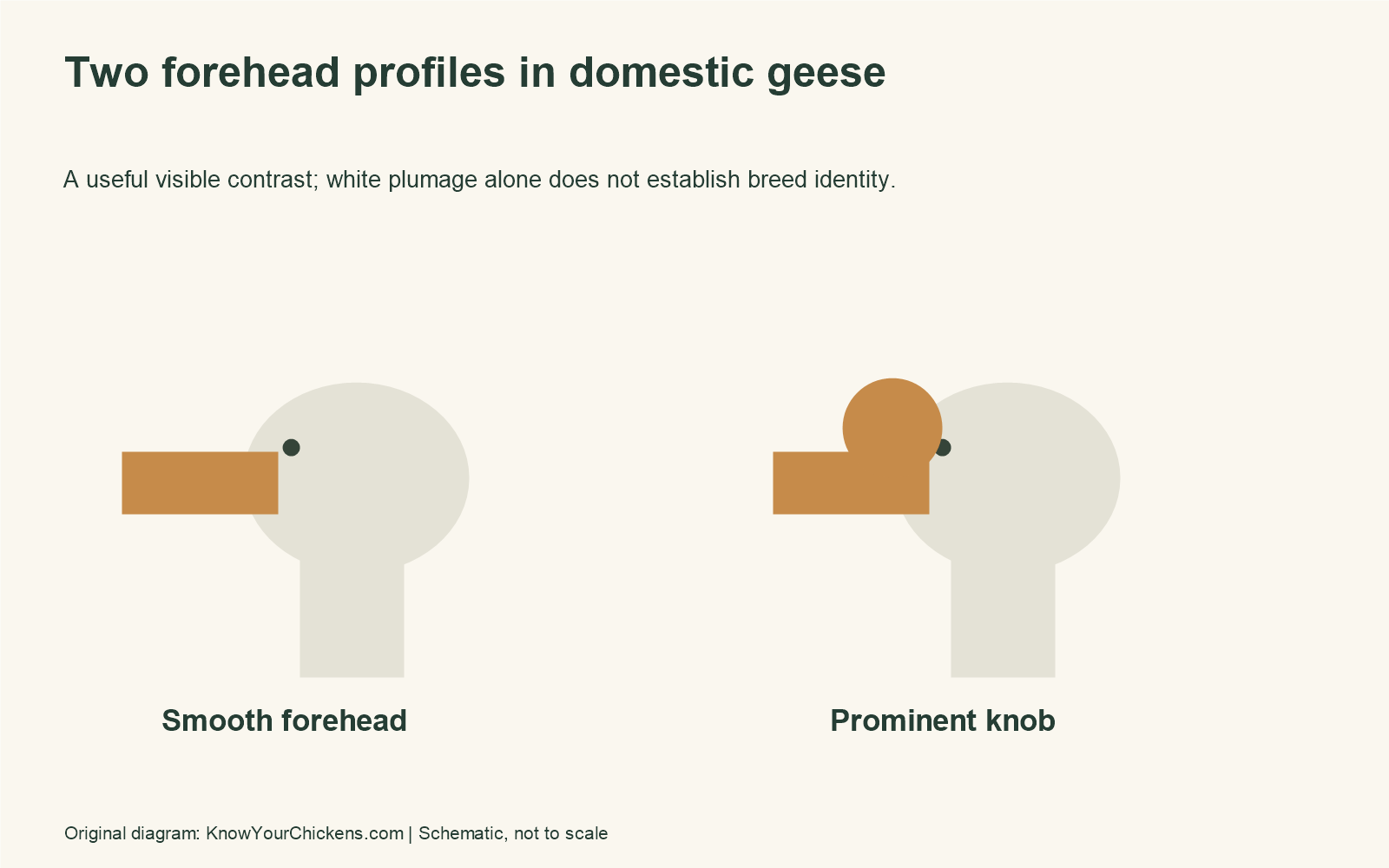
White feathers alone cannot certify breed identity. Other domestic geese can be white, and crosses occur. When choosing breeding birds, documented origin and overall type matter more than matching a distant photograph.
A goose changes the scale of a backyard plan
A substantial adult goose needs equipment and passages suited to its body. Sharing a property with hens is a question about resources, space and social interactions, not just whether both species fit in the same photograph. Our mixed-animal discussion considers that distinction.
Do not assume that a goose will replace fencing or protect every chicken. A loud or watchful bird is still vulnerable itself. It needs secure shelter and a management plan of its own.
The large-waterfowl discussion offers useful context for thinking about adult access, and separating wet waterfowl areas from chicken housing explains why shared space needs care. An Embden’s white outline is easy to recognize as a farmyard image; its size and species-specific routine are what make it a real commitment.


