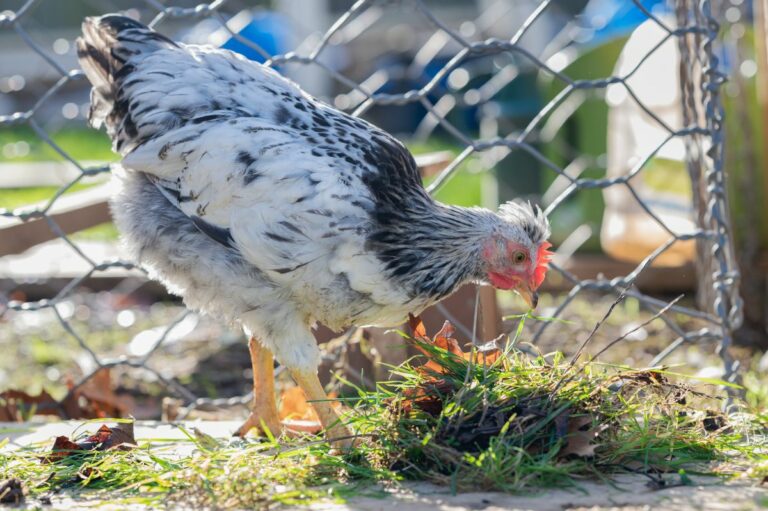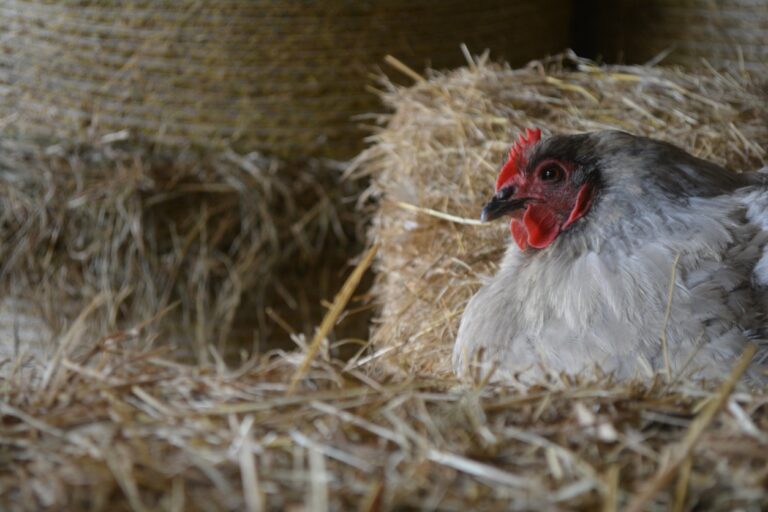

The Campine’s fine dark barring creates a different impression from a chicken covered in scattered spots. Silver and Golden varieties change the ground color, while the overall pattern gives the bird a sharply organized appearance.
The Livestock Conservancy traces the Campine to Belgium’s Kempen region and its close relationship with the Braekel. Both Silver and Golden Campines entered the American standard in 1914. The history includes imports and changing fortunes, rather than an uninterrupted climb in popularity.
A rooster can have hen-like feather form
Campine males are described as hen-feathered. That term concerns the form of their plumage; it does not mean the males are hens or that sex can be assigned from one familiar feather cue. Someone accustomed to more obvious differences in other breeds can find the appearance surprising.
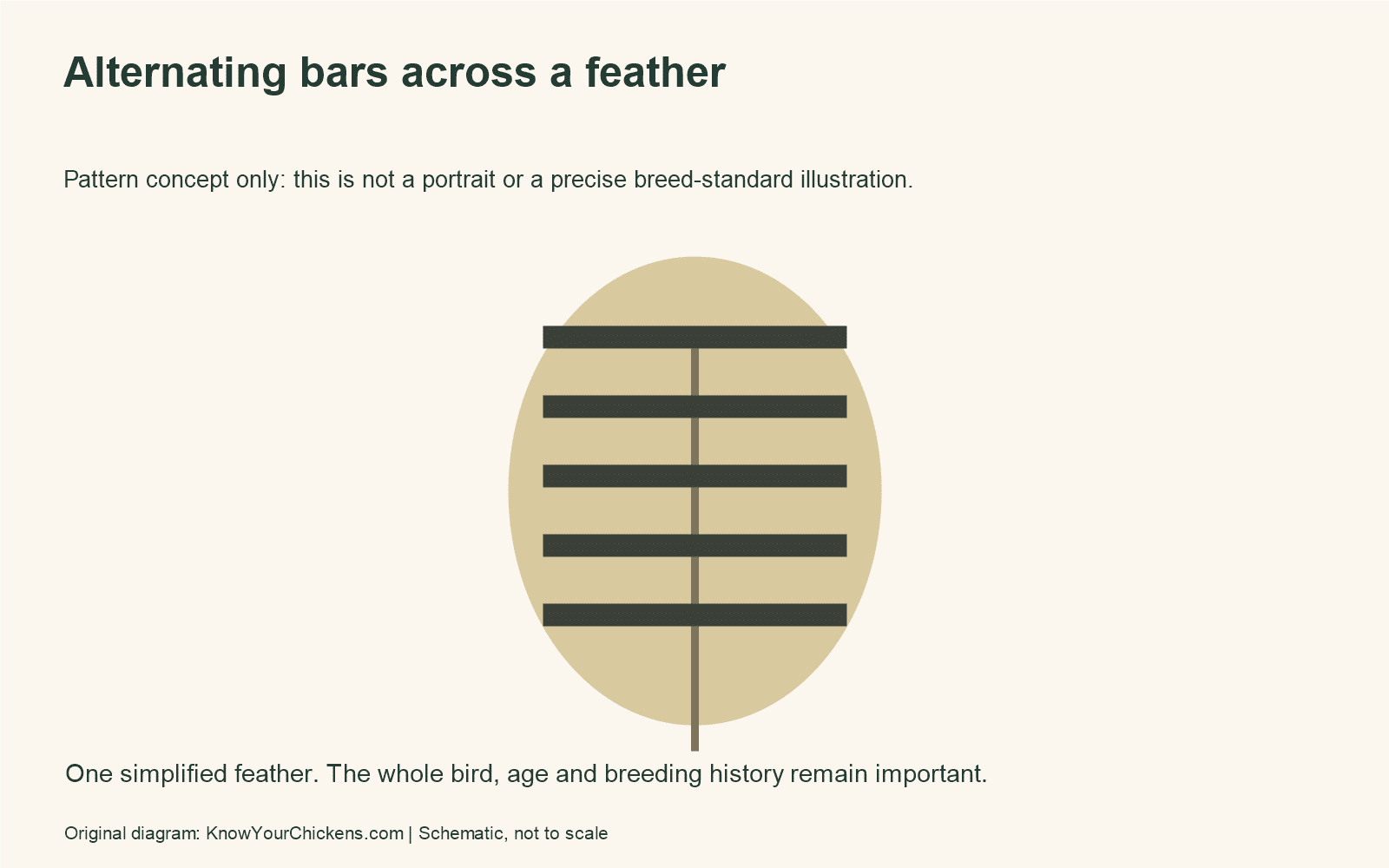
It is a useful example of why the clues in our hen-or-rooster article need breed context. A general illustration of pointed male feathers does not establish the appearance of every breed. Know which bird is being assessed before applying the rule.
Pattern and temperament are separate choices
The breed is active and inquisitive, with close-fitting plumage and white eggs. A bird that is interesting to watch moving around a yard may not be the best choice for someone whose main aim is a chicken that welcomes frequent handling. Ask about the actual breeding line and how its adults behave.
Our breed-selection discussion puts that choice in the context of space, climate and purpose. A patterned chicken’s needs do not become ornamental just because its appearance is ornamental.
For a person considering Campines, the rewarding detail is the combination: a Belgian breed history, a recognizable feather pattern and a male appearance that challenges a familiar sexing shortcut. The pattern starts the conversation, but it is not the whole bird.