

Before walking away, a hen extends a leg behind her and opens the wing on that side. The movement lasts briefly, then she folds everything back into place. It is an easy detail to miss in a busy yard—and a strange-looking pose if a photograph catches only its widest moment.
Alabama Cooperative Extension includes leg and wing stretching among comfort behaviors. These maintenance movements belong alongside grooming and other ordinary activity. They are not confined to a particular hour, even if a keeper notices them most during the first visit of the day.
The movement has a beginning and an end
Watch how the bird enters and leaves the position. A brief extension followed by normal walking is a different observation from a wing that stays dropped or a leg that the bird consistently avoids bearing weight on. A still frame hides that difference.
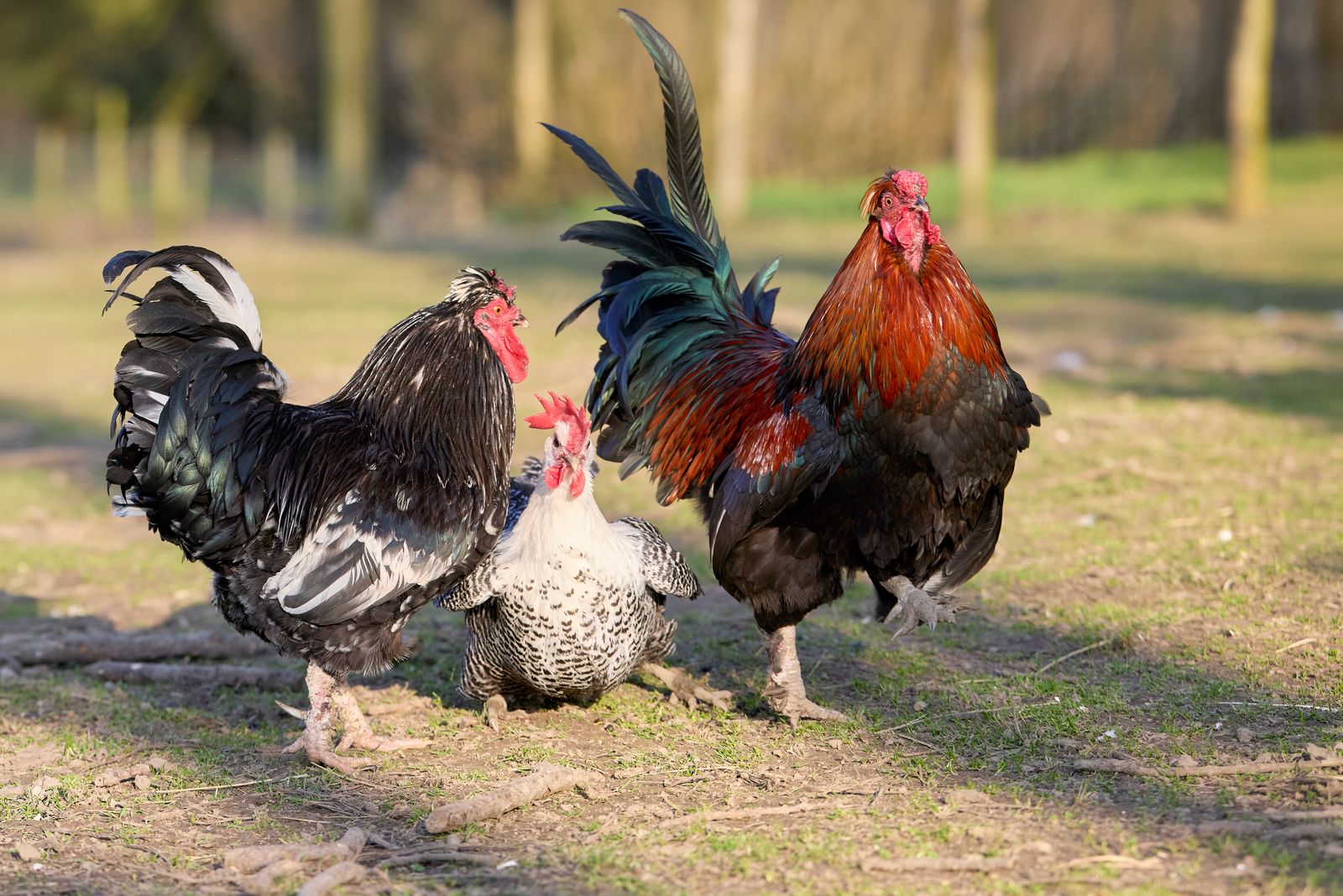
Descriptions are useful: which side moved, whether the action was brief, and whether normal movement resumed. Calling every extension a stretch can conceal a persistent problem; calling every stretched wing an injury can make ordinary behavior seem alarming.
Several birds may be doing different things
A neighbor shaking dust out of its feathers may be finishing a dust bath. Another hen running her beak through plumage is preening. Looking closely reveals separate activities rather than a flock all performing one mysterious ritual.
There is no reason to make a resting bird stretch for a photograph. Provide enough unobstructed room for ordinary movement and observe what happens naturally. The space discussion considers how crowding affects usable room, beyond the enclosure’s outside dimensions.
If a bird repeatedly holds an unusual position, struggles to walk or seems unwell, move from interpreting behavior to assessing health. Our flock-health overview gives that wider context. The ordinary stretch is interesting because it is brief and integrated into the rest of the hen’s day; the return to normal movement is part of the observation.


