

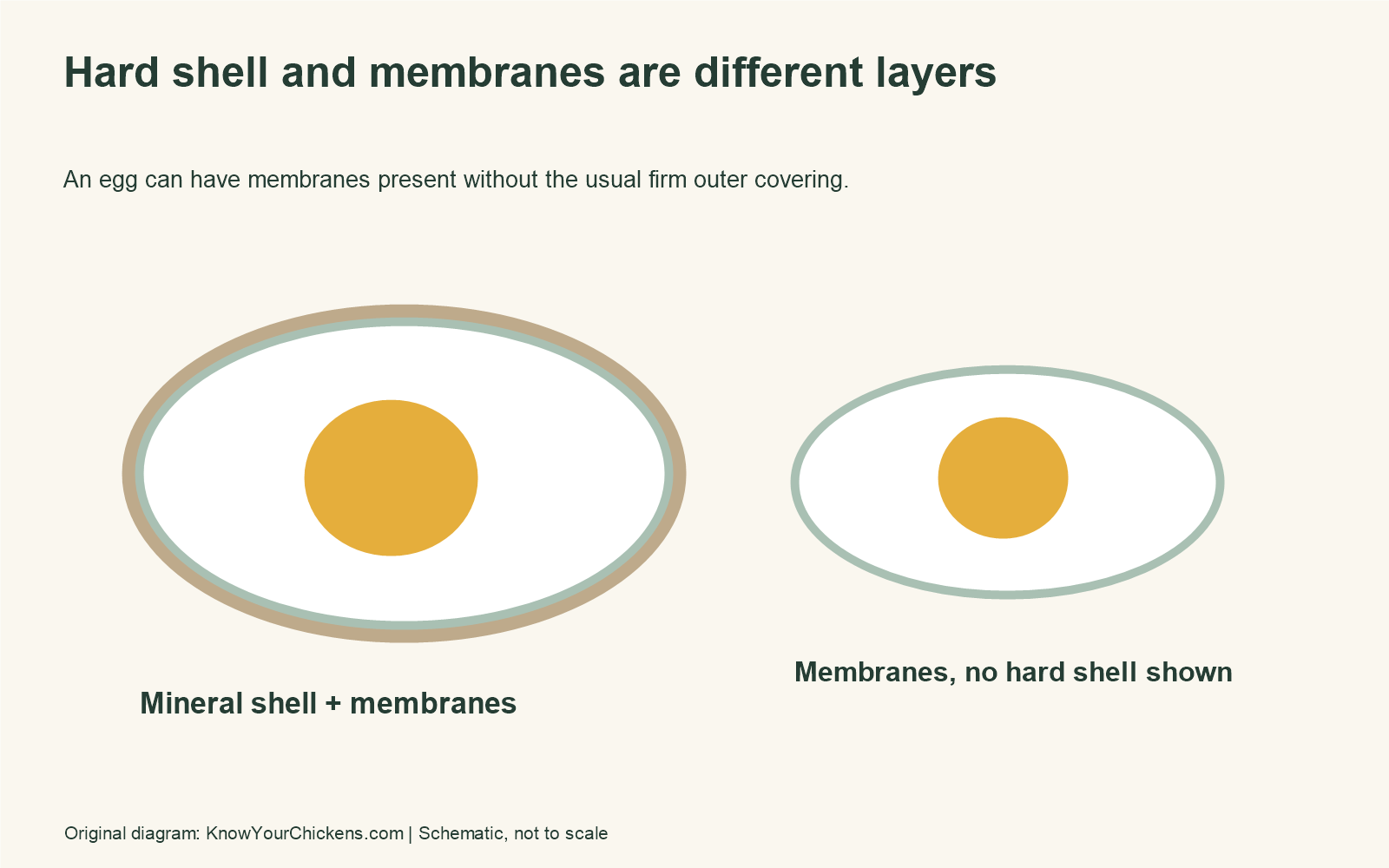
An egg with a flexible outer skin feels wrong in the hand because we expect the shell to resist pressure. The membrane can preserve an egg-like outline even when the usual hard covering is missing or poorly formed.
That distinction makes sense when the layers are considered separately. White and shell membranes form before the mineral shell is completed. An egg can therefore reach the nest with membranes present but without the firm outer package seen in an ordinary egg.
One appearance can have several causes
Poultry Extension describes occasional shell-less eggs and persistent shell problems. A repeated pattern calls for attention to nutrition and health; calcium, phosphorus and vitamin D are among the relevant nutritional factors. A soft egg is not a laboratory result identifying which one is deficient.
Some infections can also affect shell quality. The MSD account of infectious bronchitis includes egg-production and egg-quality changes. That is a reason to consider flock-level signs, not to diagnose a virus from an egg photograph.
The hen and the pattern carry the useful context
Record whether this is an isolated find, whether one bird or several may be affected, and whether other behavior has changed. A laying record is more helpful than repeatedly squeezing the membrane to demonstrate how strange it feels. Avoid handling a fragile egg over shared food or returning contaminated contents to a communal bowl.
Review the main ration before adding supplements at random. Our oyster-shell and grit article explains why a calcium source and grinding grit are not interchangeable. Neither should become a substitute for appropriate complete feed.
If abnormalities continue, or a hen strains or looks unwell, seek poultry-veterinary advice. The separate egg-binding article concerns difficulty passing an egg; a membrane-covered egg found in the nest does not establish that diagnosis. The soft covering tells you which part of the package looks abnormal. It does not tell the whole story of the bird that produced it.


