

An eggshell with folds or ridges can look as though it dried while crumpled. The unusual surface catches the eye, but it is only the finished result of something that happened while the egg was forming.
The shell is built around an egg’s contents inside the hen. A disturbance during that process can leave a different surface or shape. Wrinkles therefore deserve a closer look, but they do not identify one cause on sight.
Shell quality can be part of a wider flock change
The MSD Veterinary Manual describes egg-quality changes with infectious bronchitis. Disease is one possibility among the context a veterinarian considers. A photograph of a wrinkled shell cannot determine whether the flock has infectious bronchitis, nor exclude it because no bird is visibly coughing in the picture.
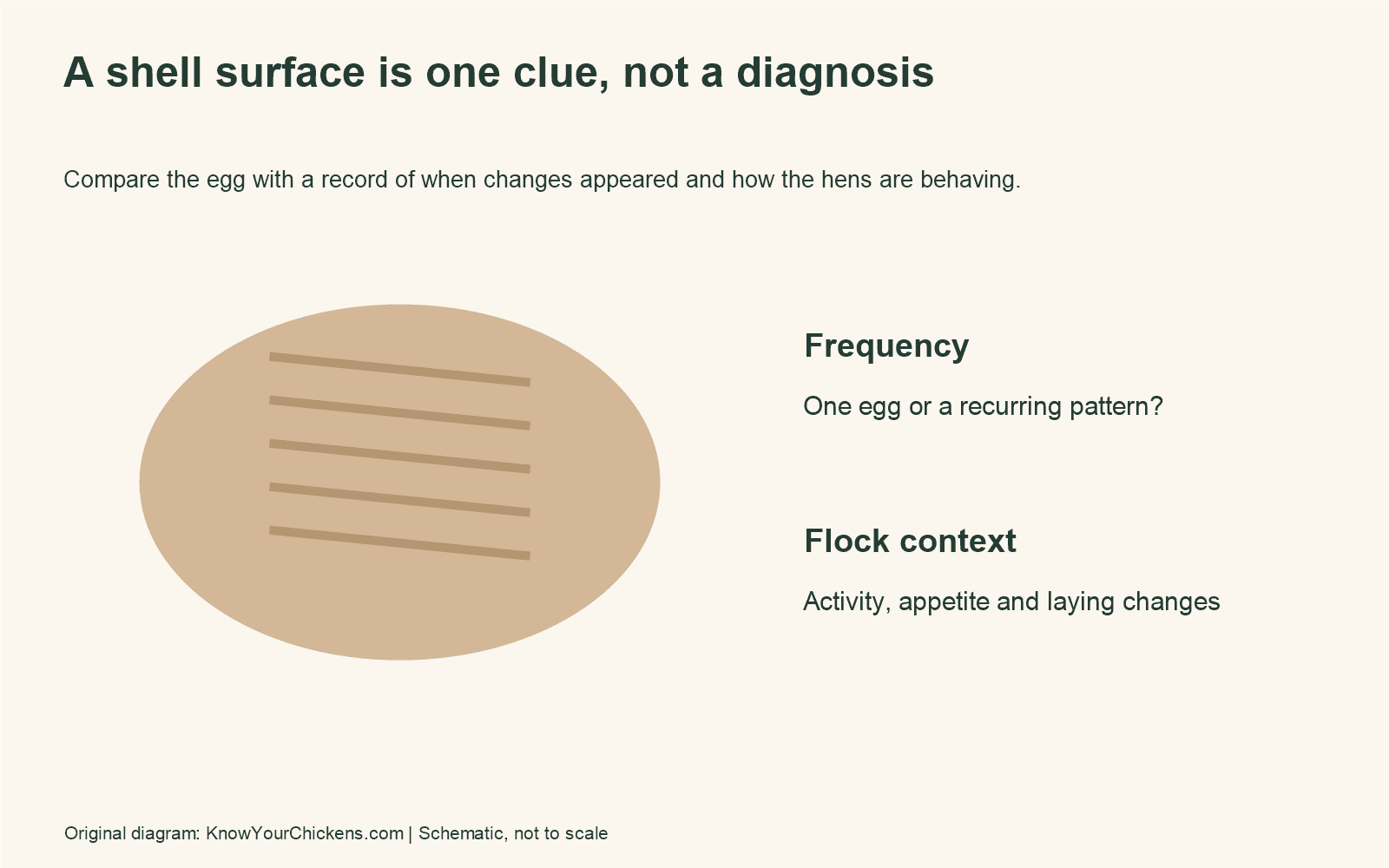
Count the affected eggs and note the dates. Is this one odd shell among otherwise normal eggs, or a change appearing across the flock? Are there changes in eating, activity or the laying pattern? Those observations are more useful than assigning a disease name to every ridge.
Separate appearance from shell integrity
A raised line, a rough patch and an actual crack are different findings. An intact-looking photograph may not show a fine break. Handle the egg separately while examining it, rather than assuming that an unusual shell is either automatically harmless or automatically rotten.
The egg-storage article covers handling decisions. A novelty shell does not earn an exemption from normal precautions, and a float test cannot certify that the contents are safe.
The recurring pattern matters
If abnormal shells persist or birds appear unwell, arrange veterinary assessment and review the flock’s ration and management. Avoid treating appearance alone as proof that extra calcium will solve the issue. A date-stamped series of eggs, alongside observations of the hens, gives the investigation a stronger starting point than one dramatic close-up.


