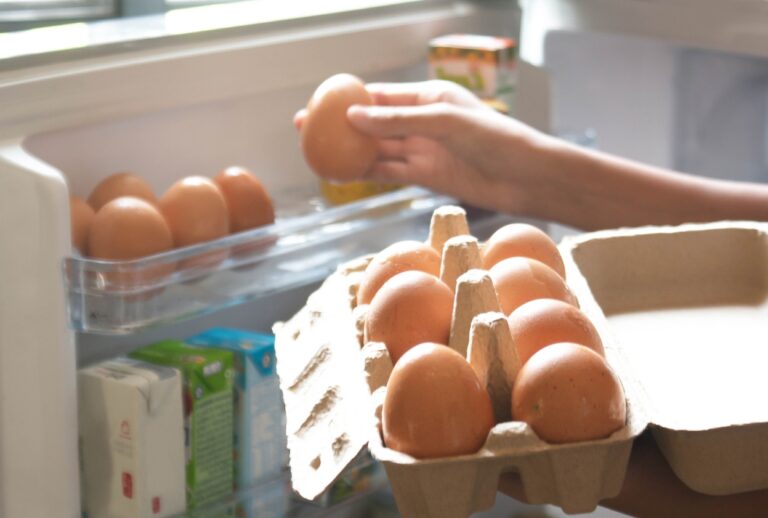

A bright photograph of a chicken yard feels like a record of what was there. It is a record made for human eyes, through a camera and a display. It is not automatically a picture of how a chicken experienced the same place.
That difference begins with the position of the eyes. A hen can inspect the world from the sides of her head, changing head position as she looks. Poultry Extension explains the wide field of view and head movements associated with chicken vision. The result is a visual life that should not be modeled simply by imagining a small person standing at chicken height.
Color has another complication
Research on the chicken retina distinguishes four classes of single cones associated with color vision: violet, blue, green and red. The retinal-mosaic study describes these receptors alongside double cones. Chickens should not simply be assigned every ultraviolet-vision claim made about other birds; the tuning of the short-wavelength system differs between species. A familiar red comb or pale feather in a photograph has already passed through the camera’s sensor, processing and the screen’s color capabilities.
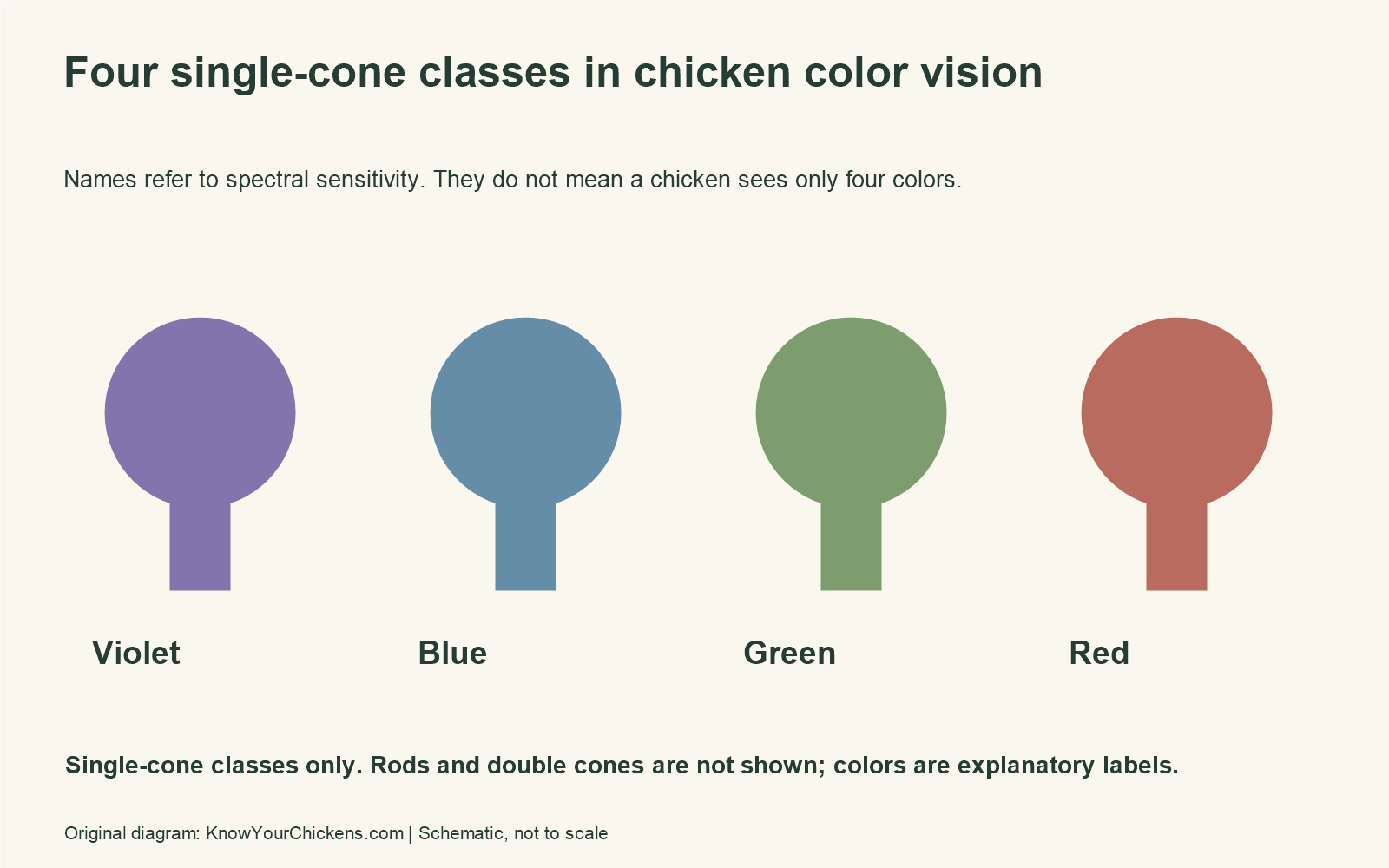
That is why an image with a purple filter is not a scientifically established “chicken view.” A meaningful reconstruction would need information about the light, the surface’s reflectance and the viewer’s visual system, not simply a dramatic color effect. The illustration here identifies receptor classes; it does not reproduce an animal’s subjective experience.
The same caution applies to a photo of a well-lit enclosure. Human brightness judgments from a processed photograph do not describe every visual condition inside it. A lens can brighten shadows that are much darker in person.
A tilted head is a useful observation, not a translation
When a hen turns one side of her head toward something, look at what has changed in the scene. A moving object, a small item on the ground or a person approaching can be relevant. One posture does not reveal precisely what she sees, nor whether she has recognized a particular danger.
The distinction matters around predator protection. A keeper should not rely on the flock interpreting a painted eye or a shiny object in the way a human designer intended. Physical protection and suitable cover remain practical decisions regardless of how compelling a deterrent looks in a product photograph.
Let the visual difference improve observation
Watch the bird’s route, pauses and changes in head position without immediately deciding what every movement means. Notice whether an object blocks a passage, whether a doorway is much darker than the yard, or whether an unfamiliar item has changed the flock’s use of an area.
For enrichment, this is a reason to observe actual use rather than choose objects only because they look colorful to us. For a familiar pet hen, it is a reminder that sharing a space does not mean sharing an identical view of it. A photograph can help document that space; the living bird’s choices supply another kind of evidence.