

A chicken investigating the ground is doing more than using a hard tool to pick things up. The beak is part of a sensory system. A peck can bring information from an object as well as bring food toward the mouth.
Research on the avian trigeminal sensory system describes input from mechanoreceptors in the beak and tongue. The hard outer appearance should therefore not be mistaken for an insensitive extension with no living structures beneath it.
Contact is part of exploration
Watch a bird inspect an unfamiliar object: looking, touching and sometimes pecking may occur before anything is swallowed. Exploratory contact and feeding can look similar in a short clip, but the eventual outcome may differ. A peck followed by dropping an item is not proof that the hen has eaten it.
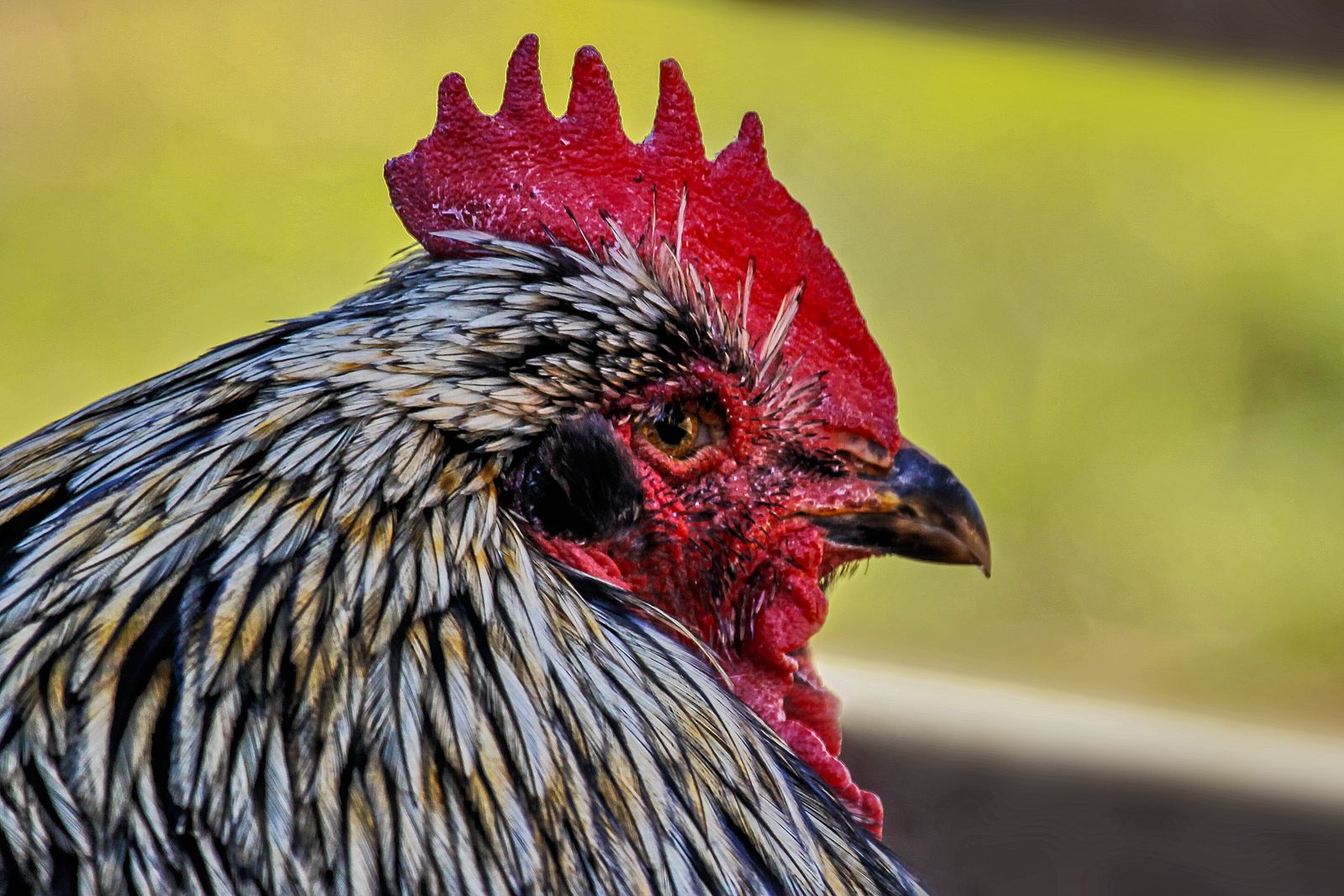
That matters when choosing enrichment objects. A material that looks sturdy to a person may still splinter, shed parts or create an entrapment point when investigated repeatedly. Observe how the birds actually use it instead of assuming that the intended use is the only one possible.
The outer layer is not the whole beak
Our beak-and-digestion article explains the wider anatomy. Beak growth, injury and abnormal shape need to be considered alongside the bird’s ability to obtain food. A damaged or overgrown beak is not simply a cosmetic inconvenience.
The sensory role is also a reason to avoid casual cutting or filing based on an online photograph. A bird with difficulty eating needs appropriate assessment; the appearance alone does not show where sensitive tissue lies or what procedure, if any, is suitable.
The next time a hen taps an object, there is no need to invent a detailed thought behind the action. It is enough to recognize that contact is part of how she investigates. The ordinary peck becomes more interesting when the beak is understood as living sensory anatomy as well as a means of eating.


