

A small black duck with a green sheen can tempt an observer into a quick description: a miniature Cayuga. The Black East Indian has its own breed identity, however, and the similarities in feather color are only part of the comparison.
The British Waterfowl Association identifies the Black East Indian as a bantam domestic duck. It shares a black-color genetic background with the Cayuga, but a shared color trait does not make two populations interchangeable. Our duck-type overview puts breed names into their wider species context.
The name sends you in the wrong direction
According to the Association, the breed was developed in the United States and standardized in Britain in 1865. Its East Indian name is not evidence of an East Indies origin. Historical explanations for how the name arose should remain explanations, rather than becoming an invented voyage attached to every bird.
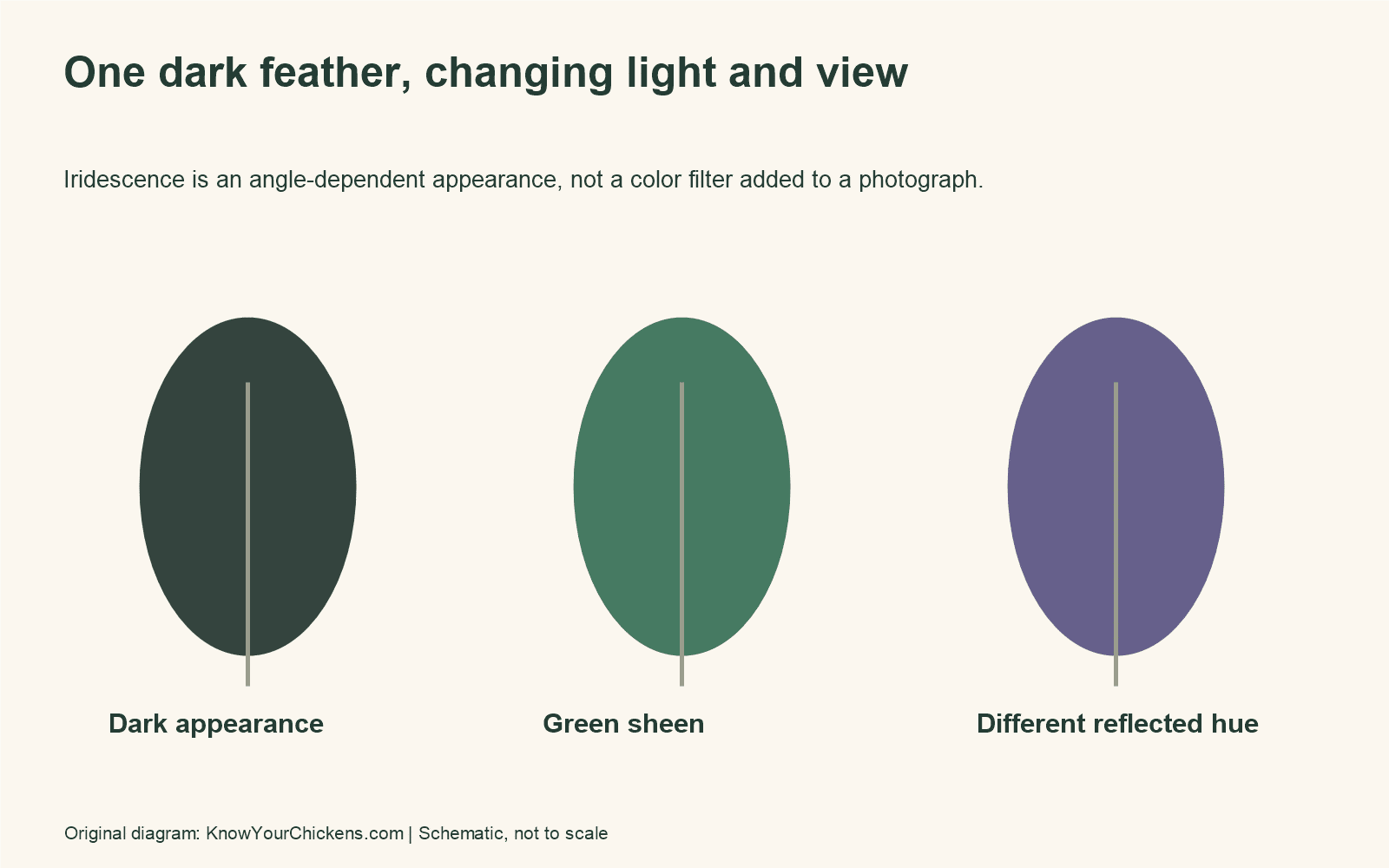
The green effect is structural iridescence over black feathers. It changes with the light and viewing angle, rather than behaving like a flat patch of green paint. The accompanying diagram explains that optical principle; it is not a photograph of an East Indian or a Cayuga.
Bantam does not mean unable to fly
The Rare Breeds Survival Trust notes that full-winged Black East Indians can fly. That is an important difference between the image of a small ornamental bird and the enclosure a real flock needs. Small size is not a containment system.
RBST also describes white feathers developing in older females. Age therefore matters when comparing a mature duck with a glossy young show bird. A photograph without the bird’s age leaves out information relevant to interpreting its plumage.
Our pet-duck article considers the commitment beyond appearance, while duck feeding addresses a need shared with less ornamental breeds. The East Indian’s appeal is its own combination of small scale, dark plumage and history. Calling it a small Cayuga makes the first visual connection, then stops before reaching the breed itself.


