

The small bird on the branch has apparently doubled in width overnight. Its feet are barely visible, its neck seems to have disappeared, and its outline is close to a ball.
Much of that change can be feathers. The U.S. Fish and Wildlife Service’s explanation of winter warmth describes how birds use plumage and other adaptations to cope with cold. Fluffing helps maintain an insulating layer of air; the bird has not necessarily gained a dramatic amount of body mass since yesterday.
There is a useful difference between the outline you see and the body inside it. When the plumage lies flatter, the same individual can look much slimmer.
Roundness alone is a poor diagnosis
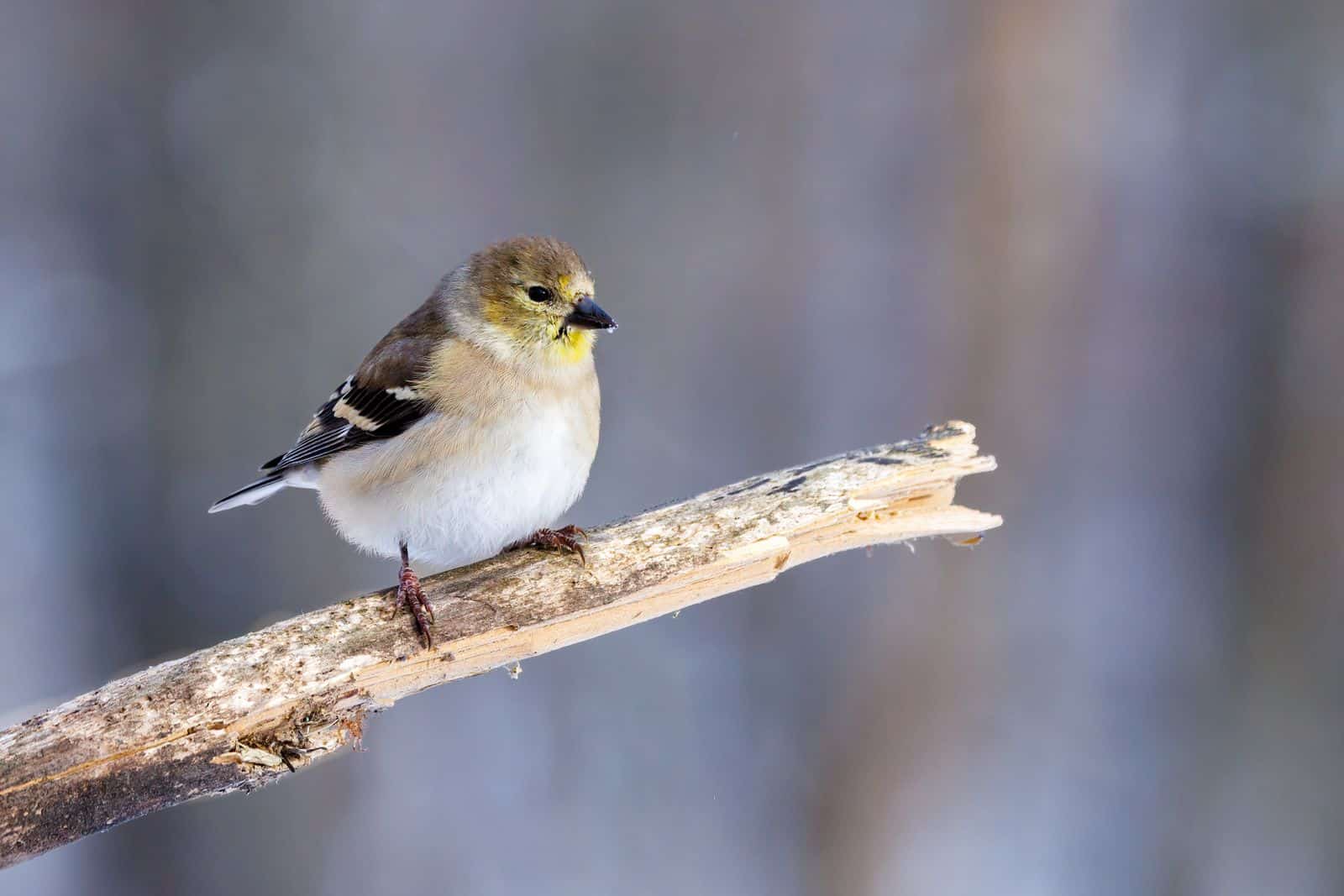
A fluffed bird on a cold morning may be behaving normally. A bird that remains unusually inactive, seems weak, or shows visible injury needs a different interpretation. One rounded photograph cannot settle that question.
Observe from a distance and seek advice from a licensed wildlife rehabilitator or the relevant wildlife authority if there are concerning signs. Do not assume that looking cold is a reason to capture a healthy wild bird.
For another quiet winter transformation, compare the American Goldfinch’s seasonal colors. Shape and plumage both change what we think we recognize. The places small birds use for shelter add a third part of the story that may remain out of sight.


