

The first egg from a young hen can fit into a carton with room to spare. That small beginning does not mean the breed description was wrong. Egg size changes during a hen’s early laying life, and the mature product cannot be judged from the first shell alone.
Research specifically examining increases in pullet egg size with age documents that developmental question. Body development, genetic background and nutrition also matter; this is not a promise that every hen’s eggs enlarge at the same rate.
First-lay timing and size answer different questions
A pullet can begin laying while still moving through development. The date she starts tells you when production began, not the final size of every future egg. Our first-lay article covers timing; the small egg is another part of the transition.
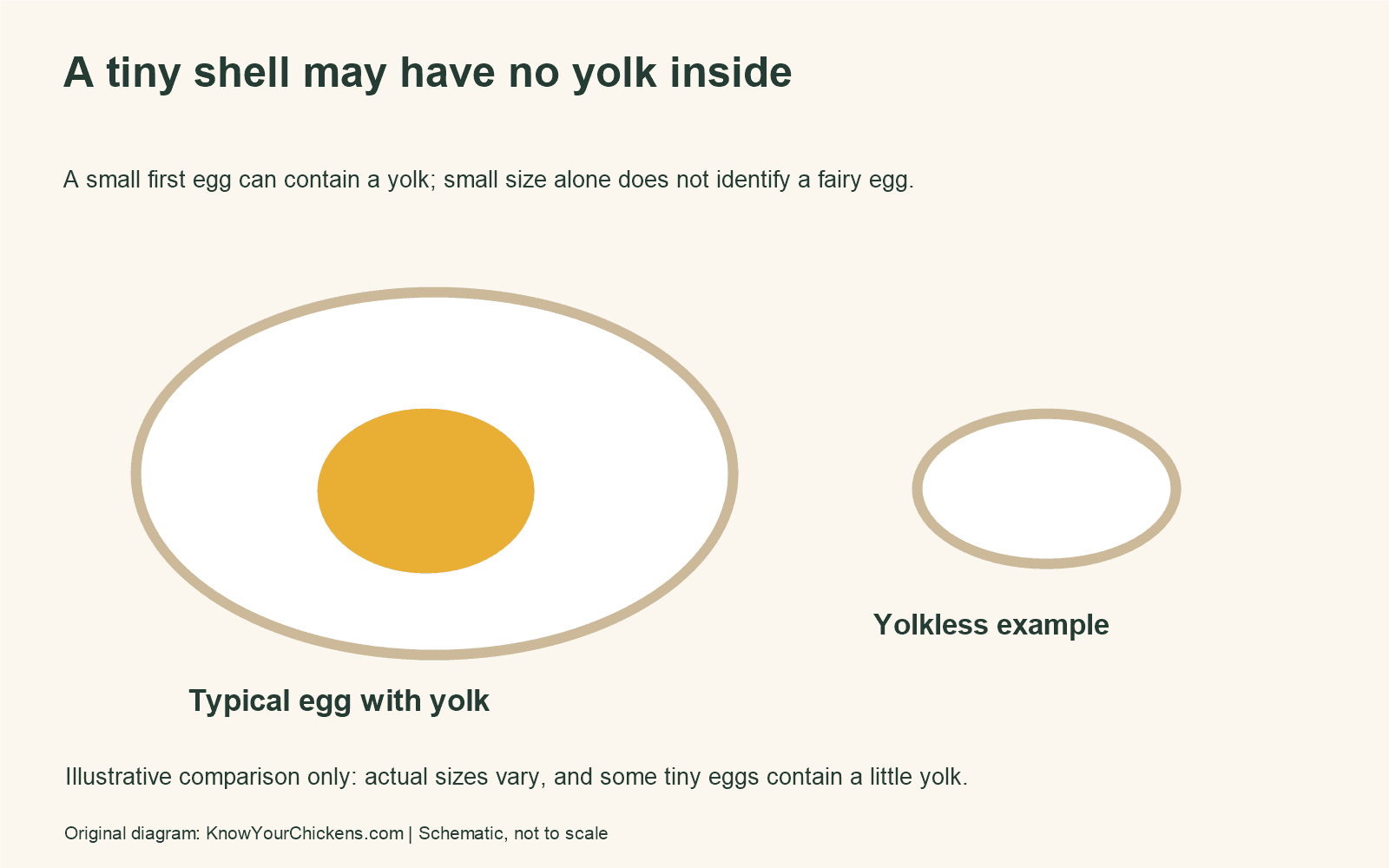
Keep records from the same bird if individual changes matter. In a mixed flock, comparing this week’s smallest egg with last month’s largest may compare two different hens. Photographing eggs beside the same scale reference makes a visual record more meaningful.
Small is not synonymous with yolkless
A small pullet egg can contain an ordinary yolk. A very small egg without one raises the separate fairy-egg question. The diagram illustrates that distinction rather than prescribing a normal size for every age.
Resist trying to accelerate egg size with extra treats or supplements. Appropriate feeding through the growing period and the transition to a suitable laying ration support the whole bird; a larger shell should not become the sole measure of good care.
Watch for recurring abnormalities or signs that the hen is struggling, rather than treating every early variation as either a crisis or a guaranteed normal event. A sequence of eggs and a healthy bird tell a fuller story than the surprise of the first small one.


