

A chickadee lands, takes one seed, and leaves. A moment later it—or another bird that looks just like it—is back. Compared with a bird that settles down to eat, the routine can seem almost inefficient.
The missing part of the story happens off the feeder. Cornell’s Black-capped Chickadee profile describes birds holding a seed with their feet and pecking into it. A nearby branch can be a workbench, not merely a retreat.
There is another possibility: the seed may be going into storage. Chickadees cache food for later use. A quick departure does not tell an observer whether the next destination is a meal or a hiding place.
The hidden-seed story reaches into the brain
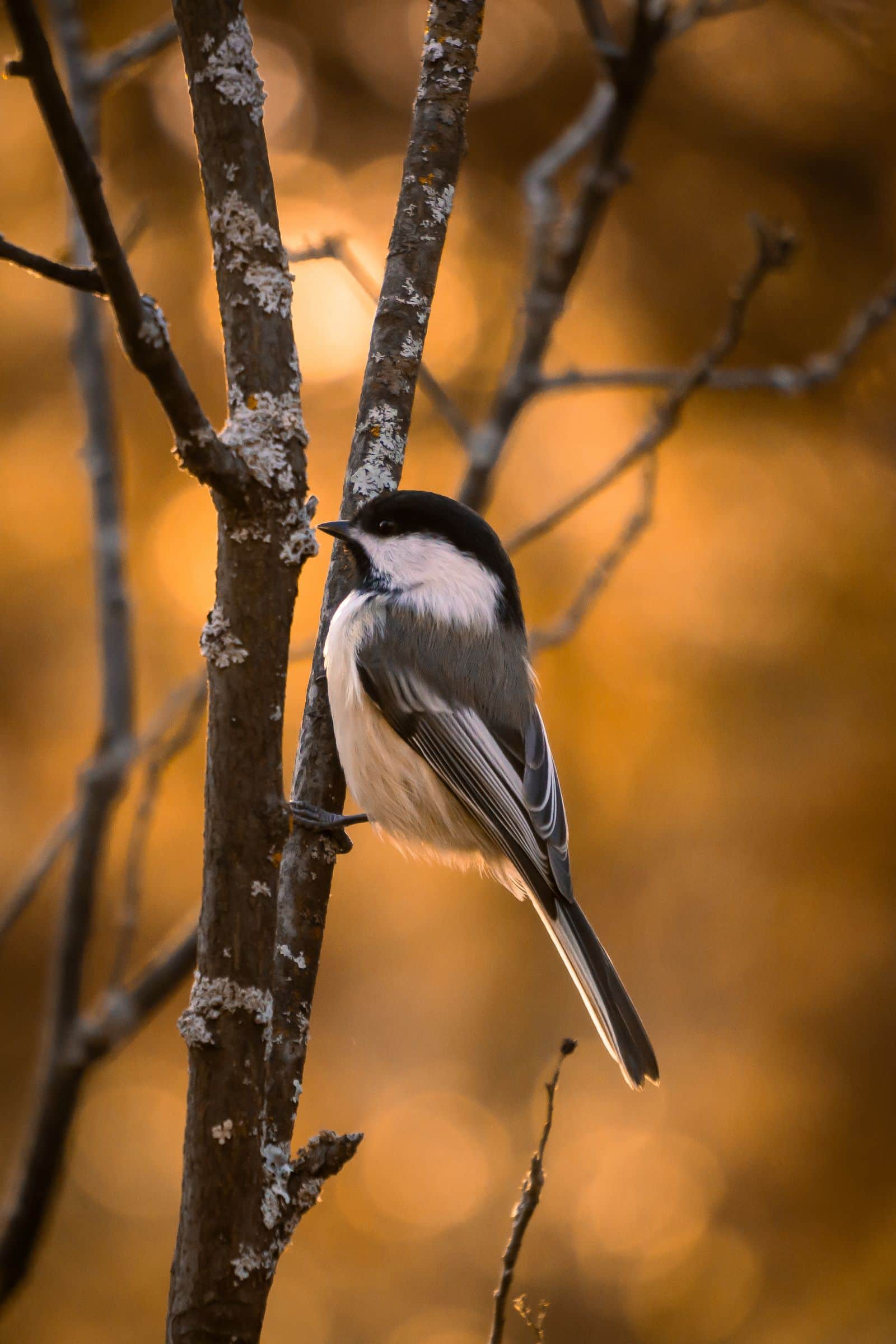
Researchers at Columbia University studied the memory side of that behavior. A 2024 report from the Zuckerman Institute describes distinctive patterns of hippocampal activity associated with individual caching events in Black-capped Chickadees.
The team called these patterns barcodes. The term does not mean the birds carry literal labels or consciously read a map. It describes neural activity that helps distinguish one remembered event from another. The study was published in Cell on March 29, 2024; it is established research worth revisiting in winter, not a newly announced discovery this week.
That makes a familiar backyard movement more interesting. Leaving with a seed can be part of a sequence whose important moment is out of sight, tucked into a particular location.
The same little bird can create many visits
This is also why arrivals are a poor substitute for counting individuals. Ten departures do not establish that ten chickadees used the yard. Our FeederWatch story explains the project’s use of the highest number seen together.
The most revealing thing to watch next time is not just the feeder. Follow one bird to its first landing spot, from a distance. It may begin working on the shell. It may disappear into a branch junction. Either outcome explains more than the assumption that a chickadee simply cannot sit still.


