

The brilliant yellow birds of summer can seem to vanish just as the garden turns brown. Sometimes they have moved. Sometimes the bird you are looking for is still there, wearing colors you have stopped noticing.
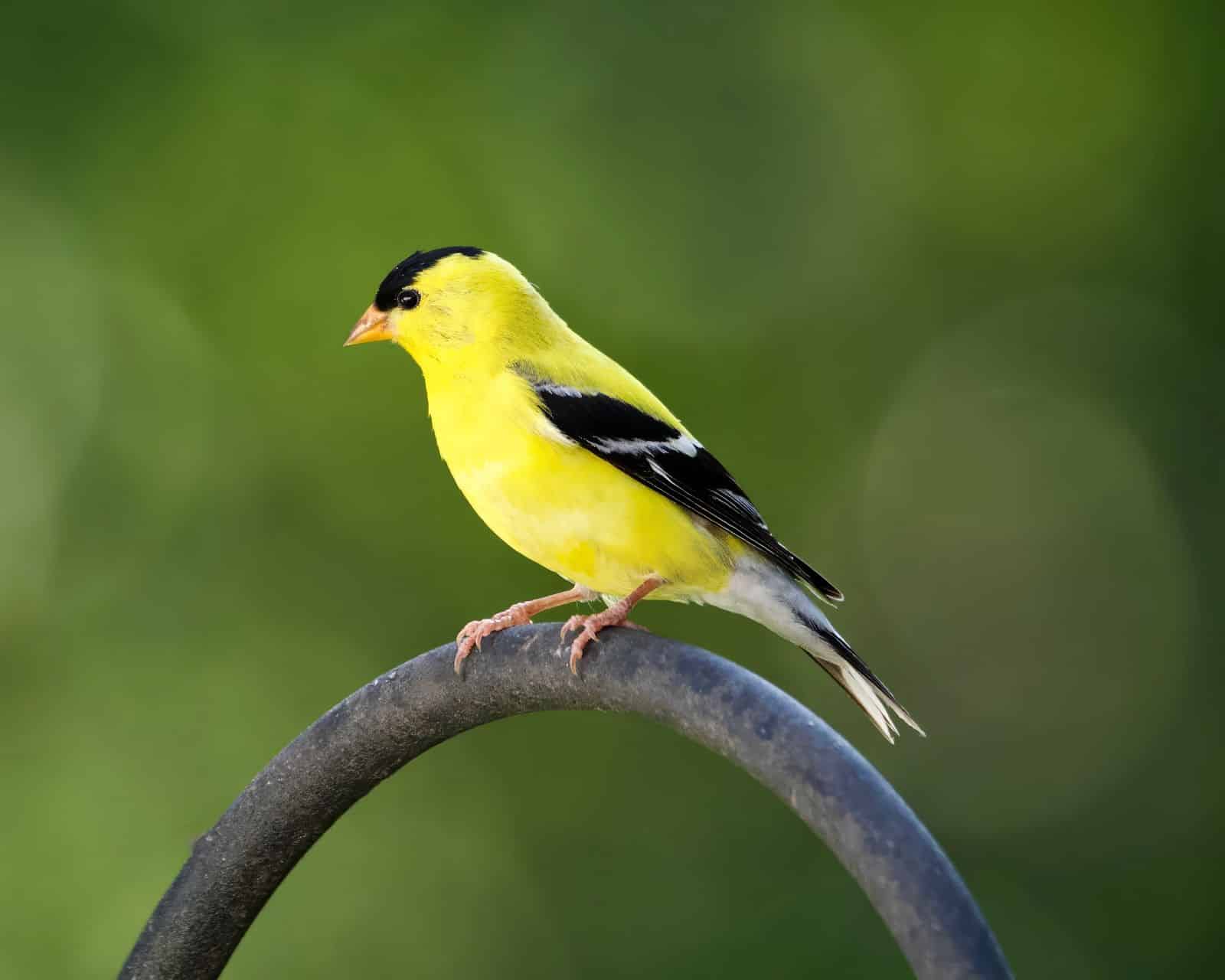
American Goldfinches change their appearance with the seasons. Cornell’s explanation of goldfinch molt describes how the species replaces feathers in spring and autumn. The bright breeding male and the quieter winter bird can look like very different visitors.
Follow the wing pattern
Yellow is an unreliable first clue in November. Look instead at the small finch shape, the short conical bill, and dark wings with pale markings. Cornell’s American Goldfinch identification guide shows the seasonal and sex differences side by side.
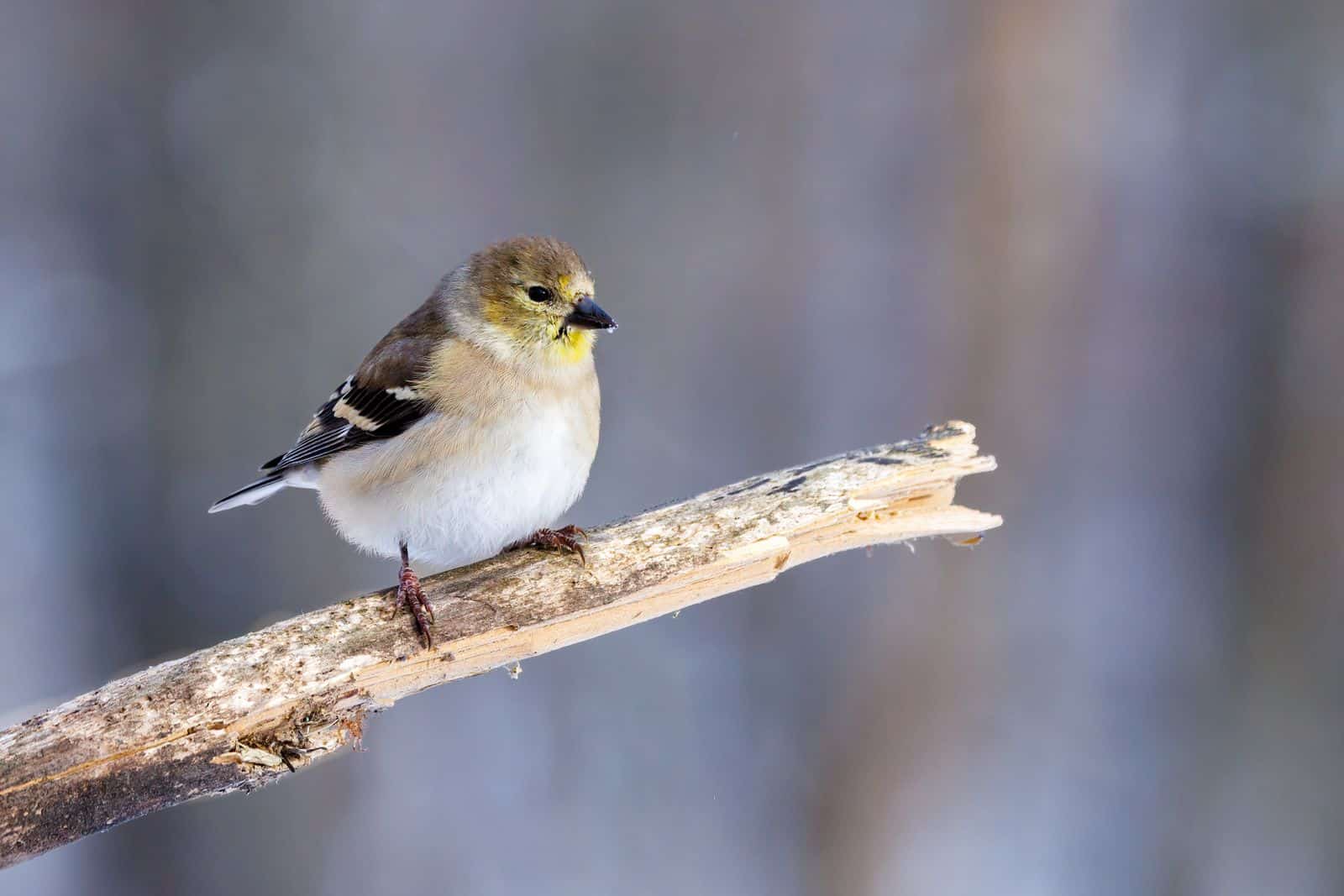
A dull bird is not automatically a female, and a pale bird is not automatically ill. Age, sex, season, light, and the angle of the view all affect the impression. A photograph of the folded wing can be more useful than a fleeting memory of how yellow the breast looked.
The two photographs here show why a summer-only mental picture can be misleading. The winter bird has not simply become a smaller version of the bright male; the balance of colors has changed.
A missing color is not a population count
American Goldfinches do move seasonally, so a change in appearance cannot prove that the same individuals have stayed in your yard. It also cannot establish that a local population has declined. Those are different questions from identifying the bird now in front of you.
The useful observation is modest: compare the birds present with a winter-plumage reference, then keep notes. Our FeederWatch season story explains how repeated observations become more informative than one apparently empty afternoon.
For anyone used to watching hens, molt in chickens is a familiar reminder that feathers are replaced rather than permanently fixed. Goldfinches have their own molt cycle, and their winter disguise is one of the easiest seasonal changes to overlook.


