

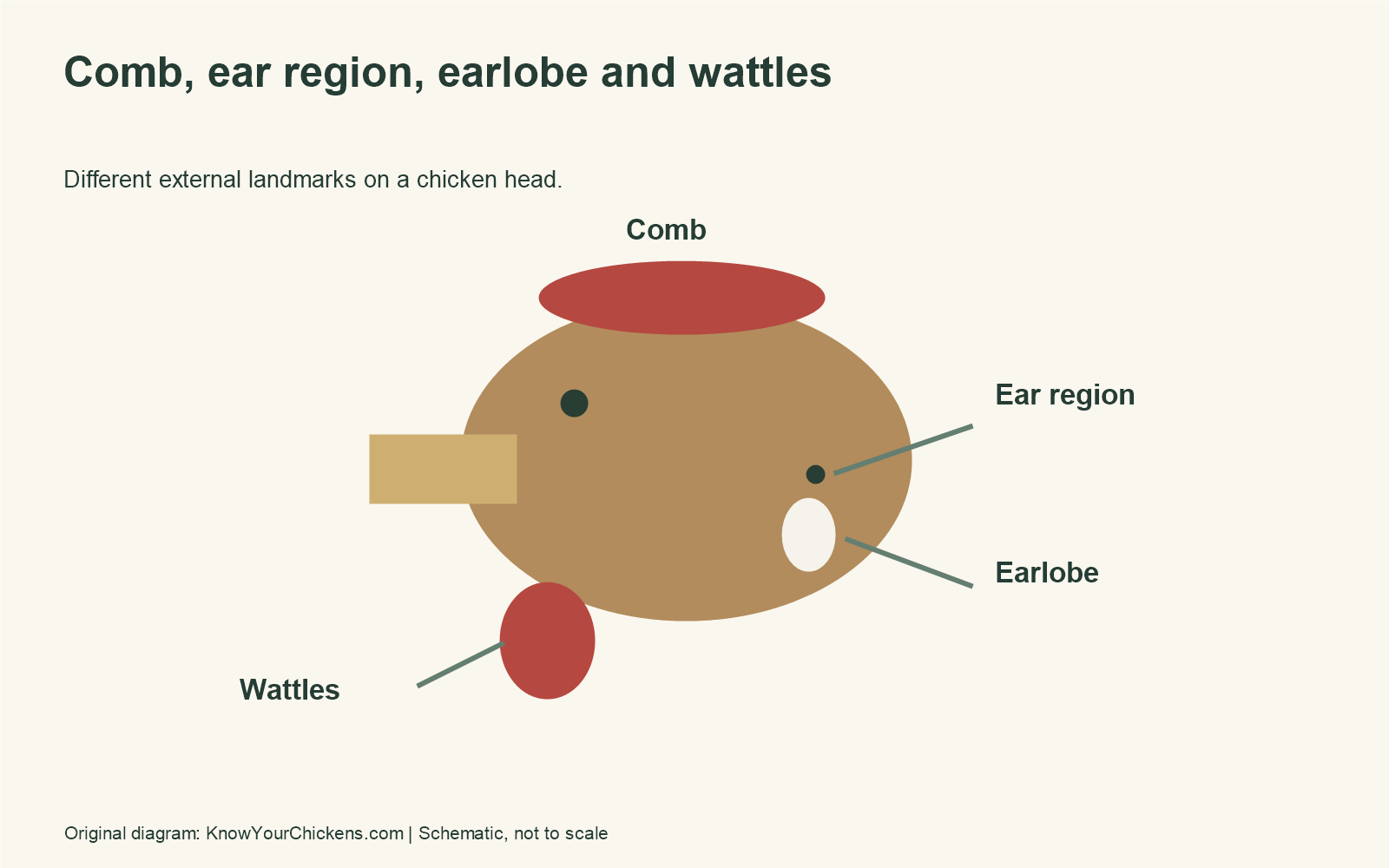
A chicken hears without the conspicuous outer ears of a dog or rabbit. The external opening is on the side of the head and covered by feathers, making it easy to overlook when the eye and bright comb command attention.
The white or red earlobe nearby is not the opening itself. Separating those landmarks makes a head photograph easier to understand and prevents a common confusion between an external patch of tissue and the route into the ear.
Hearing is part of a working social system
The Maryland review of chicken vocalizations and hearing connects auditory anatomy with communication and welfare. A flock’s calls matter because other birds can receive and respond to them, not simply because the sounds are entertaining to a keeper.
The sound-reference article organizes calls, while sounds in context considers the behavior around them. Hearing a call and interpreting its context are linked but different questions.
A hidden opening is not an invitation to probe
Use a photograph or calm external observation to learn the landmarks. A bird shaking its head, showing discharge or seeming uncomfortable needs assessment; do not insert tools or liquids into an ear on the strength of a diagram.
Noise also belongs in the environment. A recording played loudly beside a coop can change the flock’s behavior rather than neutrally reveal what its calls mean. Observe ordinary responses before creating a new disturbance.
Once you know the location, the absence of a mammal-like ear stops looking like an absence of hearing. The feathers conceal the opening, while the flock’s everyday responses to one another show an auditory world that is already busy.


