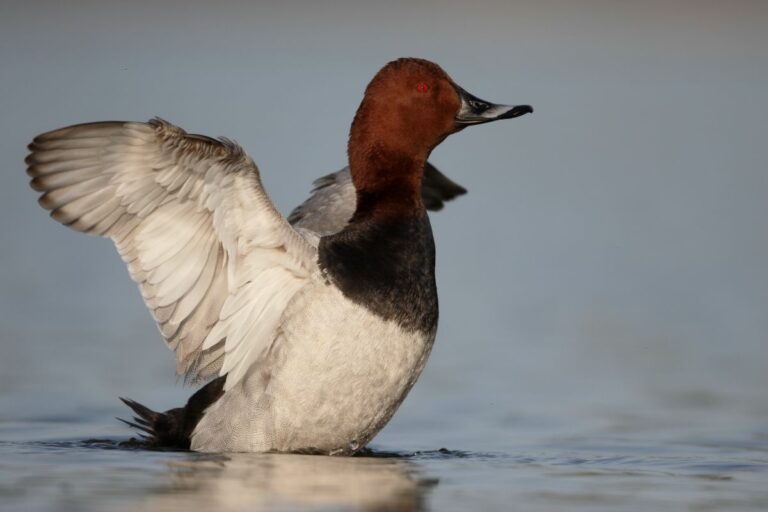

The Call duck’s small, rounded body makes an appealing first impression. Its name points to another part of the story: these ducks were associated with calling that attracted other waterfowl. A tiny bird should not be chosen on the assumption that it will make a tiny contribution to neighborhood noise.
Oklahoma State’s breed account describes the Call as a bantam domestic duck with a distinctive compact form. That scale makes it different from choosing a heavy Pekin, but smallness does not remove the needs of a social waterfowl species.
Hear adults before choosing them
If noise matters, listening to a mature flock is more informative than watching silent sales clips of ducklings. Ask which birds are calling and in what circumstances. Sex, individual behavior and the flock’s routine affect what a listener experiences.
Avoid unsupported decibel comparisons: distance, recording settings and the surroundings alter a video’s apparent loudness. The useful question is whether ordinary adult calling fits the actual setting and neighbors, not whether a small duck looks discreet in a photograph.
Small ducks still need secure resources
Food and water access must be suitable for the bird, and the enclosure needs to prevent escape and predator entry. A domestic duck should not be released into a park if its voice or care requirements become inconvenient.
The pet-duck article examines that commitment. Our duck-type overview also separates domestic breeds from wild visitors; sharing a general duck shape does not make them interchangeable.
The Call’s appeal is precisely that it is a distinctive small breed. A good decision includes its sound and adult routine along with the round face that draws attention first. Meet the living birds, rather than buying only the quiet image.