

Thanksgiving makes turkeys a seasonal symbol. Outside, wild turkeys are following a different calendar: moving between food and shelter, gathering in flocks, and making use of the autumn landscape.
The Maryland Department of Natural Resources’ Eastern Wild Turkey profile describes birds that can thrive in a mixture of woods and agricultural land. A flock near houses is not automatically lost simply because the setting looks more suburban than a picture of deep forest.
The flock is part of the season
The social arrangement changes through the year. The Illinois Natural History Survey’s account of turkey behavior describes autumn groups organized around hens and young, with males forming other groups. A collection of birds crossing the same lawn can have a social history, not just a shared interest in that patch of grass.
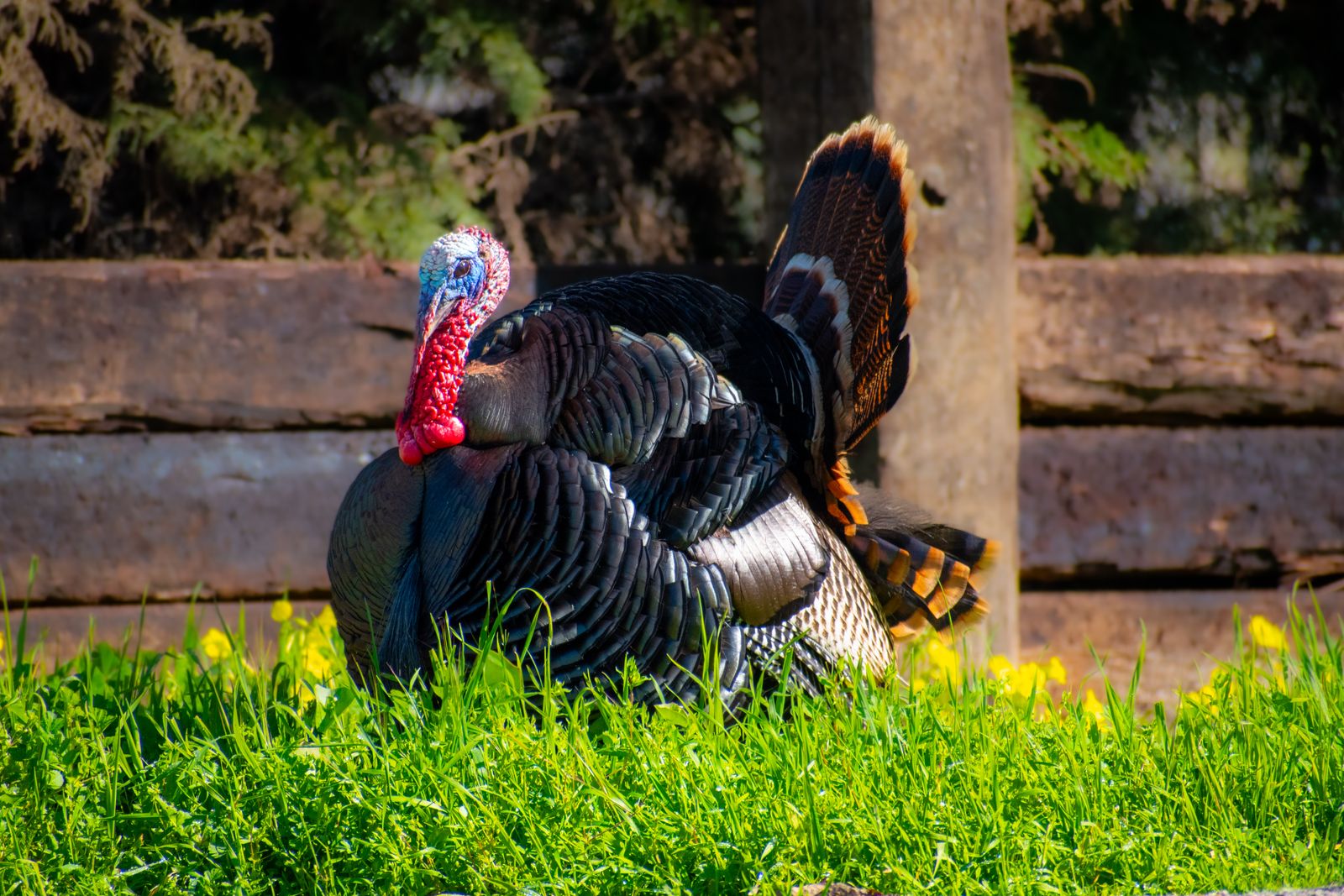
Food helps explain the route. The Pennsylvania Game Commission’s turkey account describes a broad diet that includes seasonal plant foods. Autumn observations make more sense when you notice the surrounding trees, fallen nuts, and woodland edge rather than look only at the birds.
A flock can use an area and move on. One visit does not establish that the birds have permanently settled in a garden, and a larger gathering does not by itself prove a sudden population increase.
Admiration does not require a handout
Seeing wild turkeys near poultry calls for the same boundary as other wildlife: do not encourage them into the hens’ feed or water. The USDA’s poultry wildlife guidance recommends reducing wildlife access around domestic birds.
Keep a respectful distance and follow local wildlife advice if birds become persistent around homes. Feeding them to obtain a closer photograph changes the encounter and can encourage an unwanted routine.
Our article on winter garden habitat considers another part of the seasonal landscape. Turkeys operate on a larger scale than a finch working a flower stem, but both encounters are easier to understand when the habitat is part of the story.
For today’s outdoor turkey sighting, the interesting question may be where the flock is heading next—and what food or cover lies along that route.


