

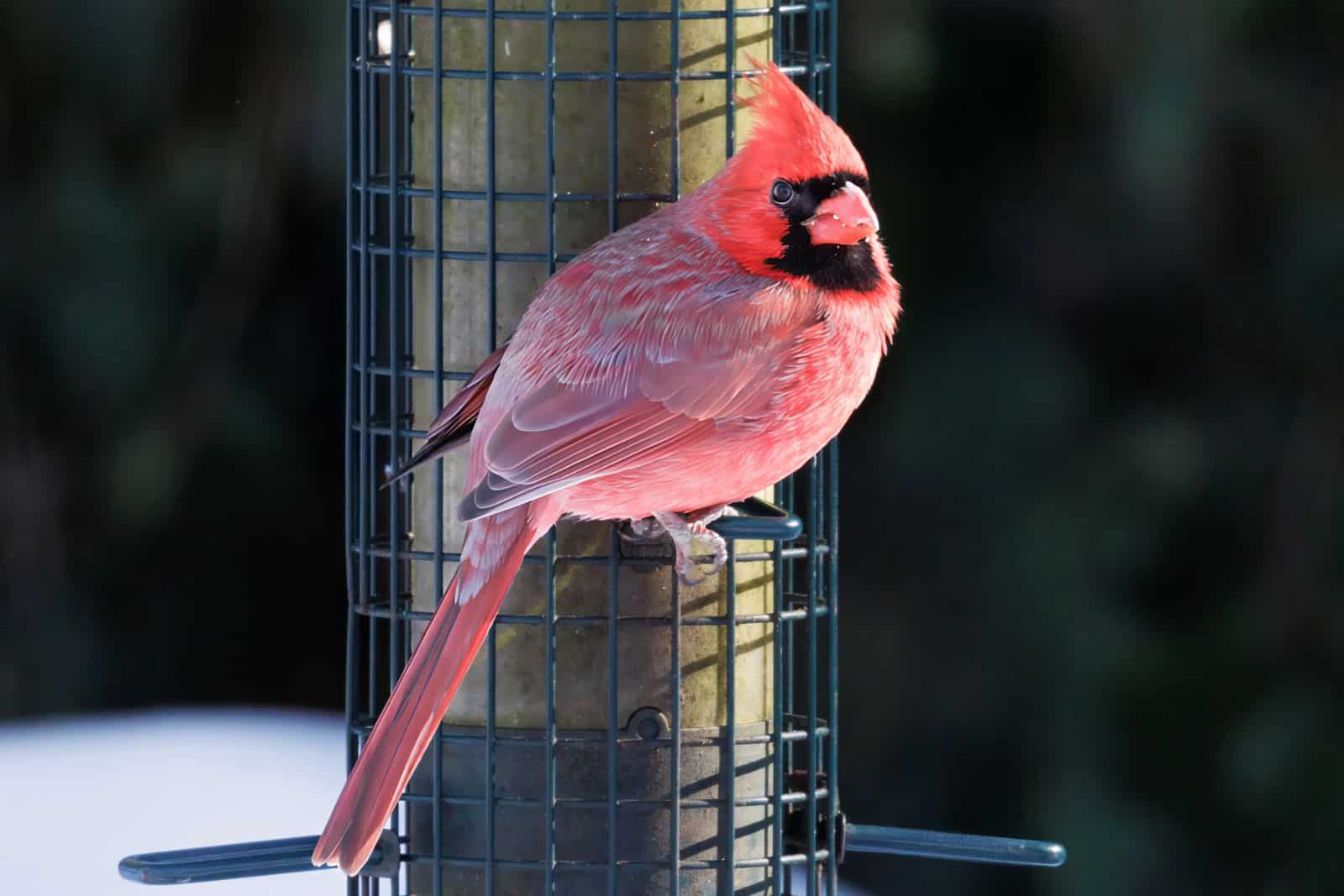
The feeder makes the birds visible to you. The window behind it may be much less visible to them.
Glass can reflect trees and sky or seem to offer a clear passage through a building. A bird leaving a feeding area can therefore aim toward what looks like habitat and meet a solid surface instead. The useful November inspection includes the view from outside, not just the view from the armchair.
The National Park Service’s bird-safe glass guidance explains why closely spaced visual markers work better than one or two decorative decals. A single hawk silhouette leaves most of a large pane looking open.
Treat the surface birds encounter
Effective patterns belong on the outside of the glass and need to cover the hazardous area. The Ornithological Council’s window-collision guidance, reproduced by Ornithology Education, describes exterior patterns no more than two inches apart and the use of external screens.
The spacing is easy to underestimate. A handful of stickers scattered over a broad window is a different treatment from a consistent pattern across it. Follow the dimensions and installation instructions for the chosen bird-safe product rather than treating any mark on the glass as equivalent.
Feeder placement is another factor, but distance alone does not make reflective glass disappear. Reviewing the whole window also benefits birds using nearby shrubs or a garden without a feeder.
The best viewing spot may need a change
Stand outside at different angles and notice what is reflected: a tree behind you, an opening through the house, or bright sky. The attractive position chosen for close photographs may be beside the very pane that needs attention.
Our FeederWatch article explains how observing a regular site can contribute to research. Making that site safer is a companion task, not a competing one.
On poultry properties, also keep wild-bird activity away from the hens’ feeding and living areas. A safer window does not remove the separate need for poultry biosecurity. Both questions can be considered before the winter viewing routine becomes established.


