

A small bird has landed on the trunk and is walking the wrong way. Head down, feet gripping the bark, it investigates the tree as comfortably as another bird might inspect a level branch.
In much of North America, a compact bird with a pale face and breast, gray back, and that distinctive movement may be a White-breasted Nuthatch. Arizona State University’s Ask A Biologist species account highlights its ability to move headfirst down trunks and along the undersides of branches.
The trunk is a feeding surface
This is not just an acrobatic route to the ground. Cornell’s White-breasted Nuthatch life-history account describes birds working upward, downward, and sideways over trunks and large branches while searching for food. Crevices in bark are part of the landscape they use.
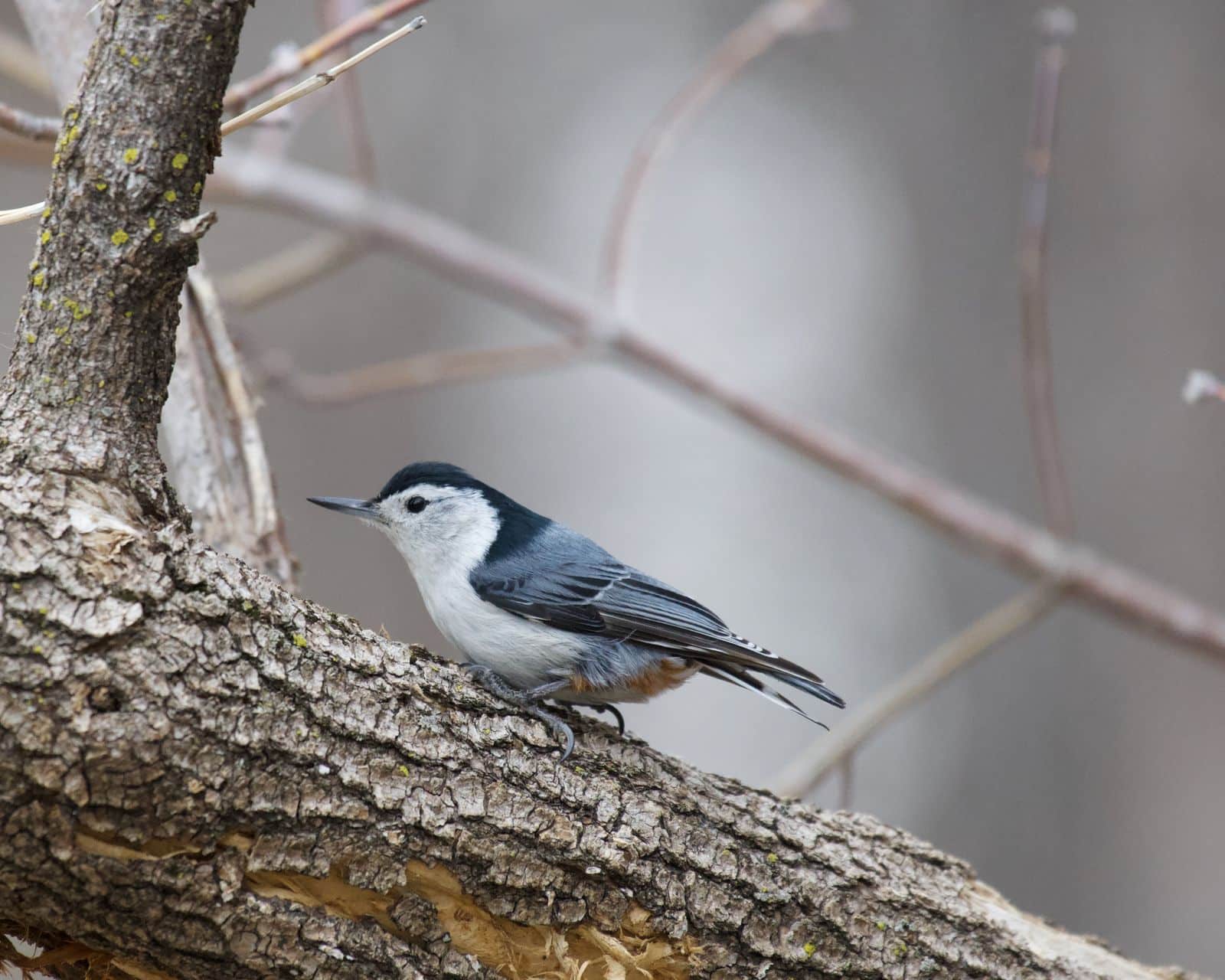
That means the bird may be worth watching after it leaves a feeder. The conspicuous stop for a seed can be only a brief interruption in a much larger circuit through the trees.
Its posture is also a useful identification clue when winter light makes color difficult to judge. First notice the compact shape and movement; then look for the facial pattern, bill, and plumage details. The Maryland Department of Natural Resources profile provides another species reference.
Headfirst is a clue, not the whole identification
Other nuthatches also travel down trunks. A Red-breasted Nuthatch, for example, is not simply a White-breasted Nuthatch seen in warm light. Size, face markings, breast color, range, and calls help distinguish the species. Use a regional guide rather than assigning a name from movement alone.
In a mixed winter group, the behavior contrasts nicely with the hopping juncos on the ground and the quick arrivals and departures of chickadees carrying seeds. Looking at where each bird searches often reveals more than waiting for every visitor to pose in the same place.
The next time a pale little bird vanishes behind a trunk, give it a moment. It may emerge around the side, below where it started, still investigating the same strip of bark.


