

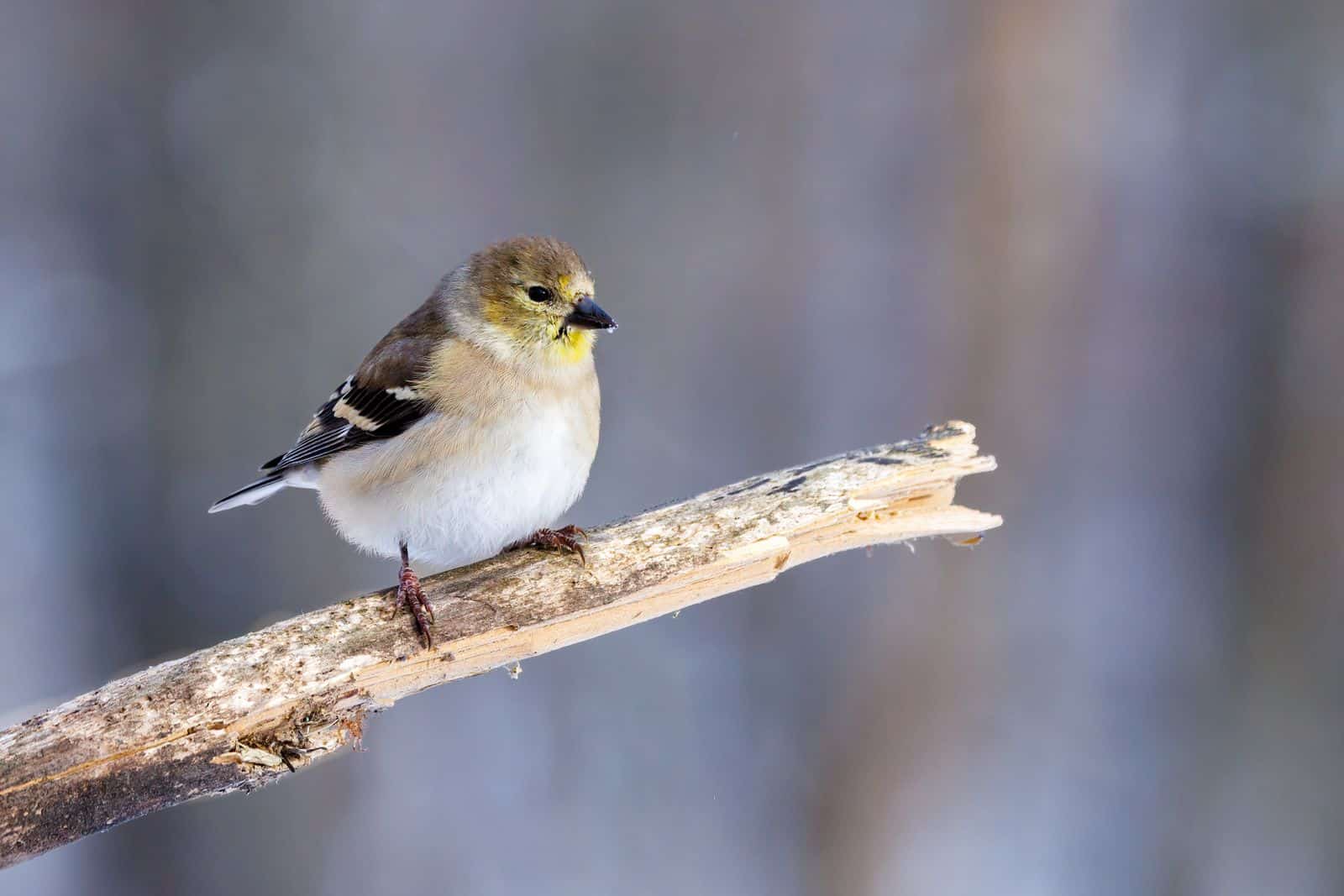
A red cardinal against bare branches and a brownish goldfinch at the same feeder seem to be following different seasonal rules. They are.
The comparison is between a male Northern Cardinal and the familiar bright breeding male American Goldfinch. Females and young birds complicate both pictures, so “red bird versus yellow bird” is a useful opening observation, not a complete identification method.
Cornell’s Northern Cardinal overview notes that cardinals do not migrate away for winter and do not switch into a distinct dull winter plumage. A resident male can remain a conspicuous red presence when the leaves are gone.
Red feathers can look brighter as they wear
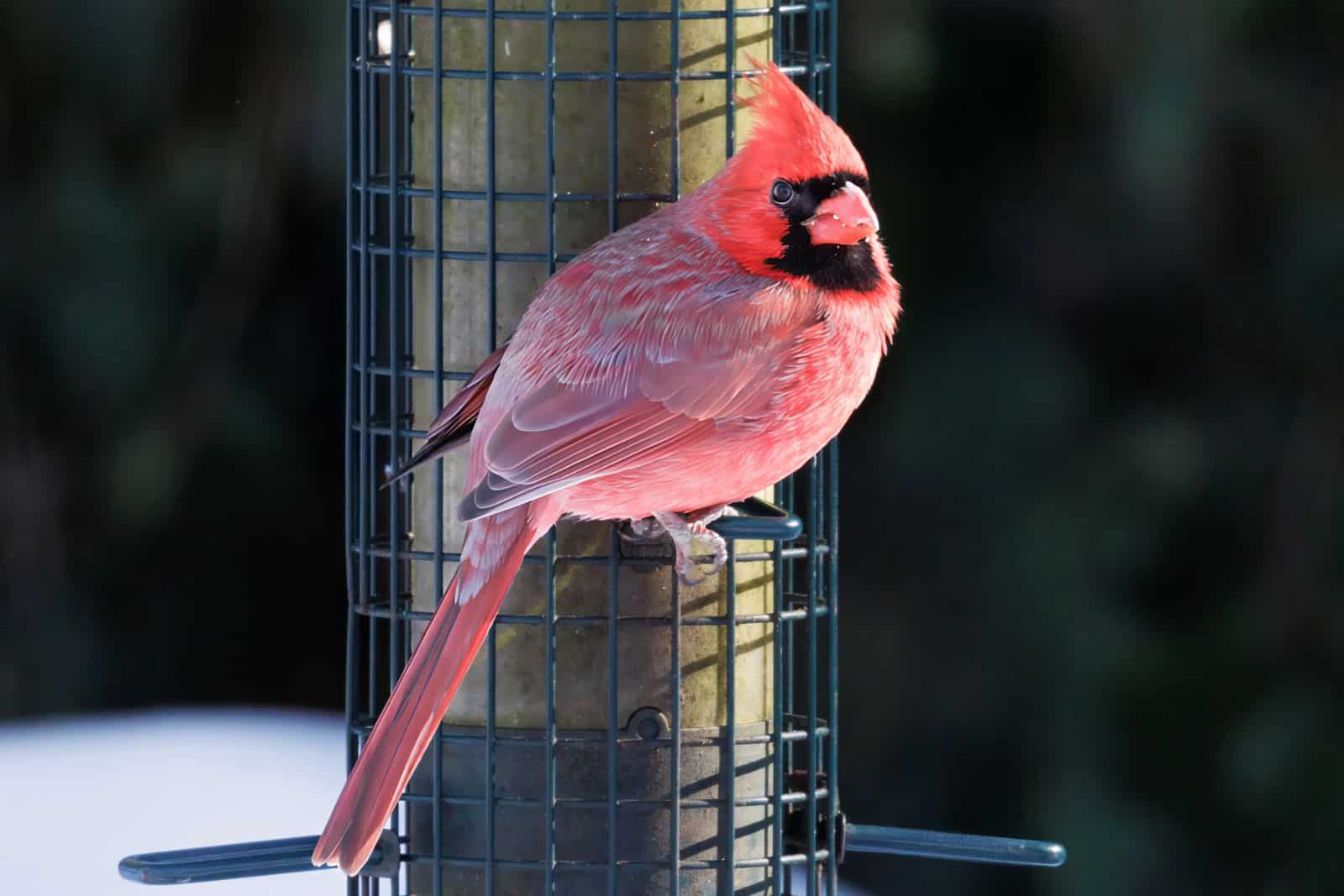
That does not mean a cardinal’s appearance is identical every week. In Cornell’s explanation of winter cardinal color, newly grown feathers can have grayish tips, particularly on the neck and back. As those tips wear, more of the red becomes visible.
It is a different mechanism from replacing the plumage with an entirely new yellow outfit in spring. The timing of feather growth and the subsequent wear both affect the color the observer sees.
Snow also creates a striking background, but the winter effect is not simply a photographic illusion. The plumage itself changes in appearance as those feather edges wear.
Goldfinches make a more obvious seasonal change
American Goldfinches replace feathers in autumn and again partially in spring. The Minnesota Department of Natural Resources profile describes the contrast between bright breeding males and the species’ subdued autumn and winter look.
For identification, that makes wing pattern and shape especially useful when the yellow is muted. Our winter goldfinch article includes photographs of both appearances. A quiet-colored goldfinch is not evidence that the colorful summer birds have all vanished, although individual birds may also move seasonally.
Two changes worth separating
One bird can reveal more color through feather wear; another can look different after a seasonal feather replacement. Neither should be explained simply by saying all birds put on brighter colors for warm weather and lose them for cold.
That distinction also makes winter watching more interesting. A notebook entry can record appearance as well as presence: red still obvious, pale feather edging visible, goldfinches much less yellow. Over several weeks, those details describe a changing season even when the species list stays the same.
If the rounded shape of a visitor is the part that looks different, fluffed feathers on cold mornings explain another change entirely. Color, outline, and seasonal movement are separate clues, and observing all three is more reliable than relying on the most vivid one.


