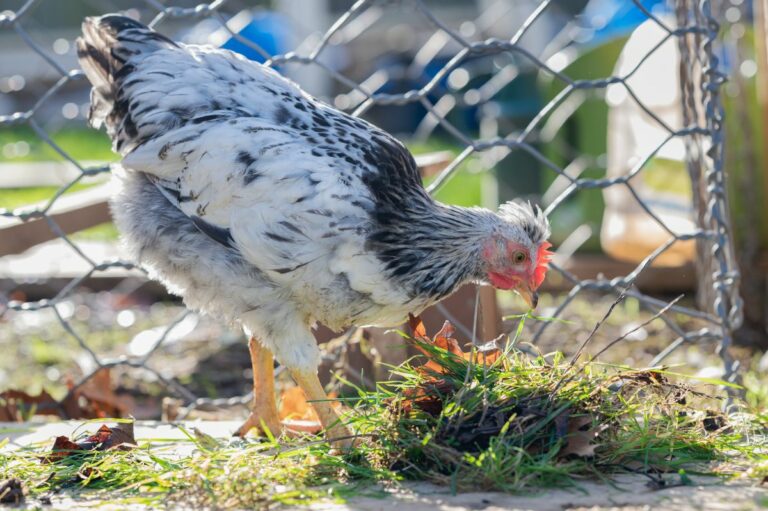

The La Fleche’s comb can look like two red horns rising from the head. That striking V shape makes the French breed memorable before the rest of its long-bodied outline is considered.
The Livestock Conservancy describes La Fleche as a distinct French breed with a history associated with table-poultry production. Its appearance should not reduce the bird to a novelty comb or a supernatural nickname.
Comb forms are genuinely diverse
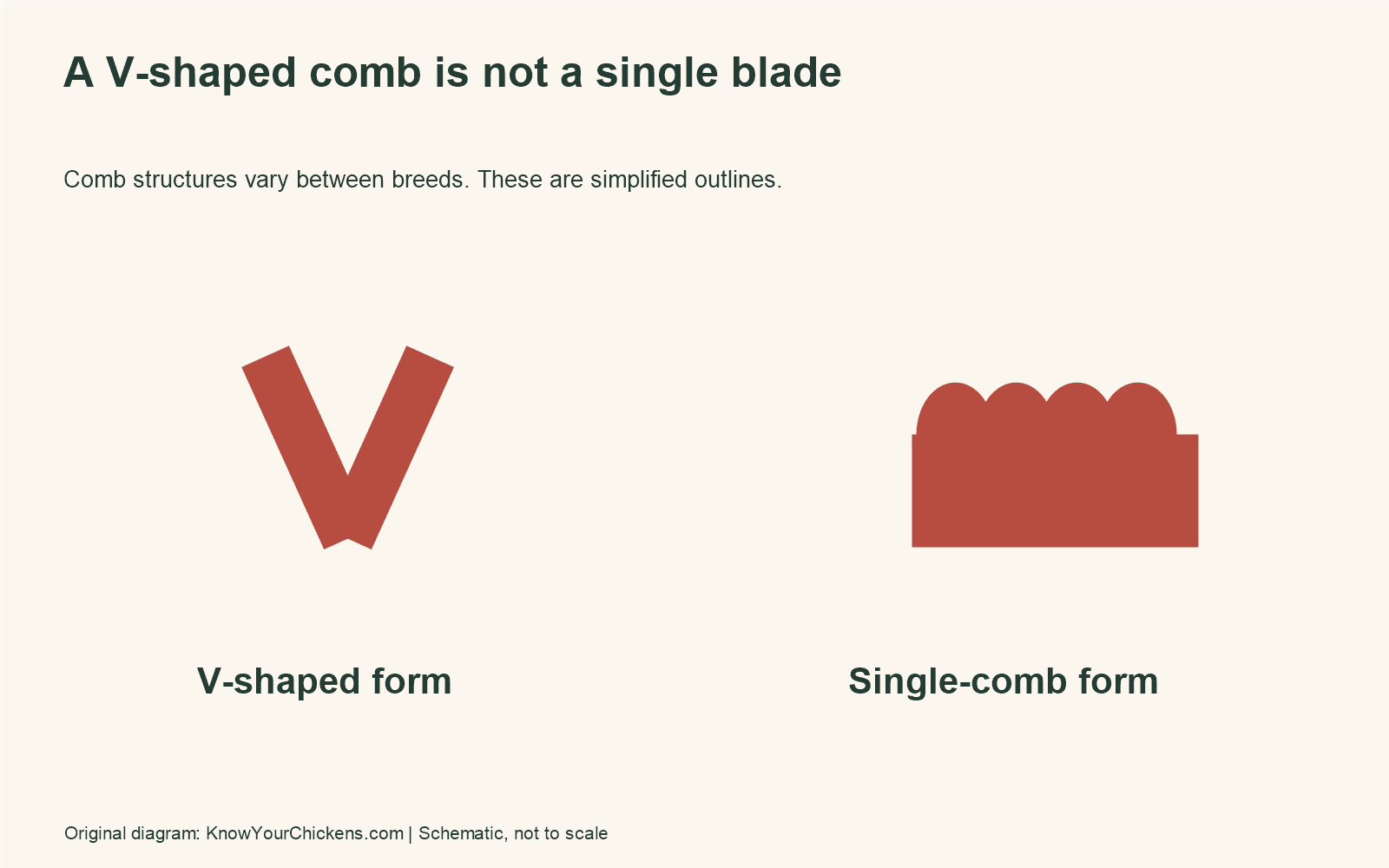
A single comb, rose comb, pea comb and V-shaped comb are different external forms. The diagram compares the V outline with the more familiar single blade. It simplifies the structures so the difference is visible, rather than attempting a complete breed portrait.
One feature still does not settle every identification. A photograph may leave body type, age and origin unknown. Ask about the breeder’s stock and records instead of assigning a breed from a dramatic head close-up alone.
A historic purpose changes the comparison
The La Fleche belongs in a discussion of poultry developed before modern commercial meat crosses. Our meat-breed comparison explains why growth and production expectations need context. A rare traditional breed should not be evaluated only by the timetable of a different type of bird.
Someone choosing it for a backyard should also consider activity, secure space and climate, as with other breeds in our selection guide. The V-shaped comb is an excellent reason to become curious, but housing and long-term care still concern the complete chicken beneath it.
The breed already supplies an unusual anatomical detail and a particular history. Those are enough to make it interesting without inventing extra drama around the shape of its head.