

A red dot beside the yolk and a small brown fragment in the white can both make someone stop cooking. They are commonly grouped together as “spots,” but the visible material can have different origins.
Neither is evidence that a chick has started growing. University of Kentucky poultry specialist Jacquie Jacob explains that blood can enter an egg while it is being formed. Fertility is a separate question from the presence of a blood spot.
Where the material entered matters
A small vessel can break around ovulation, leaving blood associated with the yolk. Spots in the albumen, away from the yolk’s surface, can originate farther along the oviduct. The USDA Egg Grading Manual explains that meat spots may be tissue from the reproductive organs or blood spots that have lost their red color. The brownish appearance does not make the material a tiny piece of chicken meat added to the egg.
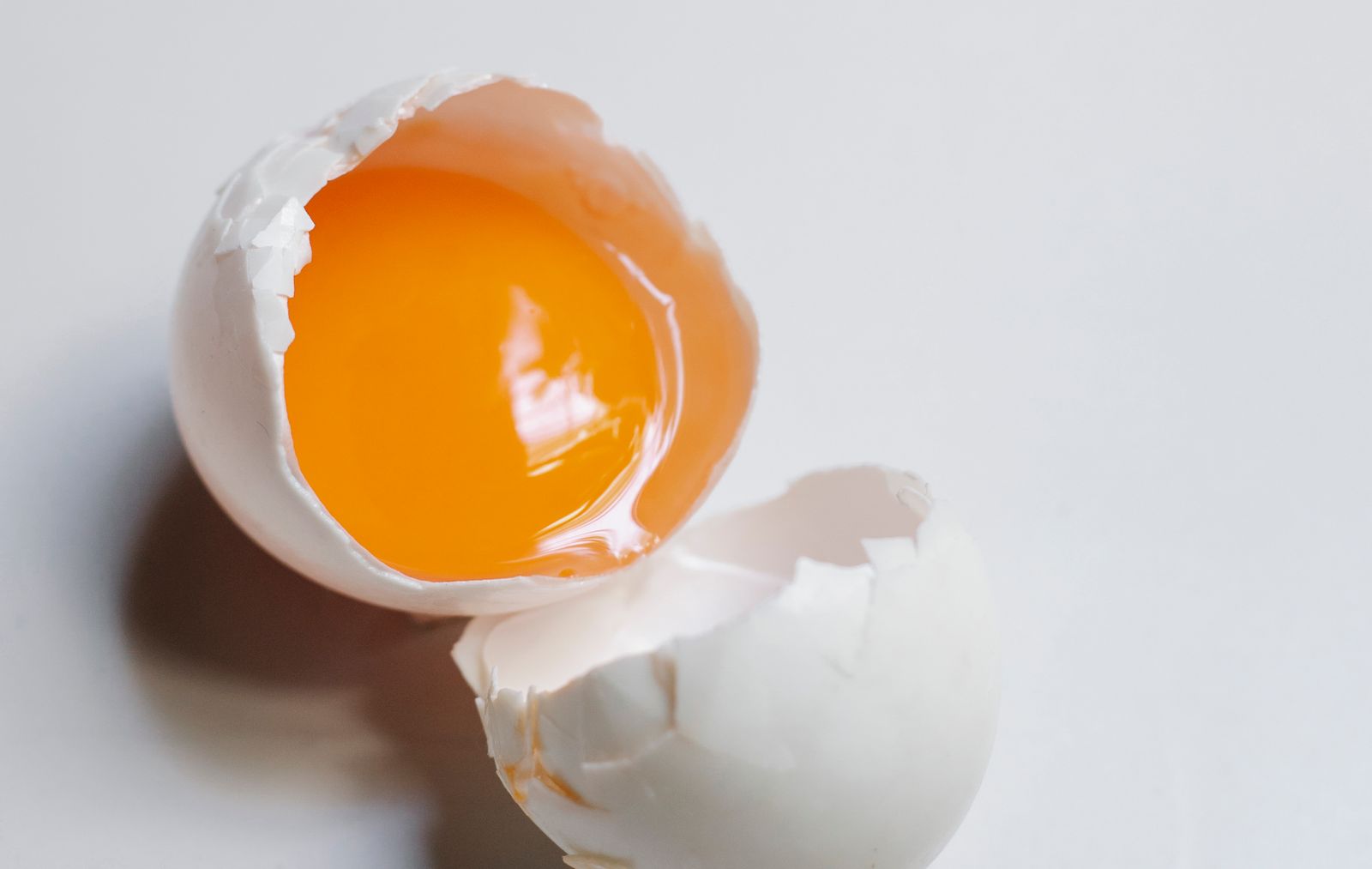
Our egg-development article follows the larger sequence. The yolk begins in the ovary, while the white, membranes and shell are added later. Something introduced at one stage can therefore end up in a different position from material introduced at another.
Appearance and food handling are separate questions
The USDA explains that an ordinary blood spot does not make an egg unsafe. Removing a small spot for appearance, however, is not a substitute for safe storage and cooking. It also does not apply to every unusual color, smell or broadly discolored egg white.
The FDA’s egg-safety advice remains relevant to eggs that look completely normal: keep eggs appropriately refrigerated and cook them thoroughly. A spotless yolk cannot show whether harmful bacteria are present.
A recurring pattern deserves better notes
If spots become frequent, record which hen is laying the affected eggs, how often it happens and whether anything else has changed. Housing, feed, age and other factors can influence the occurrence; a single opened egg cannot distinguish them all. Our egg-storage article covers what happens after collection, a different part of the story.
For the kitchen surprise itself, the useful distinction is simple: blood and tissue can be incorporated during egg formation. Their presence should not be turned into a fertility test or a story about an embryo that the evidence does not support.


