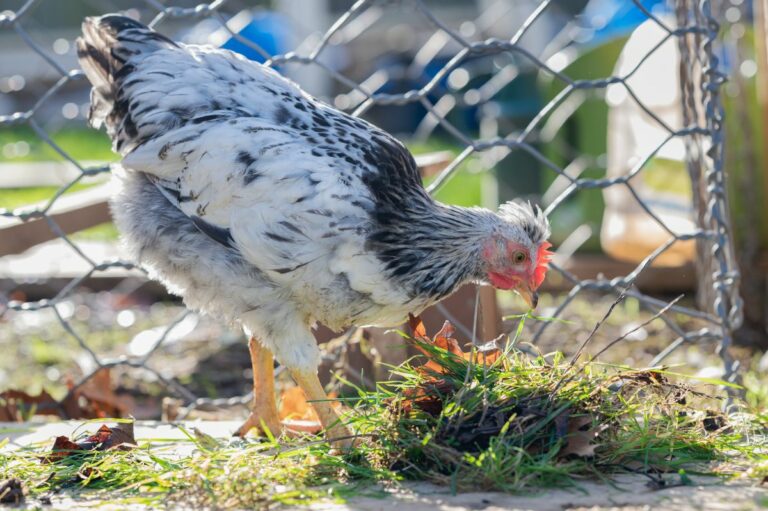

The Russian Orloff’s name seems to supply a complete origin story: a Russian chicken associated with a Russian count. The documented history is less tidy and more interesting, with a Persian connection behind the familiar label.
The Livestock Conservancy describes early Persian Gilan birds and the later role traditionally credited to Count Alexey Orlov in promoting and developing the population in Russia. Details of the suggested crosses should be kept separate from the better-established sequence of places and names.
Recognition did not guarantee permanence
The Conservancy records the breed in the American standard from 1875 to 1894, followed by removal after limited popularity. That makes the Orloff a useful example of how poultry history includes setbacks as well as introductions. A breed can survive through smaller breeding groups even when it does not remain a dominant commercial or exhibition choice.
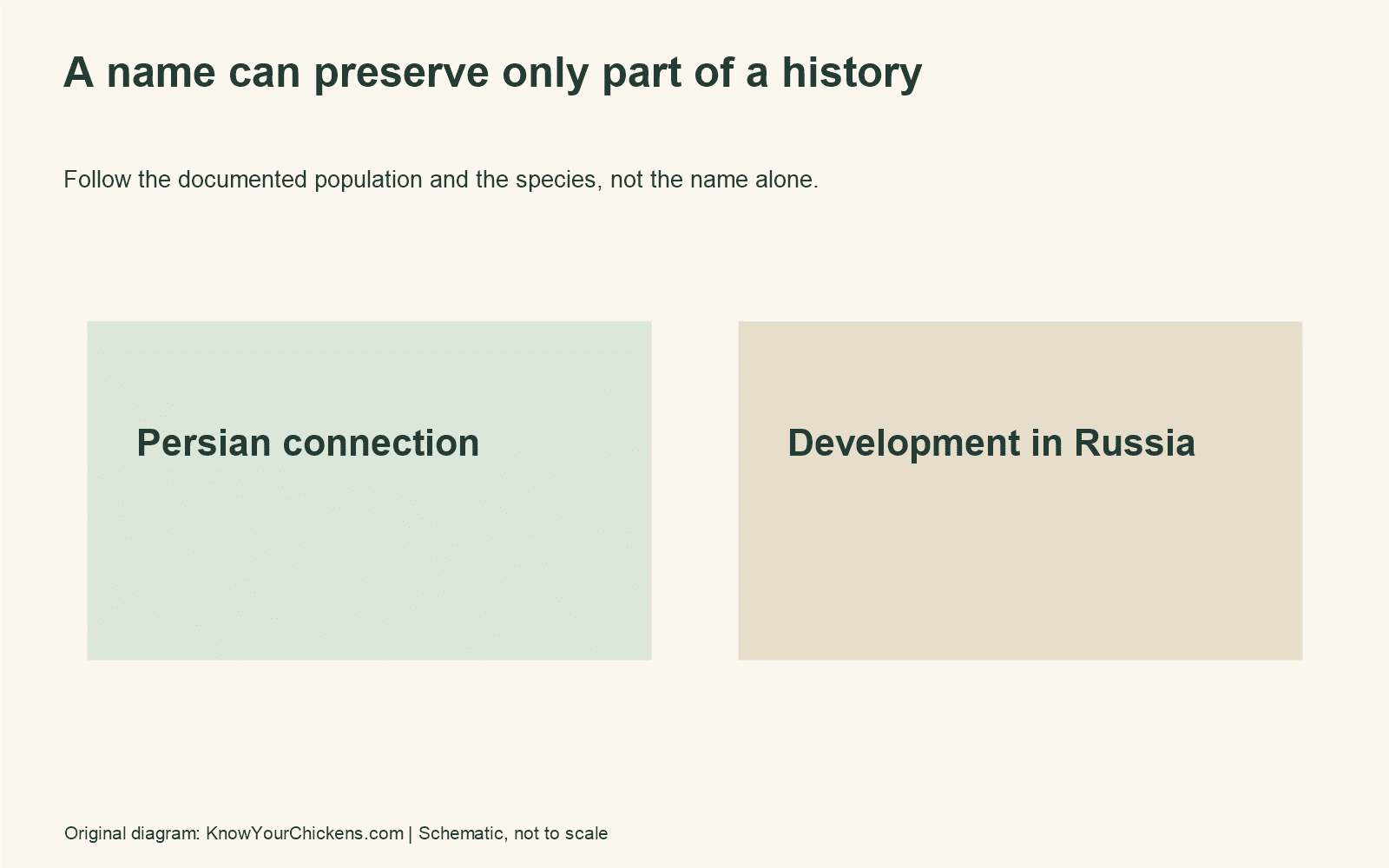
For a present-day buyer, documentation matters more than the romance of the name. Ask which birds make up the line and what the breeder has maintained. A suggestive name on an assorted-chick label is not a complete breeding record.
Cold tolerance belongs to the whole bird
The breed’s reputation includes hardiness and tolerance of cold conditions. Those tendencies do not remove the needs discussed in our winter-care article: dry shelter, water, appropriate feed and observation of the individual.
Nor should a striking head or upright appearance be used to infer one guaranteed personality. The temperament discussion separates breed tendencies from the experience of handling a particular bird.
The Orloff’s strongest discovery story is already in its history. Following the Persian and Russian connections gives the name depth without inventing certainty where records leave questions. The modern bird is the living result of that developing population, rather than a nationality label translated directly into feathers.