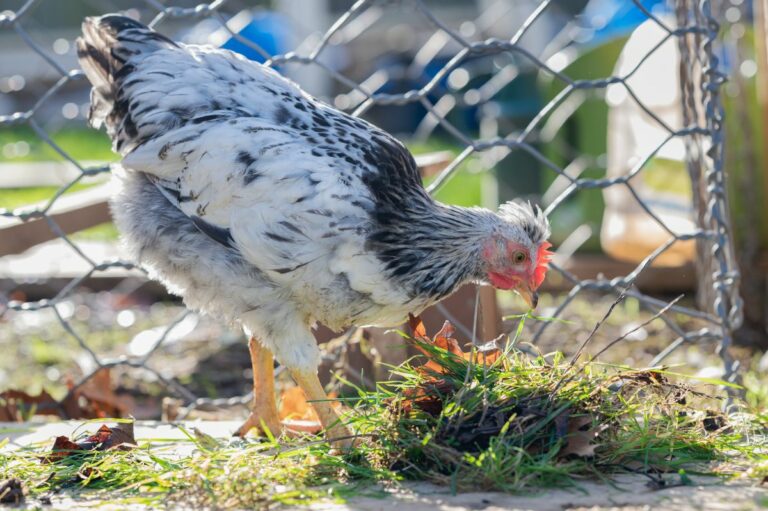

Count a Dorking’s toes and a familiar chicken outline gains an extra detail. The breed is among the chickens associated with five toes, alongside a substantial body and a long history as a table bird.
The Livestock Conservancy records the Dorking’s historical importance. Its antiquity attracts stories about Roman poultry, but those stories should not be used to claim an uninterrupted, fully documented pedigree for every modern bird.
A useful trait, not a complete identity
Five toes do not identify a Dorking on their own. Other breeds share the trait, including the Faverolles. Breed assessment also considers overall type, plumage variety, comb and documented origin. A close-up of one foot leaves most of that evidence outside the frame.
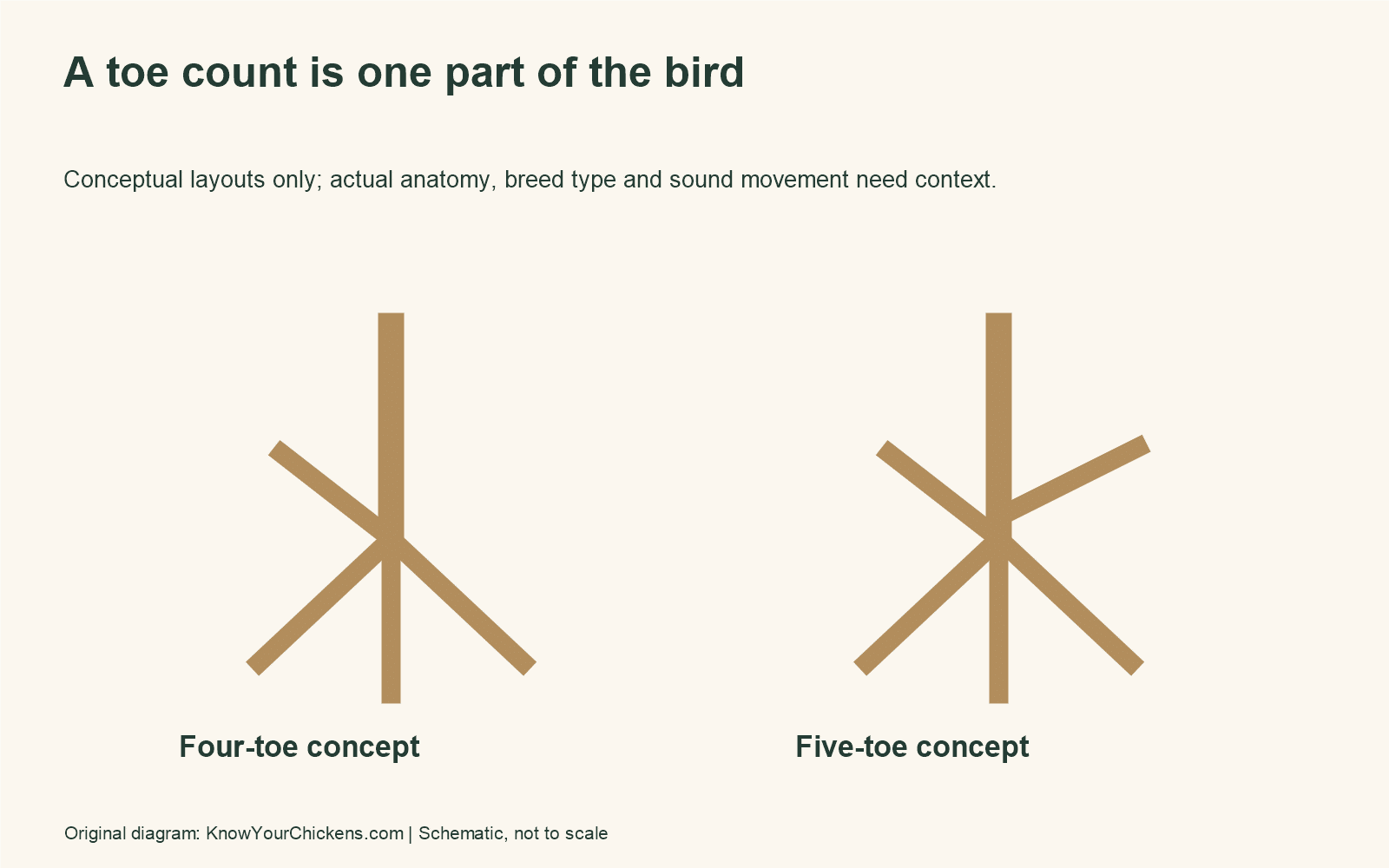
The schematic illustrates an extra toe conceptually. Actual feet should be assessed for soundness and comfortable movement, not simply counted as a curiosity. An injured or malformed foot raises a health question separate from breed identification.
Utility shaped the body
The Dorking’s history as a meat bird belongs to a period before today’s fast-growing commercial crosses dominated that role. Our meat-chicken comparison explains why growth pattern and production aims differ between breeds and modern crosses.
Someone maintaining Dorkings may be selecting for breed type and preservation as well as household utility. Ask a breeder about mature birds, mobility and breeding records rather than judging the flock only by how quickly youngsters reach one weight.
A recognizable foot trait can be an excellent starting point for curiosity. It becomes a more useful breed story when connected to the whole bird and its history, rather than treated as proof that any five-toed chicken must be a Dorking.