
The bedding is dry over most of the floor, yet one patch beside the drinker needs replacing repeatedly. The wet area may be treated as a cleaning chore when it is also a clue about where water is escaping.
Leaks, tipping and splashing are different possibilities. Observe the drinker before and during use. Water appearing while no bird is nearby suggests a different investigation from water thrown out as the flock gathers around an unstable container.
Clean material will not repair the source
The Minnesota winter-care guidance connects moisture management with manure removal and ventilation. Persistent wet material needs attention in its own right, but a continuing water supply can recreate the patch after every cleanup.
Check the equipment according to its instructions, including connections and its supporting surface. A raised drinker should remain safely accessible rather than solving spills by making water difficult for smaller or less mobile birds to reach. Our waterer discussion compares the practical implications of different designs.
Track where wet feet go next
Birds moving through the same damp patch can carry material into resting areas or nest boxes. Look at the route from the drinker rather than only the circle immediately beneath it. Layout changes may alter traffic as well as spillage.
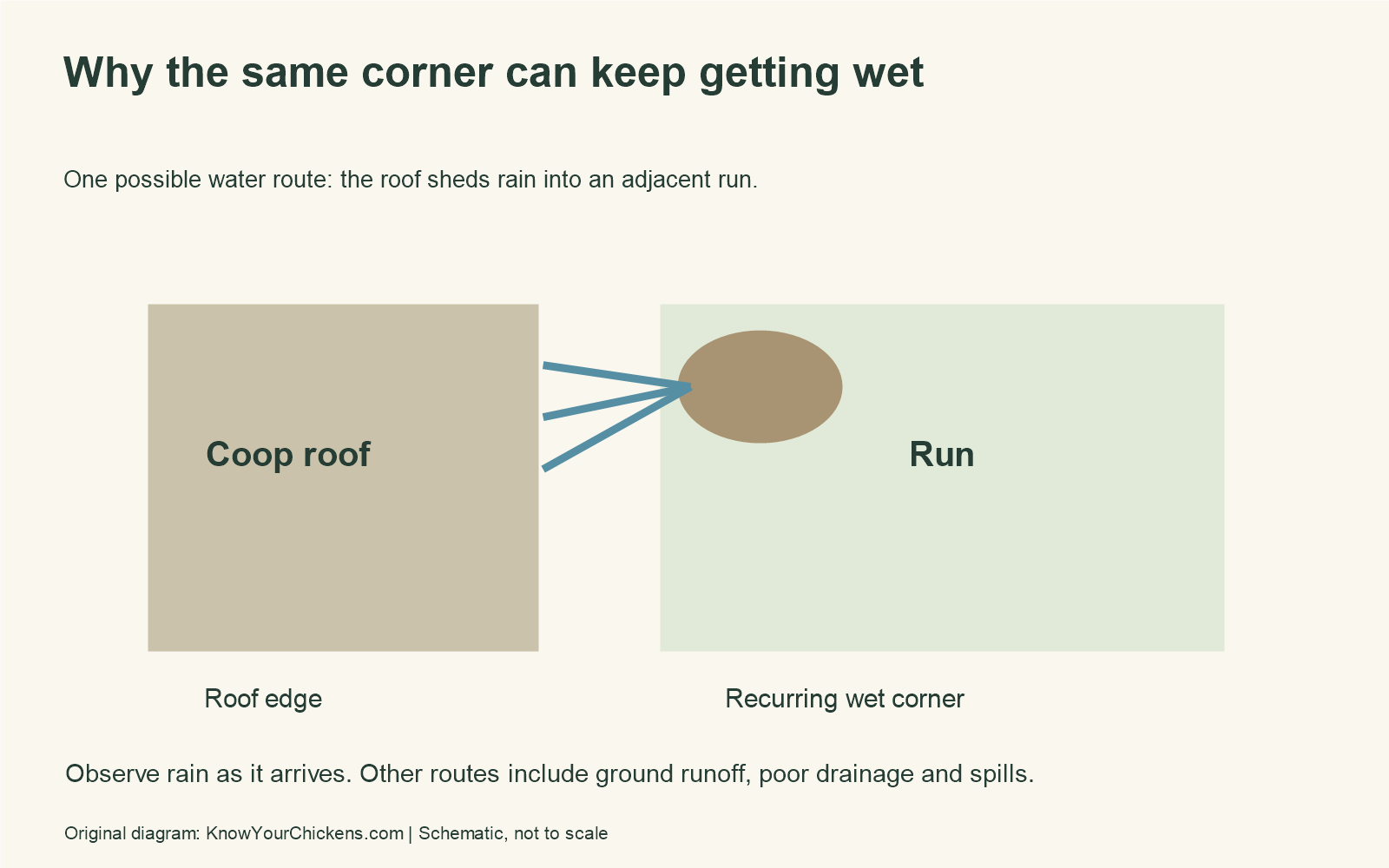
The schematic illustrates a water pathway generally; the actual source must be observed in the particular coop. Do not assume that every wet patch is a leak if rain can enter nearby or drainage brings water through the wall.
Our deep-litter article covers the limits of burying wet material. Once the source is identified, a useful comparison is whether the next fresh bedding stays dry under normal use. That tells you more than whether the cleaned patch looked good for a few minutes.