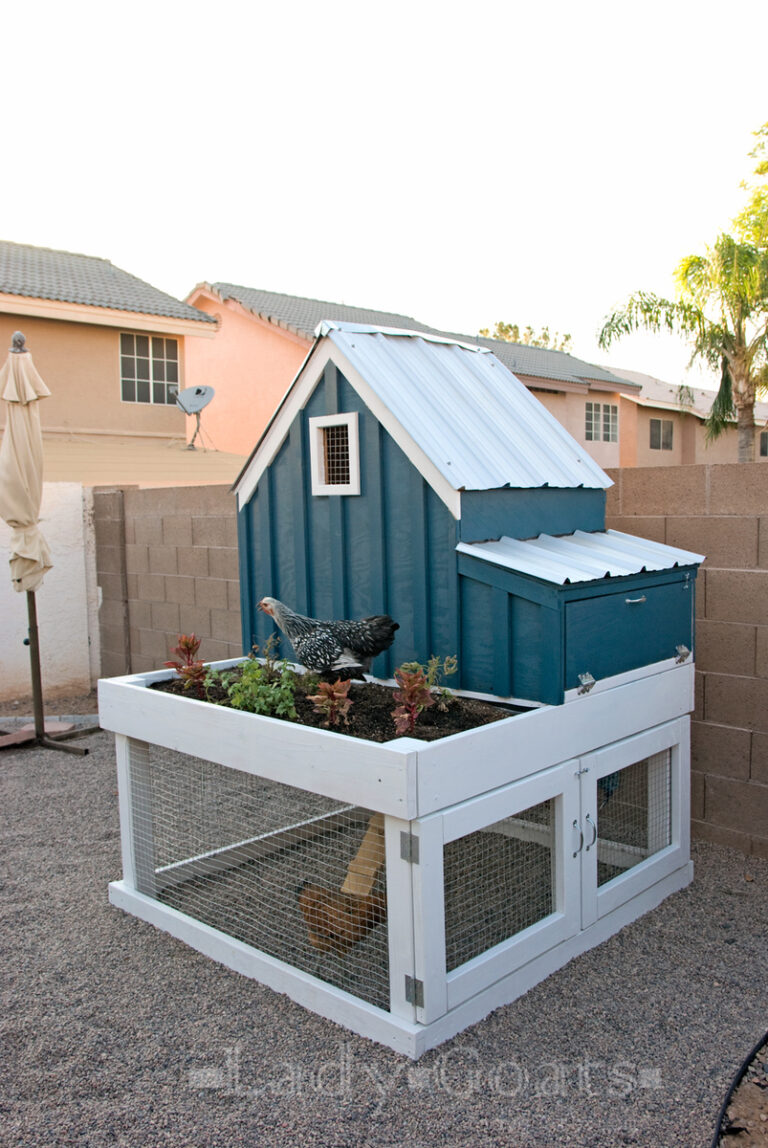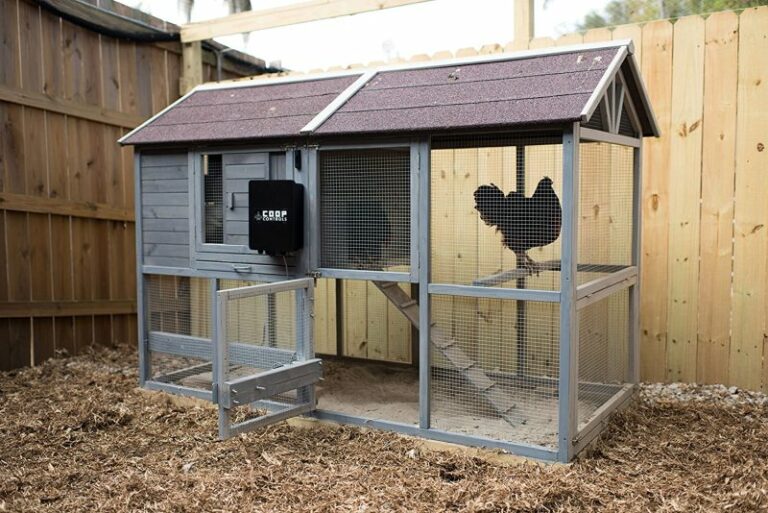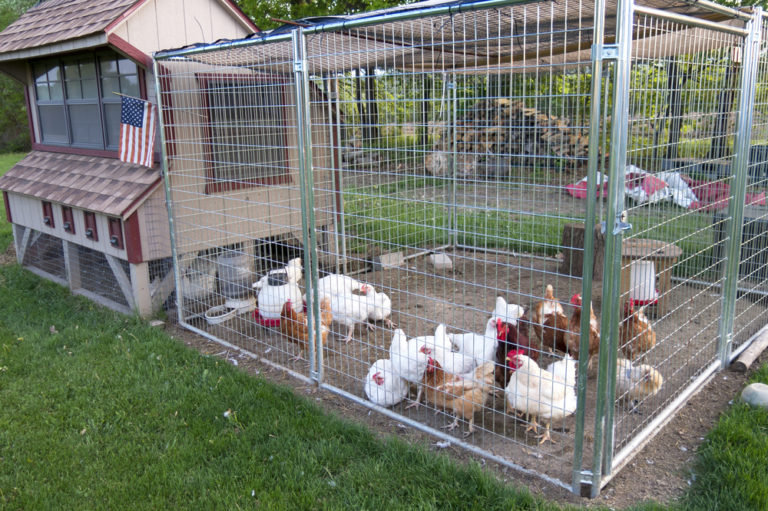

A ramp that works on a dry afternoon can feel very different after rain. Water, mud or ice changes the contact between a chicken’s feet and the surface. The route has the same dimensions, but it is no longer the same footing problem.
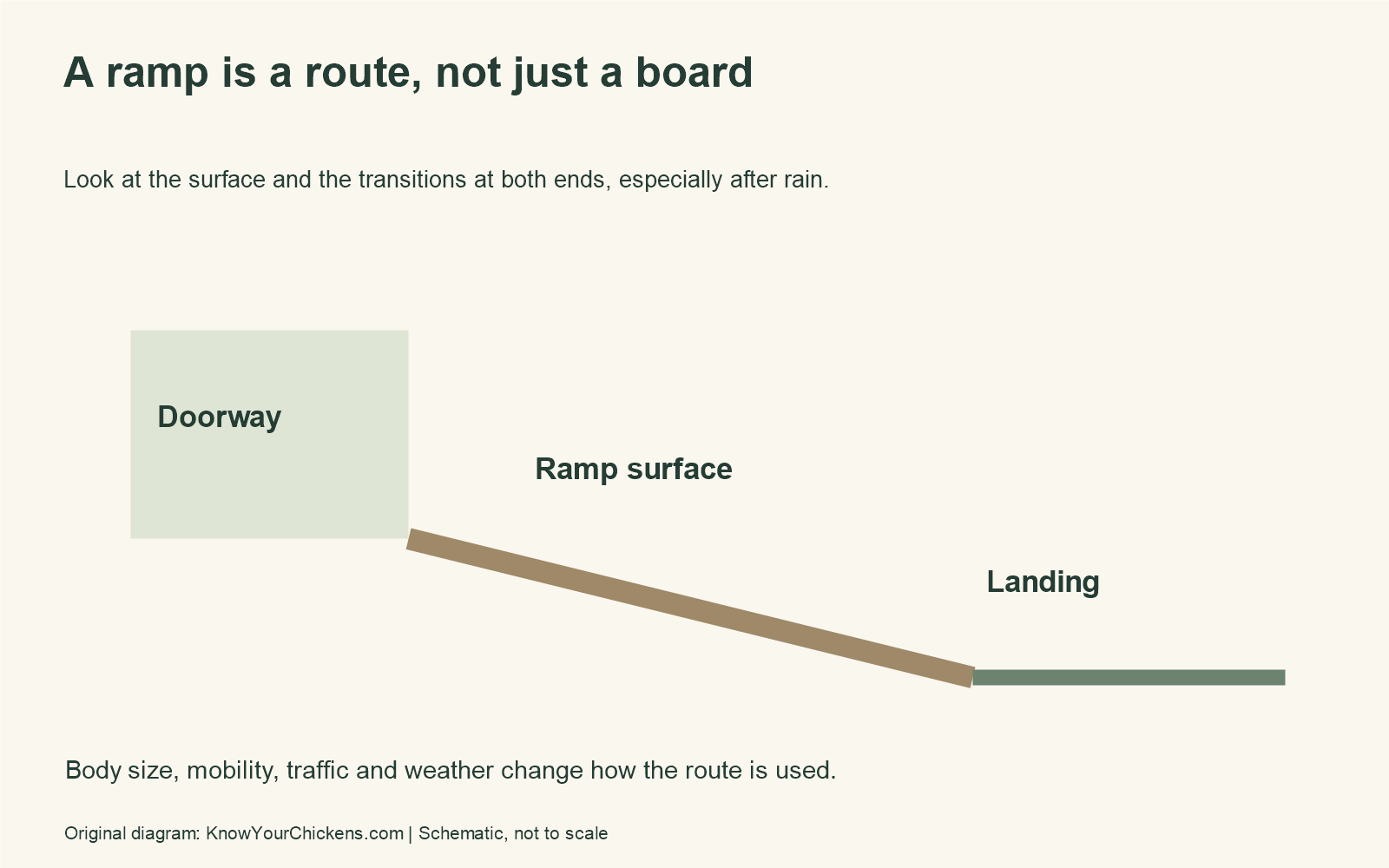
Look at the actual journey. Does the bird slow at the top, slide on the way down, avoid the ramp or jump around it? Those choices can identify an awkward transition before a fall makes it obvious.
The route includes both ends
A grippy middle section does not solve a slippery landing. A bird may step off into mud, arrive at a narrow doorway or have to turn immediately against another chicken. Evaluate the ramp as a connection between usable spaces, rather than an isolated board.
Body size and mobility matter. A heavy Brahma and an agile small bird may use the same structure differently. An older hen can also develop needs that were not present when the enclosure was built.
Weather exposes the material choice
Inspect loose fixings, damaged surfaces and accumulated material. Remove hazards using a method suitable for the construction, and consider whether the route needs redesign if problems return. An exact slope copied from another coop cannot account for every bird and site.
RSPCA chicken-housing guidance places safe, suitable accommodation within ordinary welfare needs. The practical observation here is whether this flock can move between shelter and outdoor space comfortably in the conditions that actually occur.
Our coop-design discussion covers the wider layout. Watching the first few birds use a wet ramp adds information that a dry-weather construction photograph misses: where their feet hesitate, where traffic gathers and whether the path still works for the least agile member of the flock.