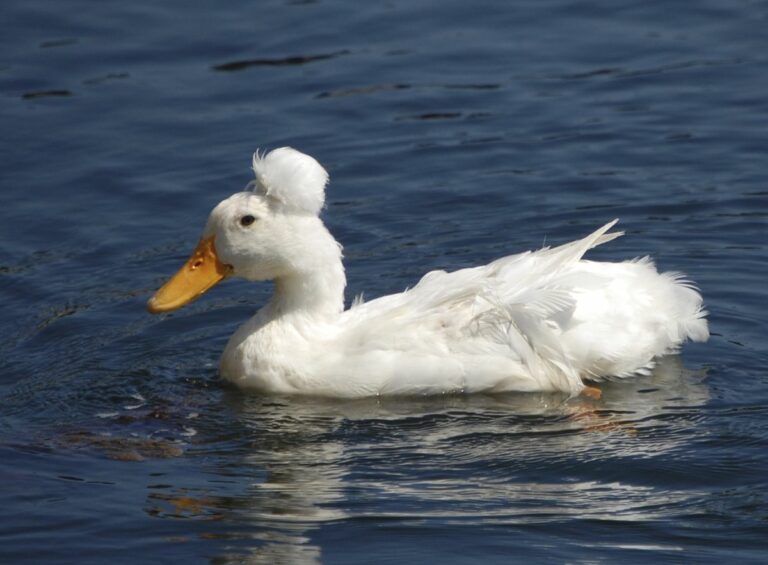

The white farm duck with an orange bill is such a familiar image that it can seem like the default duck. In many cases that image is a Pekin: a domestic breed shaped by a history of selection, particularly for meat production. Its familiar appearance hides a rather specific set of expectations about the adult bird.
Oklahoma State University traces the Pekin to China, followed by imports into Britain in 1872 and the United States around 1873. Different strains developed afterward. The name therefore describes more than one perfectly uniform commercial line, even though white plumage remains the recognizable feature.
The adult body changes the picture
The broad, full-bodied adult matters more to a prospective keeper than the small yellow duckling. Oklahoma State lists approximate mature weights of eight pounds for ducks and nine for drakes. Particular strains and individuals vary, so ask the supplier about the stock actually being sold rather than treating every Pekin label as an identical growth plan.
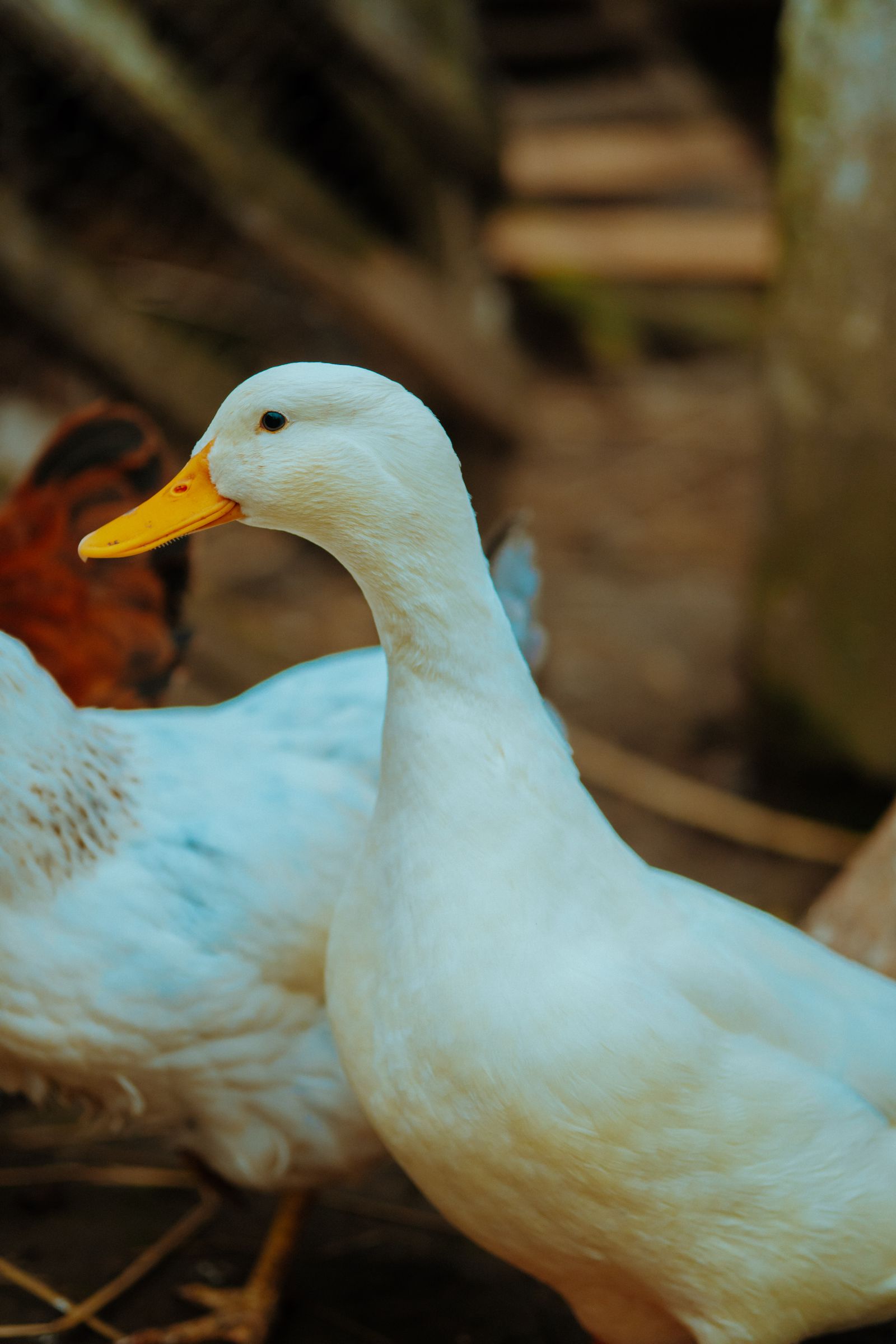
That mass has practical consequences. A doorway, ramp or pool edge that a duckling crosses easily may become awkward for a heavy adult. Our comparison of large domestic ducks puts body size into the context of housing and access. A pet’s environment should accommodate the mature bird, including a comfortable route in and out of water.
Domestic does not mean disposable
An adult Pekin is not a wild mallard temporarily visiting a pond. White plumage alone is not a complete identification method, but a domestic duck should not be released into a public waterway on the assumption that it will join a wild flock and manage independently.
The costs do not stop at buying feed. Water access, wet bedding, predator protection, companionship and finding suitable veterinary care remain part of keeping ducks. Our pet-duck article considers that longer commitment, including the limitations of keeping a social waterfowl species as a novelty pet.
A reputation for utility is not a personality guarantee
A commercial breed’s growth history and an individual duck’s behavior are different subjects. A Pekin may become familiar with its keeper, but choosing the breed does not guarantee a bird that welcomes every visitor or enjoys being carried. Give the duck space to approach and move away, and distinguish habituation from a desire for constant handling.
Likewise, a breed profile does not replace an appropriate ration. The requirements of a growing duckling differ from those of an adult. Our domestic-duck feeding guide covers the life-stage questions; treating a fast-growing duckling as a chicken of the same apparent size can miss important differences.
Before choosing Pekins, picture a normal wet morning with full-grown birds: where they drink, where the spilled water goes, and how they reach dry shelter. The famous white outline is the easy part to recognize. The adult routine is the part that determines whether that familiar duck fits your home.