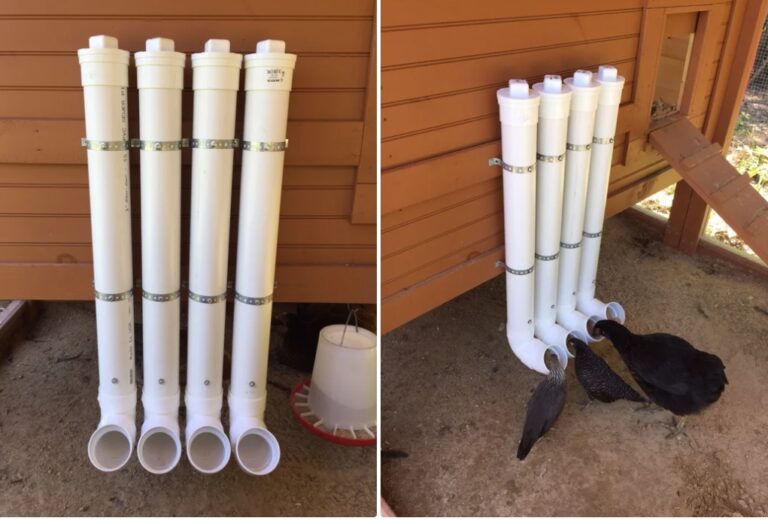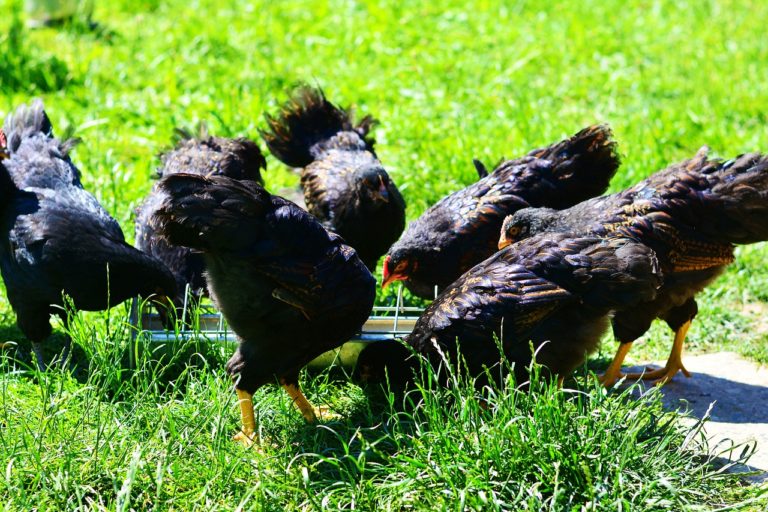

The feeder looks reassuringly full from the top. At the bottom, however, the birds are pecking at an almost empty tray. The missing connection is gravity: stored feed is useful only if it can actually move down to the opening the chickens can reach.
A hopper can conceal a blockage. Material may form a bridge over an outlet or leave a channel through the middle while feed remains against the sides. The visible supply and the accessible supply are not necessarily the same thing.
A full container is not the same as a working feeder
North Carolina State poultry-extension specialists discuss bridging and “rat holing” in their feed-quality guidance. Although that discussion addresses commercial systems, the observation to carry into a backyard is simple: check the point where feed emerges, not just the amount above it.
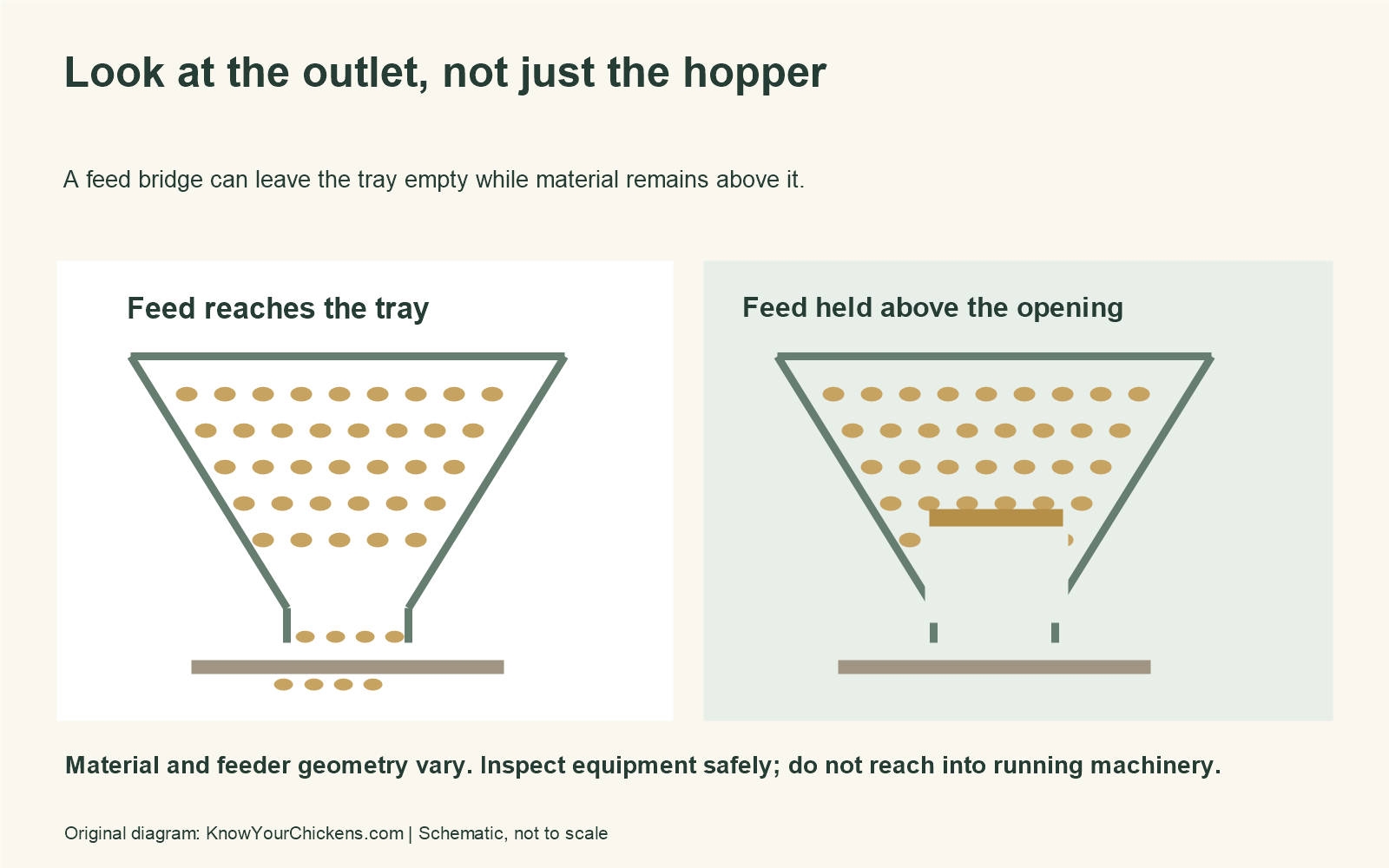
The diagram shows the distinction schematically. It is not a test of a specific product. Outlet geometry, the form of the feed and the condition of the material can differ between feeders, so a problem in one setup should not be generalized to every hopper of the same broad style.
What the chickens can tell you—and what they cannot
Birds gathering at a feeder may look like evidence that it is working. They can also gather because it is the place they normally find food. Watch whether they actually obtain feed from the tray, whether one outlet remains empty while another flows, and whether the container empties as expected over time.
Do not wait for an apparent hunger problem before checking. A direct look at the accessible ration is less ambiguous than interpreting the flock’s movements. Where there is a suspected supply interruption, provide an appropriate accessible feeder while the problem is assessed.
A blockage is a reason to inspect the material
Damp clumps, unusual odor, visible mold or contamination are not solved by pushing the contents down until the tray fills. Separate a mechanical obstruction from a feed-condition problem. Follow the feed supplier’s instructions, and do not return spoiled material to the flock simply because the equipment can now dispense it.
Keep fingers and tools clear of moving or powered mechanisms. A device that needs clearing should be made safe according to its manufacturer’s directions. This article is about recognizing a failure, not reaching into a running auger or improvising a repair.
The check belongs at both ends
A useful observation starts at the stored feed and ends where the bird eats: is the material sound, can it travel through the outlet, and is the tray reachable? Our PVC-feeder discussion covers design choices, while feeding the flock puts equipment in the context of a complete ration.
A full-looking hopper can make a missed check feel unlikely. The empty tray is the stronger piece of evidence. Once you have seen the difference, “there is feed in the bin” stops being the whole answer to whether the chickens have something to eat.