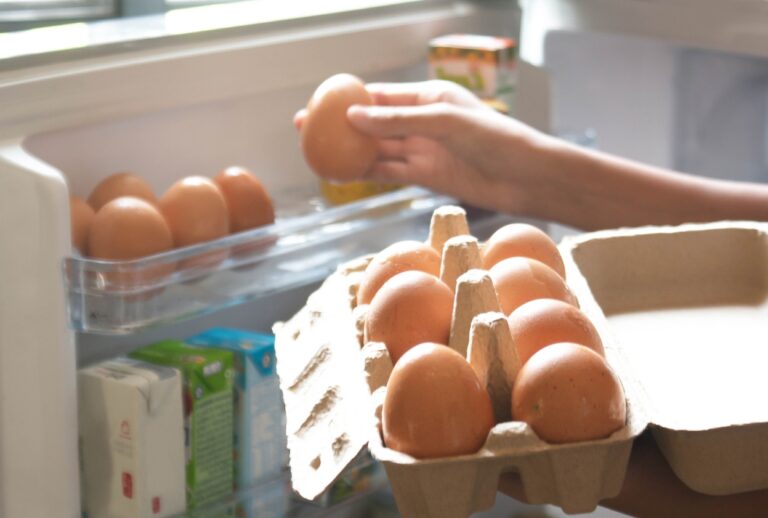

The white cord beside an egg yolk can look unexpectedly solid. It may cling to the yolk as the white slides into a bowl, or resemble a twisted little thread. Its name is a chalaza; the plural is chalazae. It belongs to the egg.
Illinois Extension describes two whitish, twisted cords on opposite sides of the yolk. They help support it within the surrounding egg white. This is part of the egg’s internal arrangement, not evidence that a chick has started growing.
A yolk has more structure around it than it first appears
An opened egg seems simple because most of its white is transparent. But it contains different layers and structures. The yolk has its own enclosing membrane, and the chalazae are associated with the white around it. Their visible, rope-like appearance makes them stand out against otherwise slippery material.
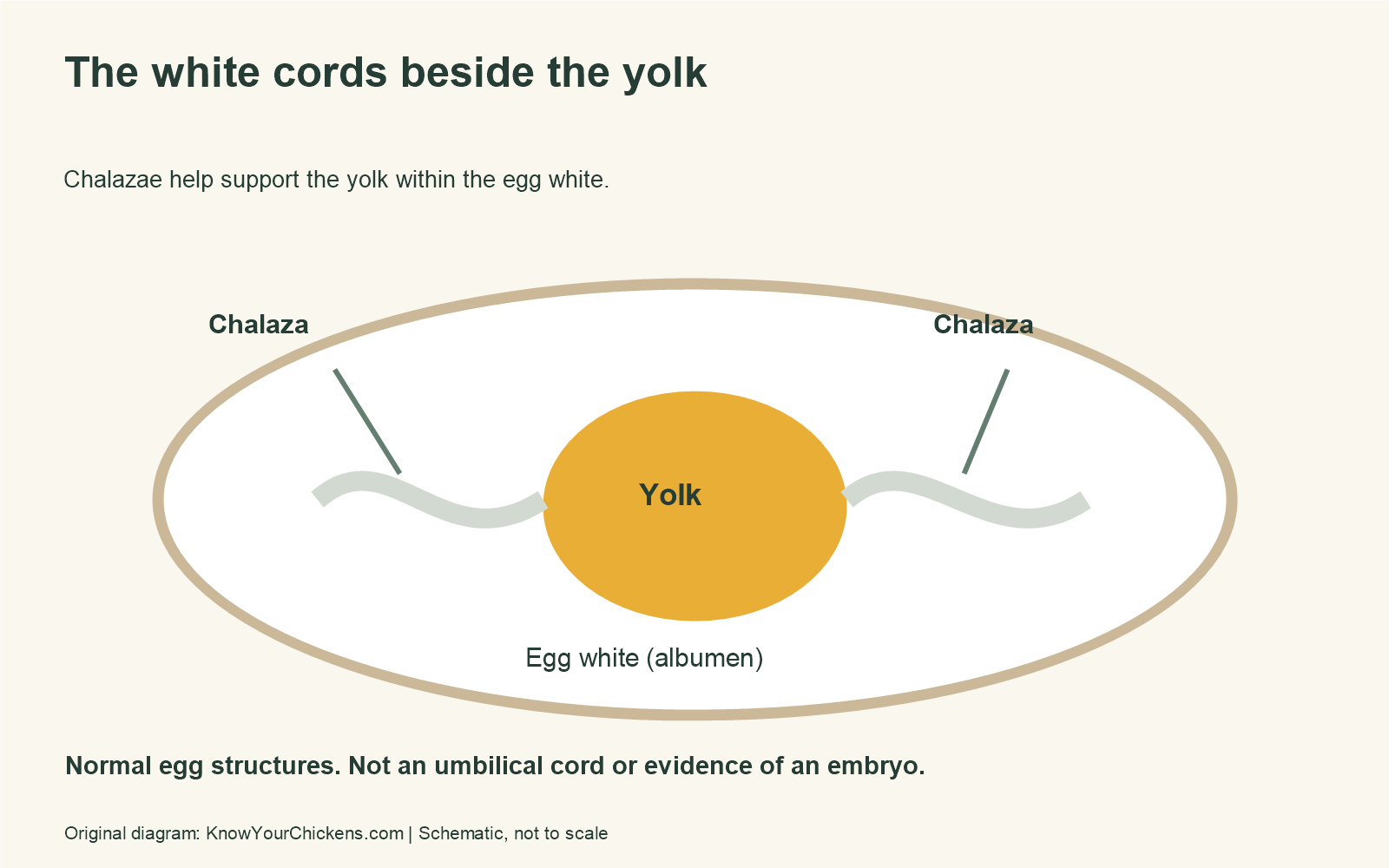
The diagram separates these parts so they can be recognized. It is an anatomical schematic; it does not show the precise size or position they will take in every bowl. Once an egg is cracked, its contents move and spread.
Not an umbilical cord
Calling the strand an umbilical cord introduces the wrong kind of development. A chicken embryo develops in an egg, not through a mammalian connection to a mother. The spot associated with embryonic development and the white cord beside the yolk are different structures.
Fertility is a separate issue from the presence of chalazae. Hens lay eggs without a rooster, and ordinary unfertilized eggs still have the structures that support the yolk. The circumstances described in our fertilization article cannot be inferred merely from seeing a white strand.
The cord is not a reason to discard the egg
Illinois Extension notes that variation in the size and density of chalazae does not change cooking performance or nutritional value. Removing a visible strand is therefore a texture or presentation choice, not a routine safety requirement.
Safety still depends on the egg’s condition and handling. A recognizable chalaza cannot clear an egg with a doubtful storage history. Equally, its presence should not be used to turn an otherwise ordinary egg into a supposed infestation. Our egg-storage guide covers the practical handling questions, while the float-test article explains why appearances and simple kitchen tests have limits.
The next time the strand appears, the useful question is usually already answered: this is one of the structures that keeps the yolk supported inside the egg. It looks conspicuous in a bowl because the shell is no longer hiding the arrangement.