

Raw eggs in their shells usually keep longer than cooked egg dishes, but storage time depends on temperature and handling. The following household guidance applies to refrigerated eggs in the United States. Different egg-handling systems elsewhere do not make it safe to switch a previously refrigerated carton to warm storage.
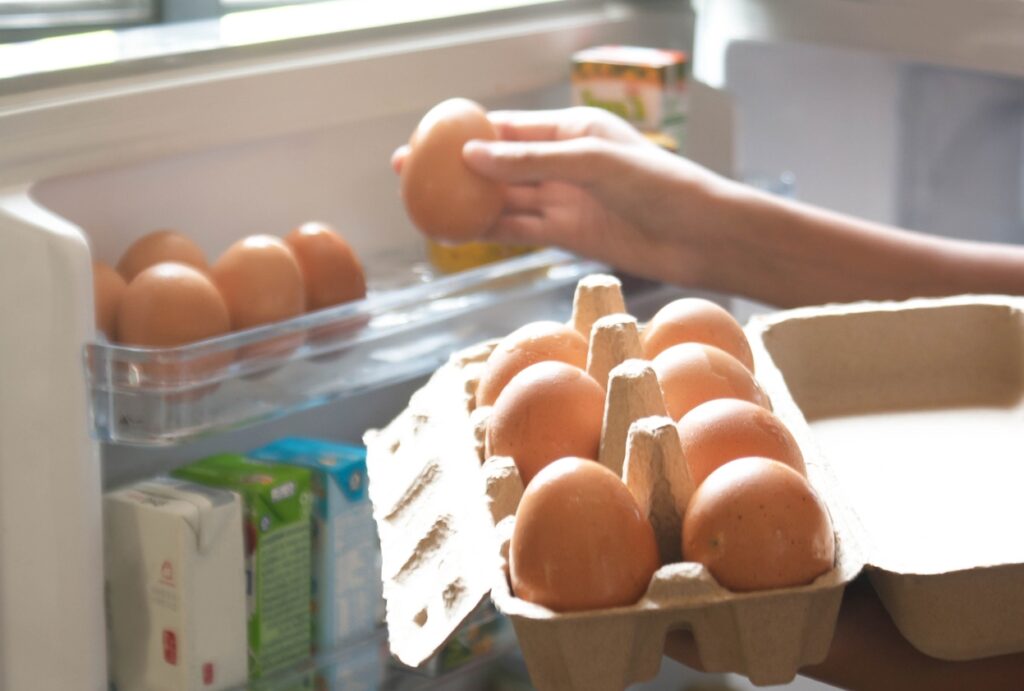
Refrigerated storage times
Keep the refrigerator at 40°F (4°C) or below, store eggs in their carton on an interior shelf, and follow any shorter applicable instructions on the product. FoodSafety.gov’s cold-storage chart gives these household limits:
| Food | Refrigerator |
|---|---|
| Raw shell eggs | 3–5 weeks |
| Raw whites or yolks | 2–4 days |
| Hard-cooked eggs | 1 week |
| Cooked egg dishes | 3–4 days |
These are storage guidelines for properly handled food, not a guarantee that a damaged or contaminated egg is safe until the last day. Label backyard cartons with collection dates and use older batches first.
Do not use floating as a safety verdict
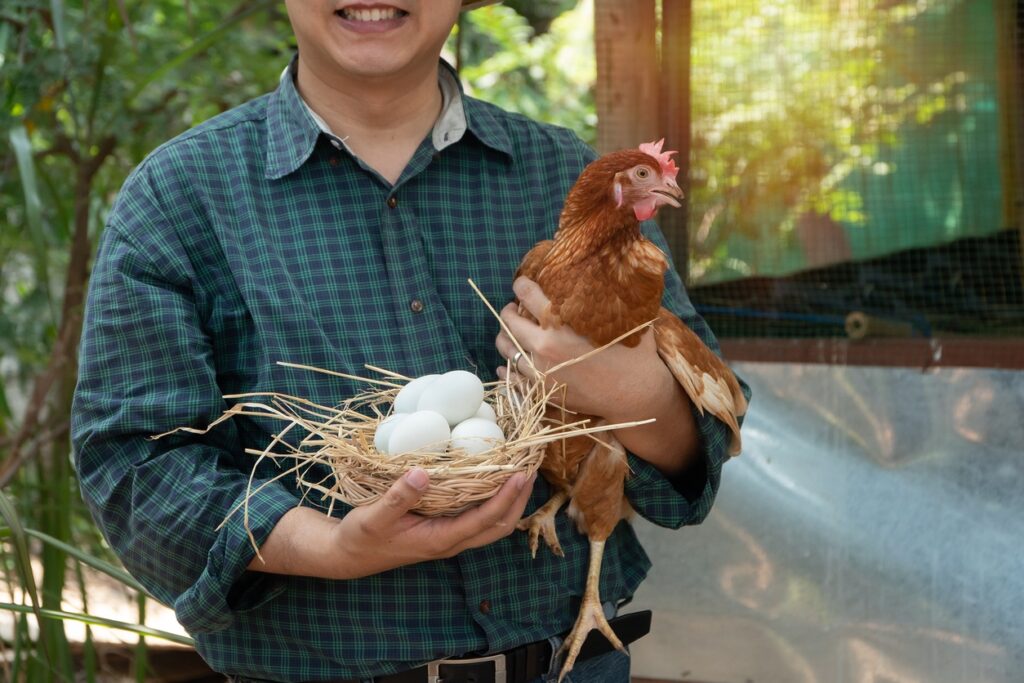
An older egg develops a larger air cell and may float. That does not automatically mean it is spoiled, and sinking does not rule out contamination. See what the egg float test actually shows. An egg that smells wrong or has an unusual appearance after cracking should be discarded, but a normal smell cannot certify safety.
What if eggs have been left out?
For refrigerated eggs and dishes in the U.S. handling system, follow the USDA shell-egg guidance: do not leave them unrefrigerated for more than two hours. Warm conditions shorten the safe handling window. Avoid repeatedly warming and cooling a carton.
Backyard practices concerning washing and unwashed eggs vary by location. Do not use an online room-temperature estimate to override local food-safety advice, and do not wash eggs with an improvised method before storing them for weeks. Cracked shells and an unknown handling history need more caution, not a new freshness test.
Freezing surplus eggs
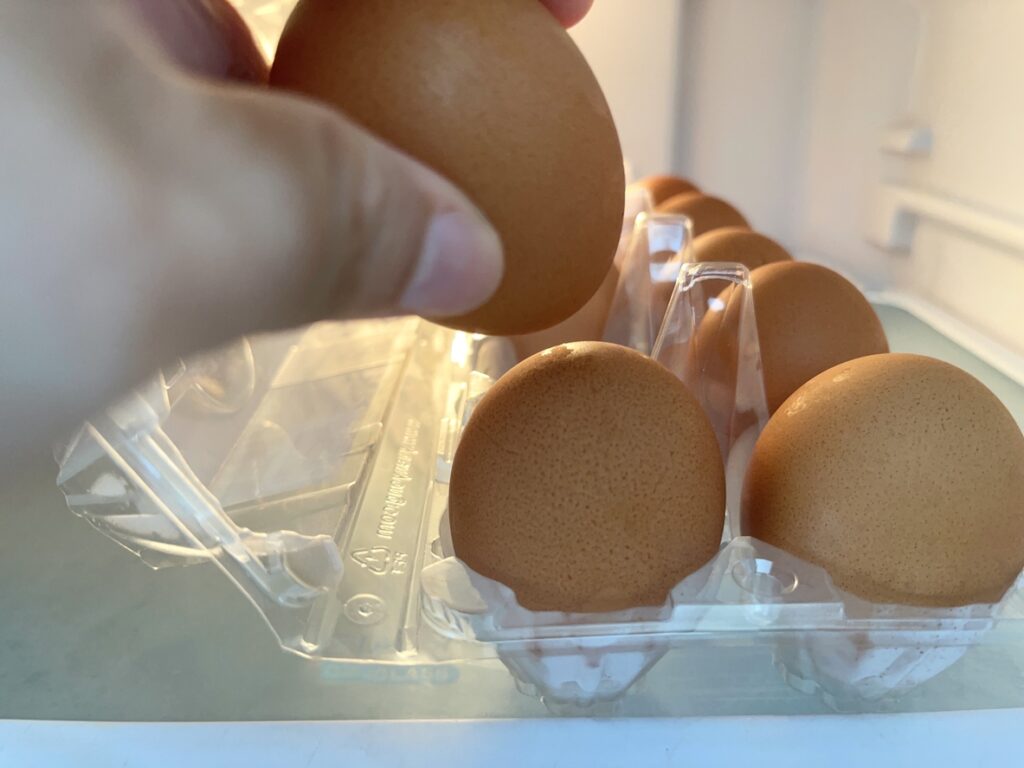
Do not freeze intact eggs in their shells. For planned storage, crack sound eggs into clean containers and follow reliable instructions for freezing whole beaten eggs, whites, or yolks. Label the contents and date; thaw in the refrigerator and use in thoroughly cooked preparations. Yolk texture may need a recipe-specific adjustment, so follow tested directions rather than treating every component alike.
The same principle applies when comparing duck and chicken eggs: a thicker shell does not replace careful handling.
Be selective about preservation advice
Water-glassing, coating shells with oil, dehydrating raw egg, and leaving pickled eggs at room temperature are not interchangeable with refrigeration. Do not assume that an egg is shelf-stable because it has been preserved in a jar. Each process needs dependable safety guidance, suitable equipment, and the correct storage conditions.
For a small flock, the simplest stock-control system is often enough: date each carton, refrigerate promptly, share a manageable surplus, and freeze suitable portions using established instructions. Plan around seasonal laying changes rather than trying to keep every summer egg until winter.


