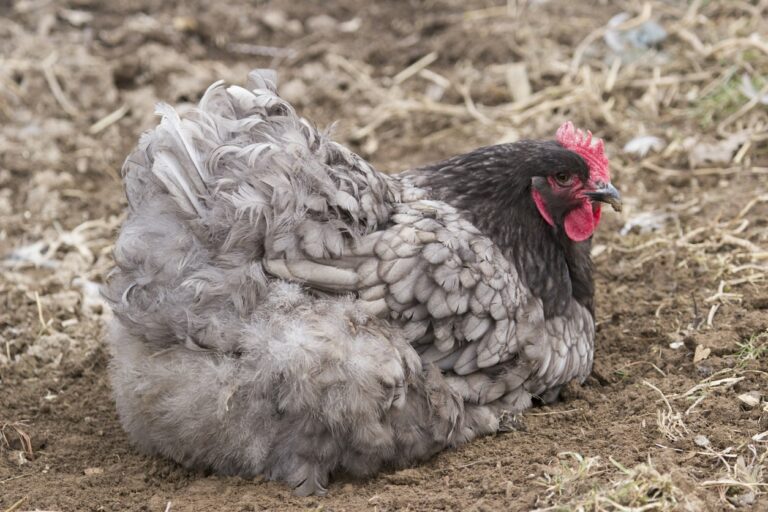


The pattern of feather loss is more informative than the number of feathers on the floor. Seasonal shedding, repeated wear over the back, bare areas around the vent, and damaged skin point toward different possibilities. Check the bird, the time of year, and what flockmates are doing before adding treatments or supplements.
Start with location and skin condition
| What you notice | Possibilities to investigate |
|---|---|
| Widespread shedding with new pin feathers | Normal molt, interpreted alongside age and season |
| Wear over the back or near the neck | Mating damage, rubbing, or pecking |
| Bare breast on a persistently sitting hen | Broodiness, while still checking health and parasites |
| Damaged skin, scabs, or blood | Injury or active pecking requiring prompt management |
| Debris at feather bases or restless birds | External parasites, requiring identification |
These clues overlap. A molting bird can also have mites, and feathers missing after an attack are not proof of a particular predator. Examine the skin gently and record whether the area is spreading or new feathers are emerging.
Normal molting needs time
Adult chickens commonly replace worn feathers in a seasonal molt, often with reduced egg production. Timing and severity vary. New feather shafts can be sensitive, so reduce unnecessary handling and avoid treating normal pin feathers as something to pull out.
Use the molting guide for the process and feeding considerations. Do not promise regrowth within a month: replacement depends on the feather cycle and the reason for loss. A suitable complete ration matters more than adding an assortment of protein-rich treats.
Watch the flock, not just the affected hen
Observe feeding and roosting. Can the bird reach resources without being chased? Is a rooster repeatedly damaging the same hens? Are birds pecking at an exposed area? Provide space, multiple access points, and ways to retreat while addressing the cause.
Separate a bleeding or injured bird where it can recover safely, and seek care for significant wounds. Review flock introductions and housing density. Do not assume that culling a particular bird is the first solution to every pecking problem.
Confirm parasites before choosing a product
Inspect feather bases, the vent region, legs, and housing as appropriate. Mites differ in where they live, and their control may require the coop as well as the bird. A dust bath supports normal behavior but is not proof that parasites are absent.
Garlic, herbs, vinegar, and diatomaceous earth should not replace a diagnosis. Avoid applying concentrated household mixtures or a detergent-and-salt bath to irritated skin. Use treatments labelled for poultry and the identified problem, with professional advice where needed.
Get help when loss accompanies illness
Weight loss, poor appetite, weakness, a swollen or dirty vent, persistent discharge, or extensive skin damage needs assessment. Feather loss is a sign to interpret, not a diagnosis called “protein deficiency” or “vent gleet” by default. Photograph changes and note diet, recent arrivals, and laying history so the vet has a useful timeline.