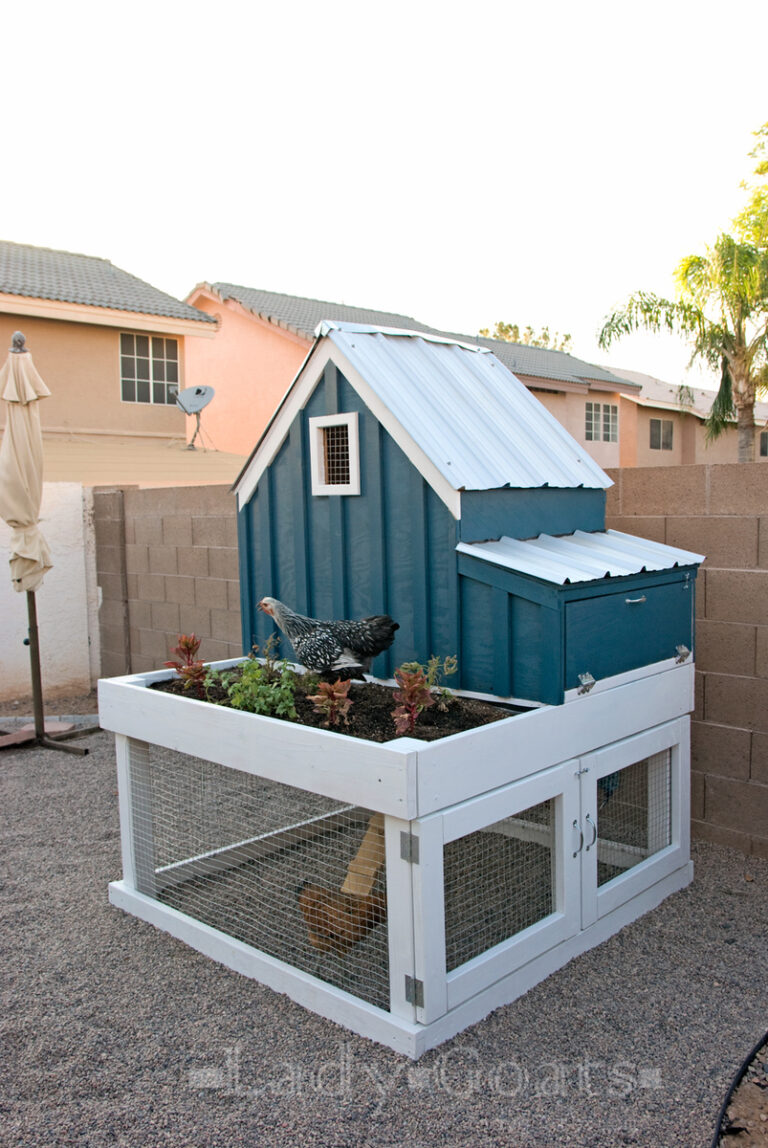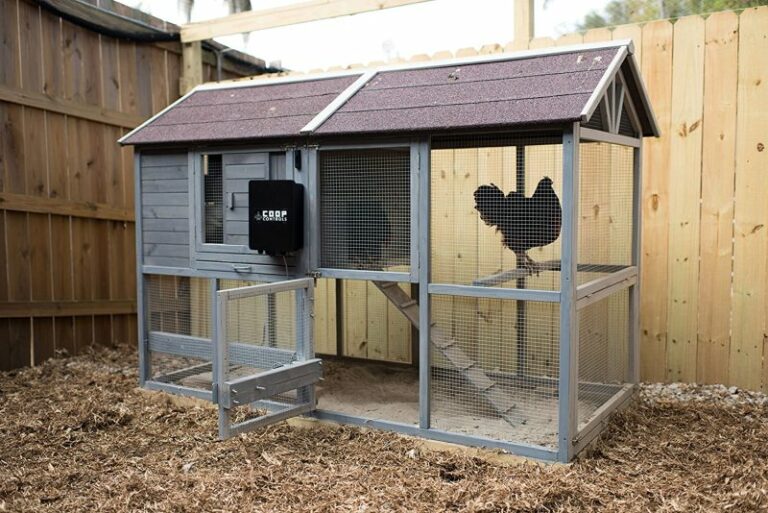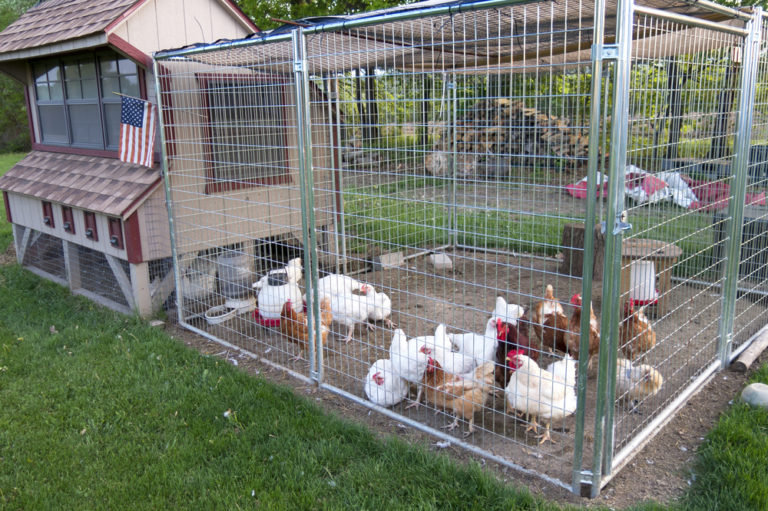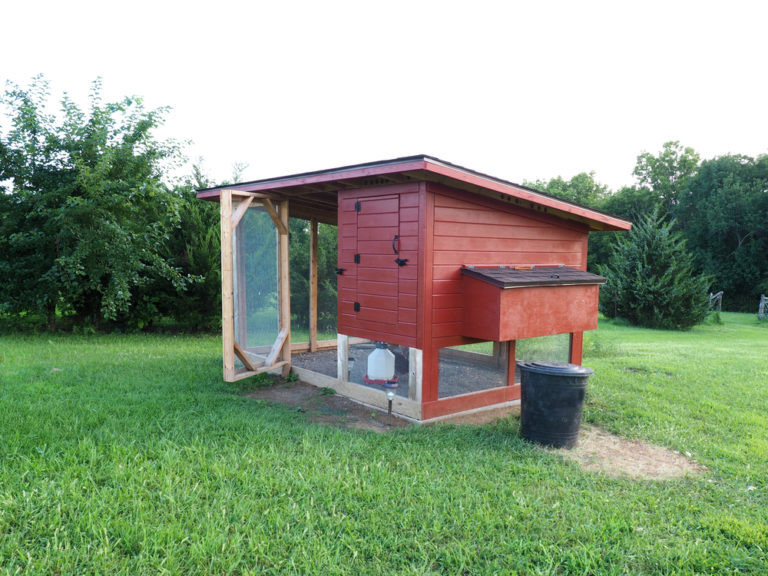

A coop can look untouched while something is working inside its walls. Chickens attract attention; a few grains beside a gnawed corner or newly disturbed insulation are easier to dismiss.
Rodent activity becomes a different problem once a building offers shelter as well as food. The UK poultry-farm rodent-control code identifies damage to buildings, insulation, and electrical installations among the consequences of infestation. Losing feed is only one part of the cost.
Look beyond the feeder
Droppings, gnawing, disturbed material, tracks, and burrows are clues worth documenting. Mississippi State Extension’s poultry-farm guidance also describes how rodents exploit hidden spaces and litter. A tidy-looking feeder does not prove that the surrounding structure is clear.
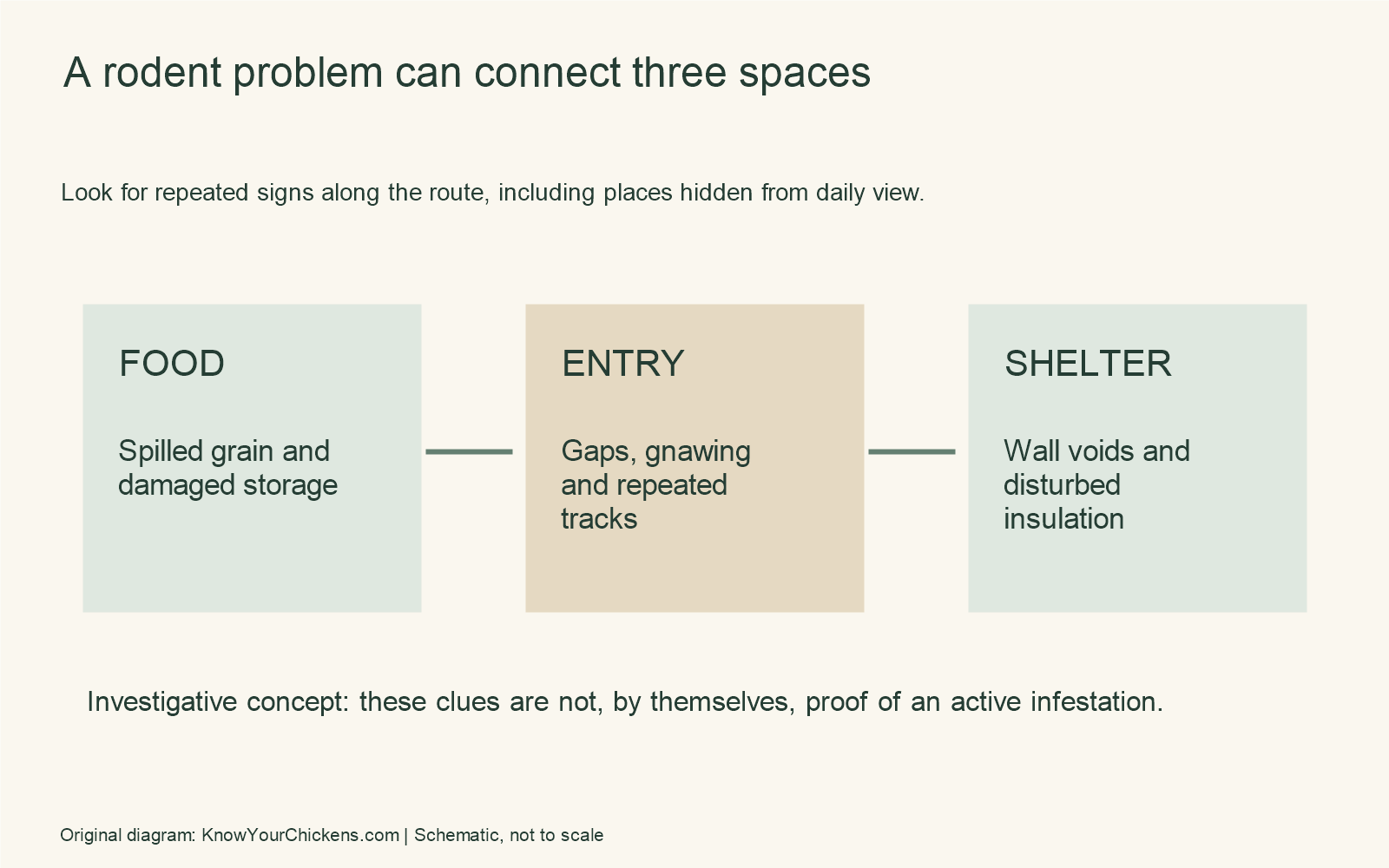
Photograph a suspicious spot, clean spilled feed, and check whether the sign returns. That gives a pest professional better information than a guess based on one small hole. It also helps distinguish old damage from continuing activity.
The diagram shows a route to investigate, not proof that rodents are present. Feed storage, the wall edge, and concealed shelter need to be considered together. Our chicken-feeder guide covers feeding arrangements; an enclosed feeder still cannot repair a chewed building.
Winter sealing has to be deliberate
The tempting response is to stuff a hole and move on. A better repair begins with understanding the opening: where it leads, what made it, whether wiring is involved, and whether it was supposed to provide ventilation.
Active electrical damage warrants qualified help. So does an established infestation that is not responding to exclusion and sanitation. Unplanned poison placement around hens, pets, and wild birds creates another exposure problem; choose a control approach with a qualified pest professional rather than improvising around accessible feed.
Cold weather makes these small discoveries more urgent because the sheltered space stays attractive. Catching repeated signs along one wall in November is easier than discovering an entire hidden nesting area during a midwinter repair.