
California’s autumn bird-flu detections include more backyard flocks than commercial ones. In its November 4 update, the California Department of Food and Agriculture reported seven detections since October 5, 2026: six backyard flocks and one commercial flock.
The latest backyard case in that update was in San Benito County, with laboratory confirmation on November 3. The four counties listed across the seven detections were Sacramento, Solano, Stanislaus, and San Benito.
These figures are a dated snapshot of confirmed detections, not a prediction of where the virus will appear next. This report was checked against CDFA’s available alert on November 8.
The county list is not a safety boundary
CDFA warns that wild birds can introduce highly pathogenic avian influenza through contact or environmental contamination. A county without a listed poultry detection should not be read as a county without risk.
The agency’s November 4 notice said movement restrictions applied in Stanislaus County only. Owners planning to move birds should check the current official alert rather than assume every listed county has identical restrictions.
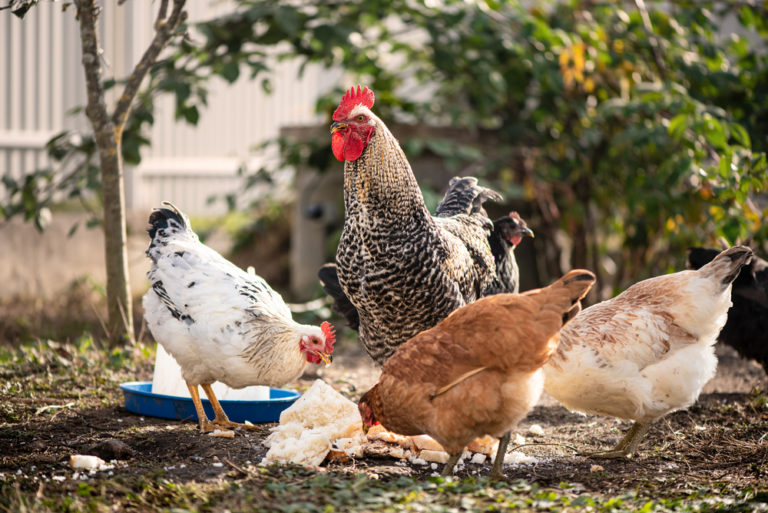
Small flocks belong in the picture
For a household with a few hens, the six-backyard-flock figure is the consequential part of this update. Biosecurity is not exclusively a commercial-farm concern. The USDA’s guidance on visitors, footwear, and equipment addresses routes that exist in small yards too.
That includes the borrowed carrier, muddy boots, or recently acquired bird that crosses the boundary around an established flock. Our article on introducing chickens explains why mixing birds needs planning; disease precautions come before social introductions.
The recent Washington detection is a separate event, not evidence of a traced connection to these California cases. For suspicious illness or deaths in California poultry, CDFA lists its Sick Animal Hotline: 866-922-BIRD (2473).