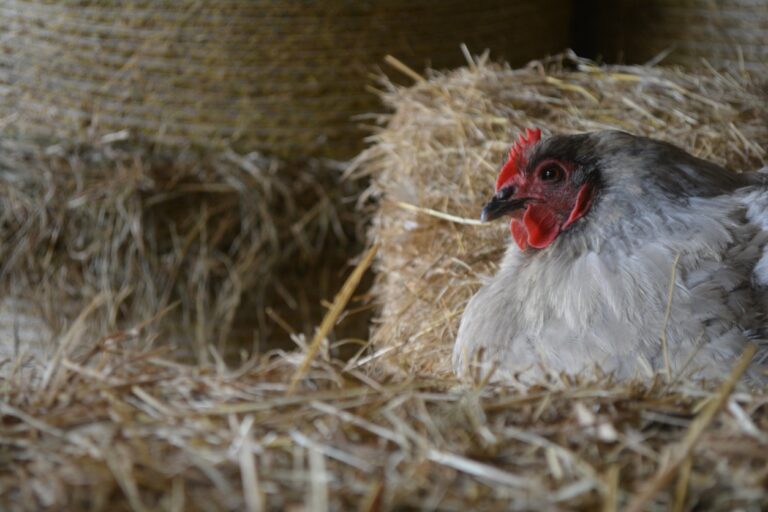

An Ancona’s white markings can catch the eye before the rest of the bird comes into focus. Against black plumage, the pale tips create a scattered pattern that is different from the tidy bars or broad patches found on other chickens.
The Livestock Conservancy describes the breed from Italy’s Marche region, named for the port city of Ancona. Single-combed Anconas entered the American standard in 1898; rose-combed birds followed in 1914. Those two comb forms are a reminder that a breed can have recognized variation without losing its identity.
White tips, not white eggshell pigment
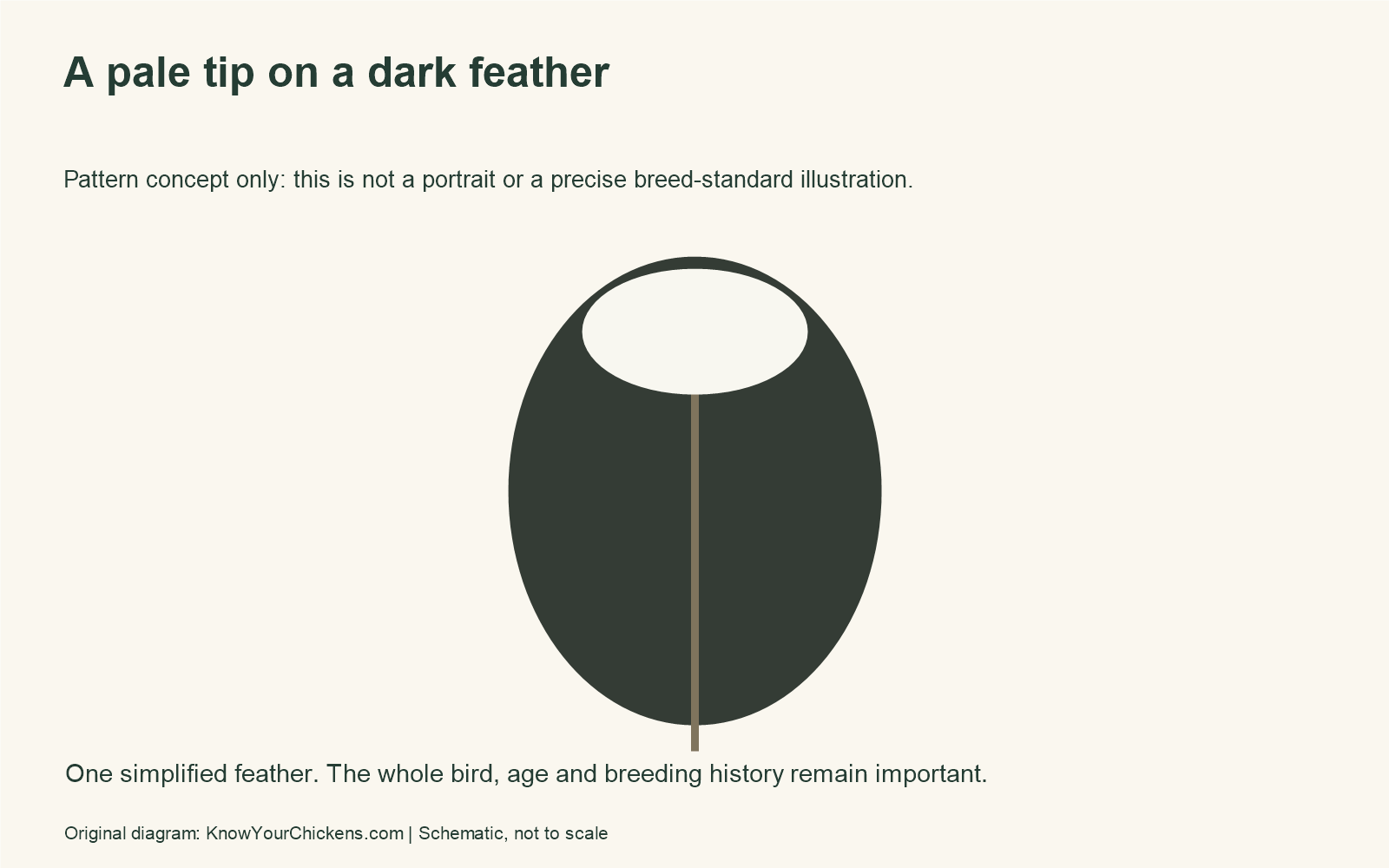
The characteristic plumage has a black ground with white mottling, including V-shaped tips. The amount of visible white can change with age. That matters when comparing a young bird with a photograph of mature breeding stock; one picture is not a fixed color map for the bird’s lifetime.
Ancona hens lay white-shelled eggs. The white in a feather and the white shell are different biological features, so neither should be used as an explanation for the other. Our egg-color article addresses the shell question.
The yard needs to suit an active chicken
Oklahoma State’s breed account places the Ancona among active Mediterranean chickens. That is more useful to a keeper than assuming a decorative pattern predicts a quiet lap bird. Consider the space available for movement and the security of boundaries; our discussion of chicken flight explains why a light, active bird changes the containment question.
Speckles can make an Ancona and a Speckled Sussex look superficially related in a small image, but their breed histories and types differ. Look at the complete bird and its documented origin, not simply the presence of white marks. The Ancona’s interest lies in that combination: a Mediterranean laying bird whose appearance remains lively even when she is standing still.