
A chick that stops fleeing a person may simply have become less afraid. That is useful, but it leaves another question unanswered: can a gentle human interaction become something the chick actively values?
A 2026 study published in Animal Welfare approached that question through the places chicks chose afterward. The interesting evidence was not a photograph of a relaxed-looking bird. It was a comparison between environments associated with different experiences.
A preference measured after the interaction
The experiment involved 20 female Hy-line W-80 chicks at the University of Bristol. Researchers compared a setting associated with gentle handling against one associated with neutral human presence, using a conditioned-place-preference approach. The chicks subsequently developed a preference for the environment linked to gentle handling.
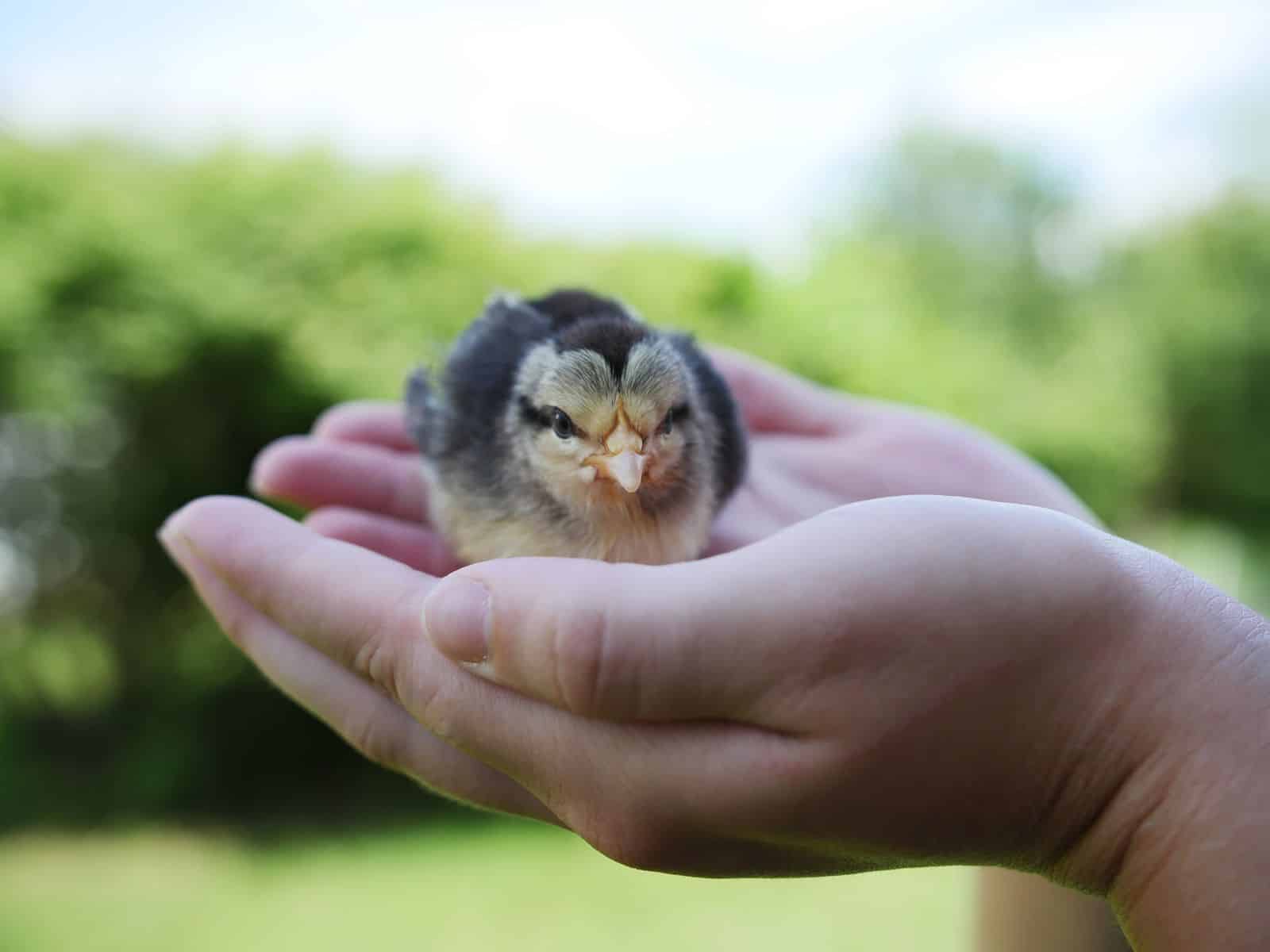
That is a more specific result than “chickens like people.” It connects a defined experience with a later choice in a controlled setup. The authors interpreted the pattern as evidence that gentle interaction was experienced more positively than neutral presence. A preference test cannot provide a direct transcript of an animal’s subjective feelings.
Why the comparison matters
Imagine watching only the handling session. A bird that moves less could be calm, tired, constrained or responding in another way. A single visible behavior is difficult to translate confidently into an emotional state. Asking where the animal chooses to spend time adds a different kind of evidence.
It still needs careful interpretation. A preference between two settings does not mean every possible alternative has been tested. The paper itself discusses the value of additional control conditions. The research question concerns a particular comparison, not an absolute measure of how pleasurable every human encounter is.
the university report on the work places it in the wider discussion of positive poultry welfare. For a backyard keeper, that is a useful shift in attention: care can involve opportunities for positive experience as well as avoidance of fear.
The sample does not stand for every chick
These were female chicks from one commercial laying strain, studied under the described conditions. The result should not be stretched into a claim about every breed, sex, age or handling method. An adult rooster resisting restraint is not a failed replication of this experiment.
Nor does the research make prolonged holding, chasing or passing chicks between visitors into enrichment. The words “gentle handling” refer to what was actually done in the study, not anything a person intends affectionately. A chick’s warmth, access to its group and normal care remain part of the situation; our chick-care article covers those basic needs.
A useful question for the keeper
Instead of trying to reproduce a laboratory procedure at home, notice whether a chick has a real option to approach and withdraw during ordinary calm contact. Do not interpret stillness alone as enjoyment. Where handling is needed for care, keep the task purposeful and appropriately supported.
Our discussion of temperament and handling explains why breed reputation cannot substitute for observing the individual. The study adds a narrower and more interesting possibility: a carefully defined human interaction may become a remembered positive experience. It offers evidence for that possibility, without requiring us to pretend that a chick has described the experience in human words.