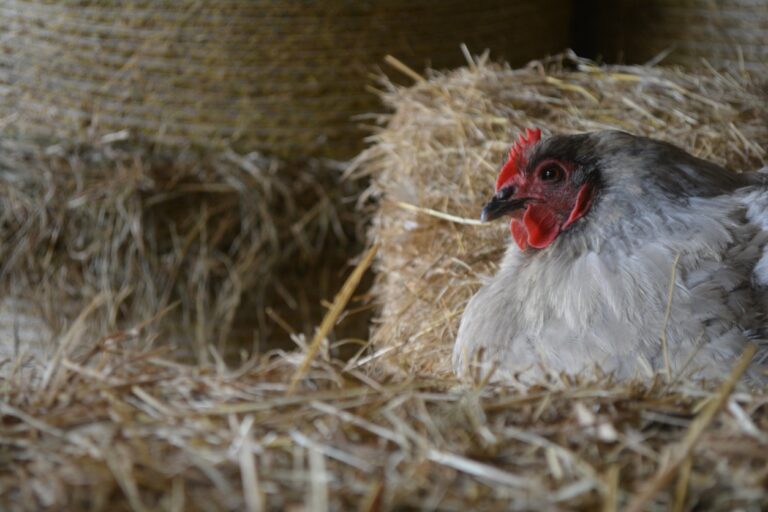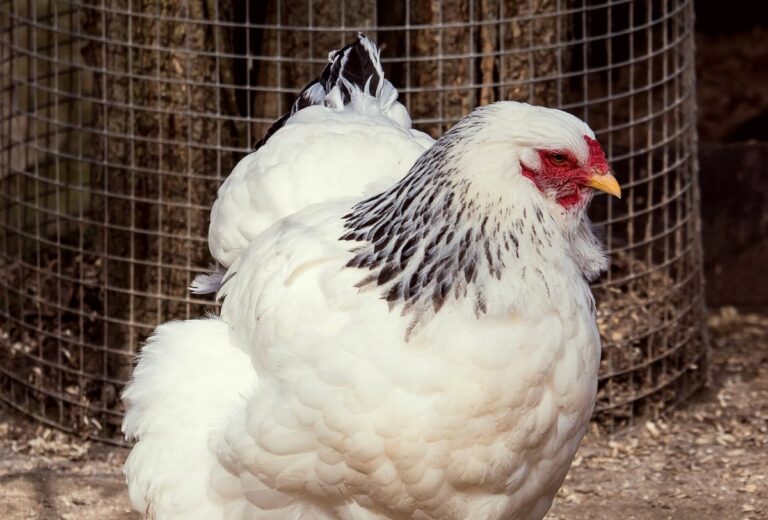

A red chicken with a small comb can disappear into a photograph of an ordinary farm flock. The Buckeye deserves a closer look. Its identity is tied to a particular breeder, a distinctive body shape, and a history that cannot be reduced to another version of the Rhode Island Red.
The breed’s story begins with Nettie Metcalf in Warren, Ohio. The Livestock Conservancy credits her with developing the Buckeye through a sequence of crosses that included Buff Cochin, Barred Plymouth Rock and Black-Breasted Red Game stock. She was selecting a useful farm bird, not simply trying to color an existing breed red.
The name almost concealed the difference
For a time, Metcalf used the name Pea Combed Rhode Island Reds. According to the Conservancy’s history, she exhibited the birds as Buckeyes in Cleveland in 1902; American Poultry Association recognition followed in 1905. The change gave the developing breed an identity of its own.
That naming episode is a useful warning when buying poultry today. A familiar-sounding sales label is not a pedigree. Ask what the birds are bred from, whether the flock is maintained as Buckeyes, and what the breeder is selecting for. Our hatchery and breeder guide covers the questions that matter before placing an order.
Look beyond the red feathers
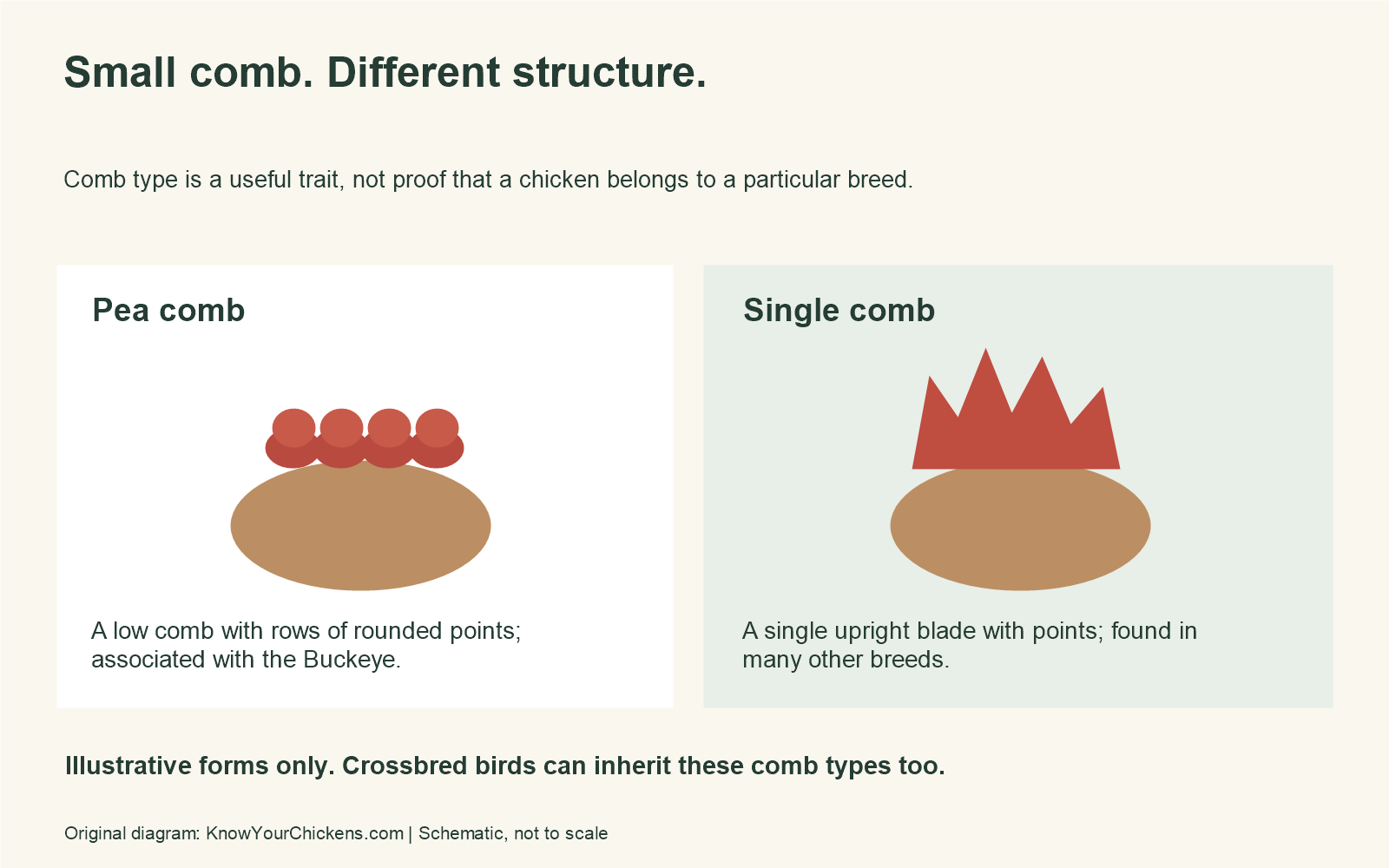
The characteristic pea comb is an obvious place to start, but it is not the only one. The breed has a broad, substantial body and a mahogany-red appearance with black in the tail. Those traits distinguish a breed description from the vague label “red layer.” The Rhode Island Red has its own history and type.
The accompanying comb comparison is a schematic, not a breed-identification certificate. Crossbred chickens can inherit small combs too. A comb photograph alone should never overrule the bird’s documented origin, overall structure and breeding history.
A farm bird still needs a suitable farmyard
The Buckeye is a dual-purpose chicken, so its appeal is not confined to one production figure. A keeper interested in maintaining a breeding flock may value type, activity, maternal behavior and preservation alongside eggs. A household focused narrowly on maximum egg output may be asking a different question.
Treat any advertised laying total as a claim about a particular line under particular management, not a contract with every hen. Age, season, diet and health continue to affect laying cycles. Keeping a record of your own birds is more informative than assuming a breed average will arrive in the nest box on schedule.
Likewise, a reputation for cold hardiness does not remove the need for dry housing, water and protection from direct drafts. Our winter-care discussion explains why a small comb is one useful feature rather than complete protection from cold injury.
For someone considering Buckeyes, the revealing conversation is often with the person maintaining the breeding flock: which traits remain consistent, what the birds are like in that setting, and how the line has been kept. That brings the breed back into focus as living poultry with a history, rather than just a red thumbnail in a catalog.