
The shell cracks, the white slips into the bowl, and two yolks follow. It is tempting to call them twins. But the interesting part happened before there was a shell: two yolks entered the hen’s egg-forming tract close enough together to be packaged into one egg.
A double yolk is a variation in egg formation. By itself, it does not establish fertility, promise two chicks, or tell you whether the egg has been stored safely.
The shell comes later
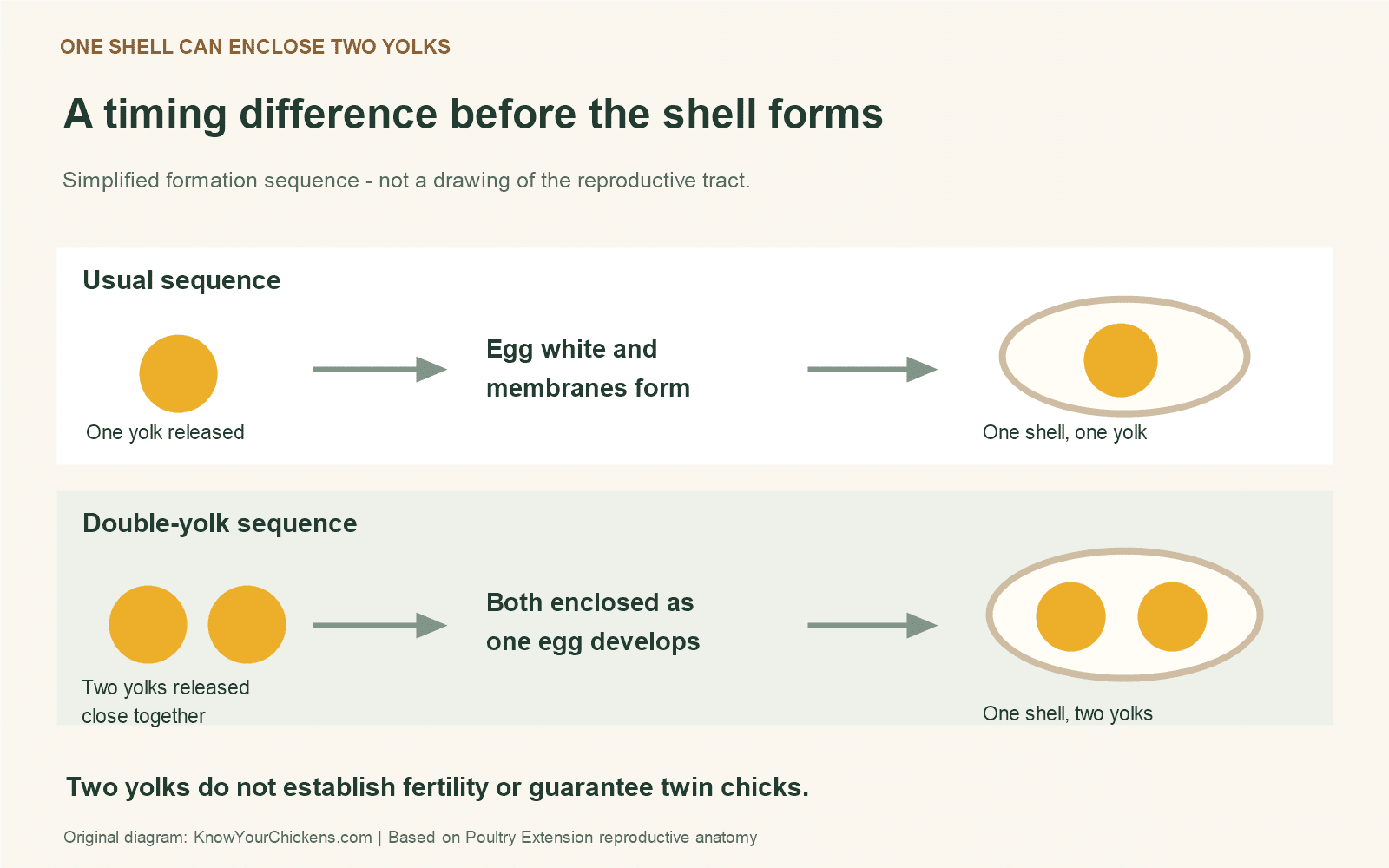
A hen does not begin with a finished egg inside her ovary. Developing yolks mature there, then move into the oviduct. Egg white, membranes and shell are added along the route. When two yolks arrive in close succession, those later layers can enclose both.
That sequence explains the surprise in the bowl: the hen has enclosed two yolks within one shell, rather than producing two complete eggs that somehow joined after laying. Texas Parks and Wildlife’s explanation of bird eggs describes how multiple yolks can share the white, membranes and shell.
Why it can happen as a pullet starts laying
Young hens sometimes release two yolks in quick succession. Genetics can also influence the occurrence, according to Poultry Extension’s reproductive-anatomy account. That makes age and the individual bird more useful context than a blanket claim that double yolks are either completely random or a sign of disease.
Our guide to the first eggs from a pullet covers the wider transition into laying. A double yolk is one possible variation during that period, not a milestone every young hen must reach.
These eggs are often larger than single-yolk eggs, but size is not a verdict. Until you open one, a large egg remains a large egg. Nor can one unusual breakfast establish how often that particular hen will produce another.
Two yolks are not a prediction of twin chicks
Yolk count and fertilization answer different questions. A hen can lay without a rooster; an extra yolk does not change that. Fertilization concerns sperm reaching an ovum, not how many yellow circles appear when the shell is opened.
Even when fertile, a double-yolk egg is a poor hatching choice. University of Florida Extension describes very low hatch rates. Two developing embryos sharing one shell should not be treated as a straightforward route to twins. For a planned hatch, choose suitable eggs using the guidance in our chicken incubation article, rather than selecting an oddity for the spectacle.
The breakfast question is still about handling
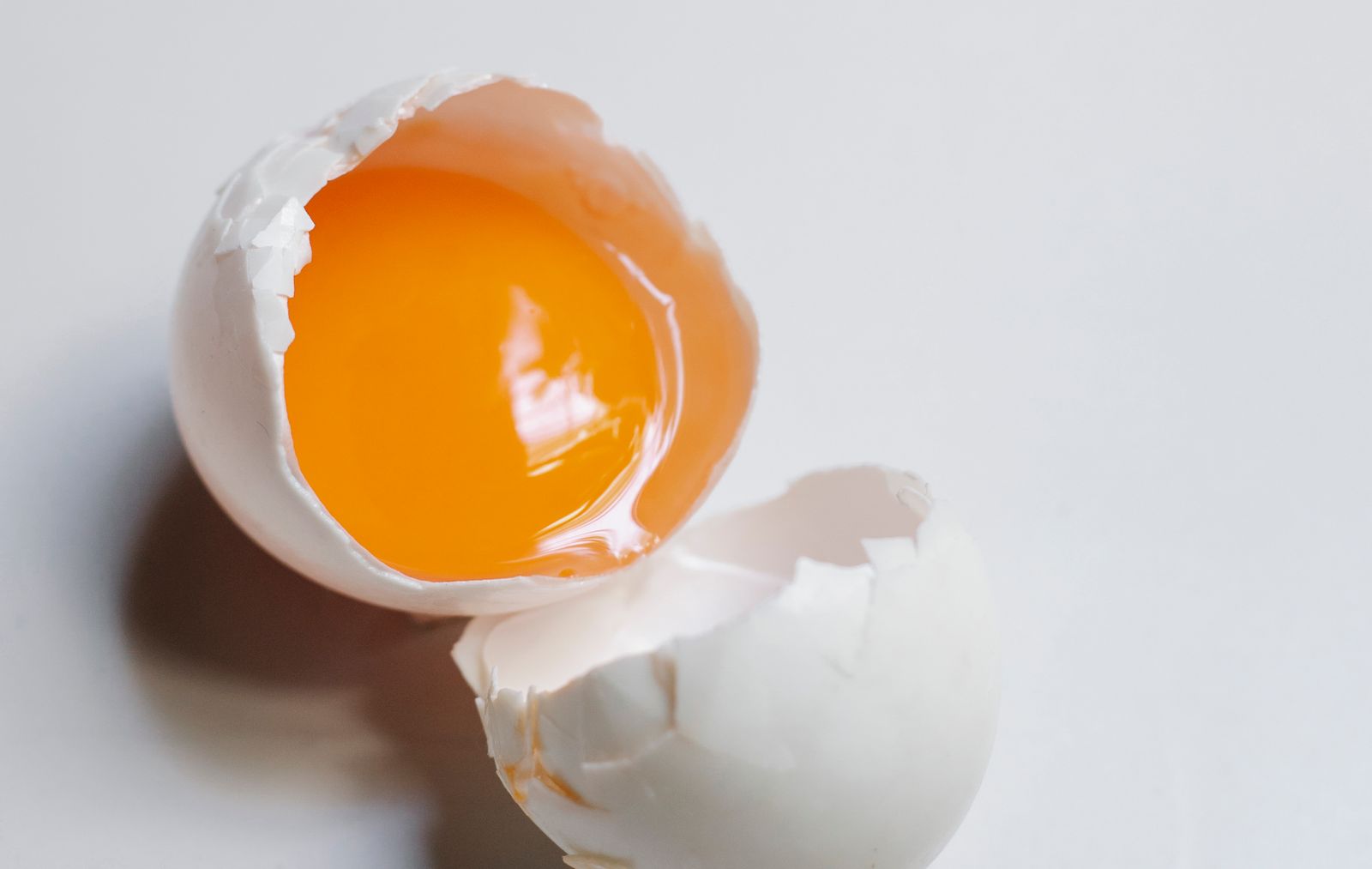
Finding two yolks does not, by itself, make an egg unsafe to eat. It also gives no protection against contamination. Clean-looking eggs can contain Salmonella, so the FDA’s egg-safety guidance still applies: refrigerate eggs at 40°F (4°C) or below and cook both whites and yolks until firm. For dishes served raw or undercooked, use appropriately pasteurized eggs or egg products.
Storage history matters more than the novelty. Our egg-storage guide explains the handling questions; neither a double yolk nor a float test can replace them.
There is a separate question for the hen. The Merck Veterinary Manual identifies oversized eggs, including double-yolked eggs, as one possible cause of obstruction. That does not mean every double yolk signals trouble. A hen straining or appearing unwell needs attention for those signs, rather than reassurance based on the egg she laid yesterday.