
High egg output is only one reason to choose a chicken. Compare line, maturity, temperament, climate, and broodiness as well as estimated annual production. This reference includes both established breeds and commercial crosses; their breeding behavior is not interchangeable.

20 Best Egg Laying Chickens
Here are 20 of the best egg laying chickens:
1. Isa Brown

- Annual # of Eggs: 300
- Personality: Affectionate
- Appearance: Light golden feathers
These cute birds are a great choice for an egg-laying flock.
Producing anywhere between 300 and 350 eggs each year, this American breed starts to lay at 16 weeks of age.
Weighing approximately 4.5 pounds, these hens are on the larger size and are remarkably low maintenance.
These chickens can adapt to all kinds of weather, including cold, warm, or anywhere in between.
Isa Browns are remarkably friendly and will respond positively to being trained with treats.
In addition, because these chickens were bred specifically for egg laying, you’ll have a bountiful supply of eggs in a very short amount of time.
2. Lohmann Brown

- Annual # of Eggs: 300
- Personality: Friendly
- Appearance: Light brown bodies with white tail feathers
These delightful little chickens are also hybrids, developed by a German genetics company with the goal of creating a new breed from New Hampshire hens and other brown egg layers.
A popular egg laying breed in South Africa, this chicken is now one of the most widespread egg laying chickens.
Although this chicken is small, it produces a shockingly large amount of eggs.
Lohmann Browns are extremely friendly and have great temperaments, making them a good breed to consider if you have small children or other chickens.
They lay a large amount of brown eggs- around 300, in fact – and these eggs are nothing to scoff at.
They can lay jumbo-sized eggs, many doing so just four to five months after hatching!
3. Golden Comet

- Annual # of Eggs: 280
- Personality: Tough, rarely broody
- Appearance: Light golden-brown color with white tail feathers
Golden Comets are a popular variety of hybrid chicken, bred specifically for their ability to lay large amounts of eggs – while also offering an excellent feed conversion ratio.
They eat limited amounts of food and are therefore much cheaper to breed than other breeds.
This chicken was produced as the effect of making a New Hampshire Rooster and a White Rock hen.
These chickens lay a whopping 280 eggs per year. Their eggs are medium-sized and brown.
Golden Comets are very tough and resilient to most kinds of weather conditions and living environments.
It is rare for them to turn broody, but it is also next to impossible to successfully breed new generations of Golden Comets.
If incubating eggs is something that interests you, that may not be possible with this breed of chicken.
However, if egg production is all that’s on your mind, this breed is a fantastic choice. These birds lay eggs year-round and are incredibly easy to care for.
They start laying at only 16 weeks of age, which is much sooner than practically any other breed of chicken.
These birds are friendly and curious, and will rarely fight with your other chickens. In fact, they are incredibly laid back.
4. Australorp
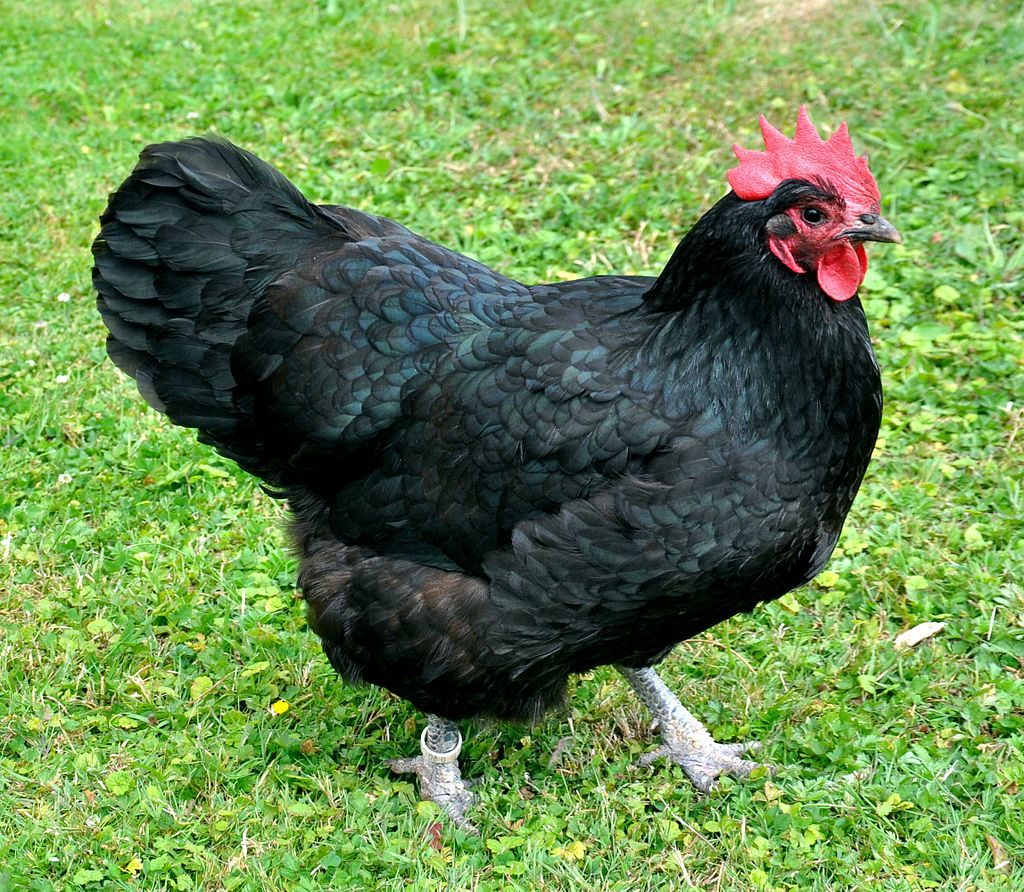
- Annual # of Eggs: 250
- Personality: Docile
- Appearance: Sleek, jet-black feathers
The Australorp is a unique-looking bird that is a cross between a Rhode Island Red and an Orpington chicken.
Developed in Australia in the 1920s, this chicken originated out of breeders’ desires to produce one of the best egg laying chickens that were also suited to adapting to the harsh Australian climate.
As a result, this chicken is remarkably heat-tolerant.
It also lays fantastic amounts of eggs!
The eggs laid by Australorps are light brown and large.
In addition, Australorps are calm, friendly, and gentle.
They are easy to tame and while some may have a tendency to become broody, most won’t, meaning they will be more docile and easy to get along with.
5. Delawares
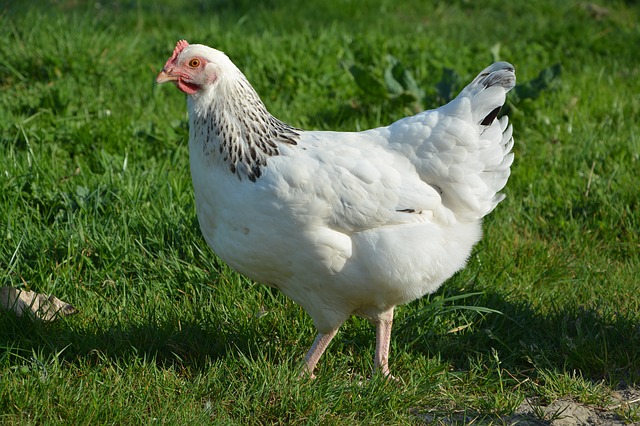
- Annual # of Eggs: 200-280
- Personality: Sociable
- Appearance: White with black markings
The Delaware chicken breed is incredibly friendly and fun to watch.
There is some variation in their egg-producing capabilities, as some hens have a natural tendency to go broody.
They are white with black markings and can be raised for either meat or eggs.
Laying around 250 eggs per year, this chicken probably won’t be the star of your egg laying flock, but its personality will make it one you want to have in the group.
6. Leghorn
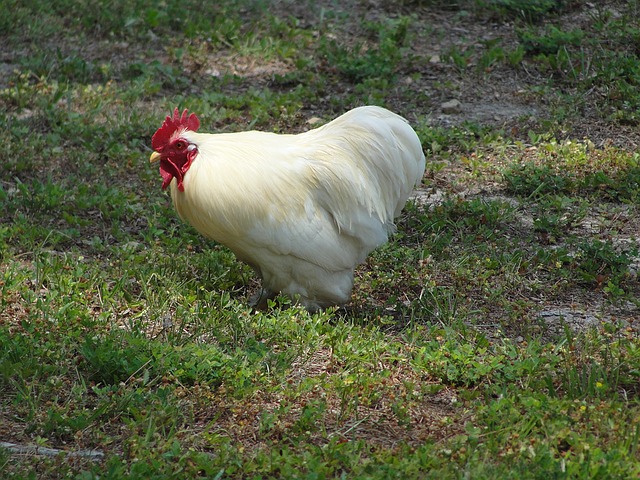
- Annual # of Eggs: 250
- Personality: Shy and difficult to tame
- Appearance: White with thick red combs
If you ever watched the television show “Foghorn Leghorn,” you’ve probably already heard of the Leghorn chicken.
This breed was brought to the United States from Italy in the 1800s, and has been a prominent fixture in many backyard chicken runs ever since.
They do need plenty of food, heat, and water, making them one of the more finicky chickens you can raise.
These birds grow to about five pounds and start laying at about four or five months of age.
These birds lay around 250 white eggs each year.
They have a unique, unmistakable appearance with a large white body and a thick red comb.
White Leghorns are exceptionally easy to raise, they aren’t the greatest breed if you want a chicken that can be tamed.
They tend to be shy and skittish and will run away if you attempt to interact with them.
7. Rhode Island Red
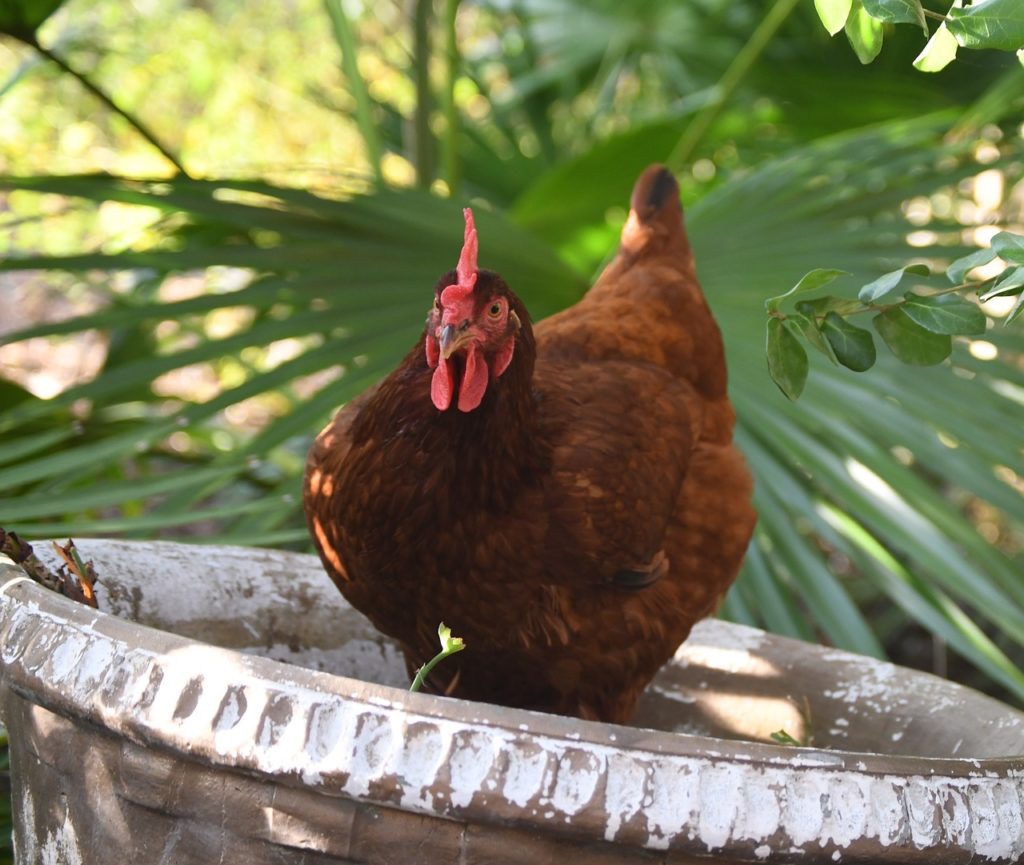
- Annual # of Eggs: 250
- Personality: Independent, tough
- Appearance: Dark brown and black feathers
A popular dual-purpose chicken that is raised for both eggs and meat, Rhode Island Reds originated in the United States and are one of the most commonly kept backyard chickens.
They are quite tough and lay up to 250 average-sized brown eggs each year.
These birds are good at caring for themselves and love to forage.
They are also quite friendly, so you don’t have to worry about them fighting with other members of your flock.
This chicken was selectively bred from the Malay chicken and the Brown Leghorn chicken (from Italy).
A fantastic bird to choose if you want the best of both worlds – eggs and meat – the Rhode Island Red starts to lay at around five months of age.
These hens grow to about 6.5 lbs, making them a smart, hefty choice for the stew pot, too.
These chickens can be a bit more spirited than some other breeds of chickens, so if you’re looking for a quiet bird, this may not be your best option.
The roosters of this breed, in particular, are quite hyper.
8. Sussex

- Annual # of Eggs: 250
- Personality: Calm, tame free rangers
- Appearance: Available in eight colors, with the most popular being pure white with a black tail and neck features
There are several types of Sussex chickens in the breed, and as a result, there is also a wide variation in colors available.
You can find Sussex chickens with eight different color options.
Most commonly, this dual-purpose hen is found with a pure white body with black tail and neck feathers.
Growing to a whopping 8 lbs, this chicken is incredibly docile. Unfortunately, its peaceful temperament means it often is bullied by other breeds, which is ironic due to its massive size.
This calm chicken is one of the best at free ranging in a garden without actually decimating it.
A tame breed that you can easily train to eat from your hand, the Sussex lays a respectable amount of eggs – 250 per year.
These can be brown, white, or even tinted. It should be noted that some strains of Sussex chickens are better at laying eggs than others, so the number of eggs you receive can vary.
9. Dominiques
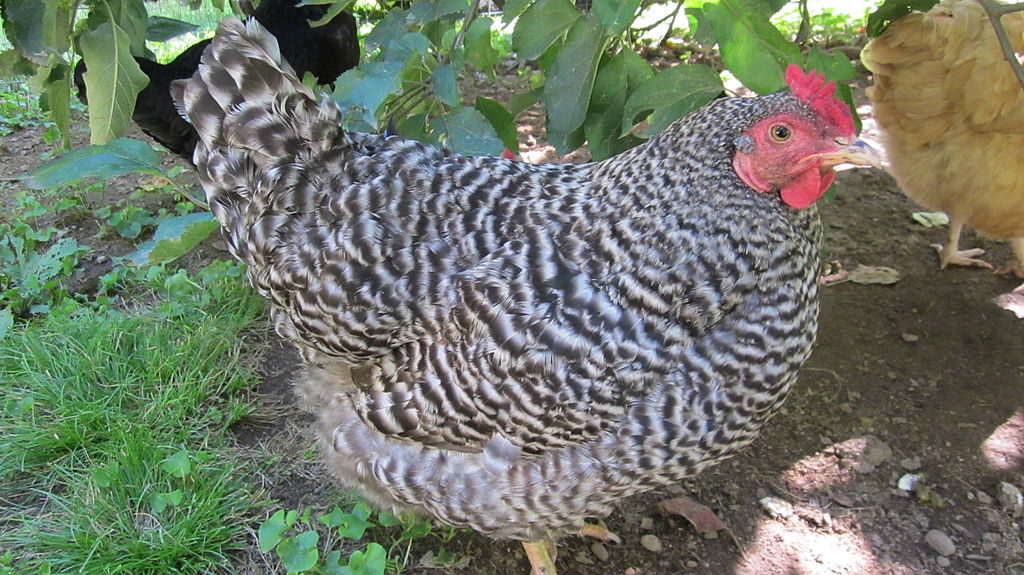
- Annual # of Eggs: 250
- Personality: Gentle
- Appearance: Available in black and white barred patterns
This chicken is similar to the Barred Rock in that it is has a black-and-white “barred” feather pattern.
It is considered a rare breed by the American Livestock Breeds Conservancy and is one of the most unique breeds of chickens you can raise.
Hens are of medium size and should lay about 250~ egg per year.
These chickens will lay prolifically during the summer months and are some of the most easygoing chickens you can find.
Because they are so gentle, the roosters don’t do a great job at protecting the flock.
However, they can be kept with great success in confinement or in a closed pen, as they don’t have a tendency to fight.
10. La Bresse

- Annual # of Eggs: 250
- Personality: Easy to manage
- Appearance: Multiple colors available
The La Bresse chicken is often viewed as a meat-only bird but was originally developed in France as an egg producing chicken.
In fact, it is one of the oldest breeds of French chickens, developed as the result of breeding between local chicken populations.
With three potential color variations (white, gray, and black), this chicken is most commonly found in a white color.
While the La Bresse breed produces about 250 eggs per year, this chicken can be raised for either eggs or meat.
The meat is remarkably tasty, and the eggs of this hen have a thick white shell.
11. Ancona

- Annual # of Eggs: 220
- Personality: Anxious and prone to flight
- Appearance: Small with black and white feathers
Ancona hens are one of the smaller breeds of chickens.
Originally from Italy, these birds are now quite common in the United States and the United Kingdom.
These chickens lay about 220 small white eggs each year.
Though similar in coloring to the Plymouth Rock, this chicken is much smaller, coming in at less than half the size of the Plymouth Rock.
While these chickens are prized for their egg-laying abilities, they aren’t the ideal choice if you are hoping to raise a chicken as a pet.
These birds tend to be very nervous and will run away when approached.
They are also notorious for flying out of chicken runs in an attempt to escape. Therefore, you will need to clip their wing feathers on a regular basis.
12. Barnevelder

- Annual # of Eggs: 200
- Personality: Tame, great for raising in a garden
- Appearance: Black with brown-edged feathers
A cross between Asian jungle fowl and the Dutch Landrace, this chicken originated in Holland and has a remarkable appearance.
With gorgeous glossy black feathers, this chicken stands out among its peers.
It also lays an exceptional amount of eggs – about 200 each year. These eggs are on the small side but are usually brown and lightly speckled.
These chickens are easy to raise in a garden pen, as they’ll pick around most of your plants as they forage for weeds and pests.
They aren’t prone to flying, so you don’t usually need to worry about clipping their wing feathers.
13. Golden Laced Wyandottes

- Annual # of Eggs: 200
- Personality: Calm
- Appearance: Reddish brown feathers with black edging
The Golden Laced Wyandotte is a large bird, weighing in at about 6 lbs (roosters can be larger), and is a good egg layer as well.
This bird has a docile personality and is a terrific forager, making it one of the best chicken breeds for free ranging.
It is beautiful and adds a gorgeous appearance to the rest of the flock.
It does have a tendency to turn broody, which can cause a major drop off in egg production during the summer.
These chickens start to lay at around 18 weeks of age.
14. Hamburg

- Annual # of Eggs: 200
- Personality: White with black feathers
- Appearance: Aggressive in small spaces
This chicken is native to Germany and is one of the most gorgeous breeds you can raise.
Producing about 200 eggs each year, the Hamburg hen looks a lot like a Dalmation.
It was bred as a combination of local chicken breeds like Sebright Bantam, Andalusia, Minorca, and Sumatra.
It has white and black feathers, but you can also find Hamburg hens that are black with golden-edged feathers.
The eggs produced by this chicken breed are beyond comparison – although they are on the smaller side, they will have a glossy white shell and taste absolutely delicious.
These chickens do need plenty of space to free range, as they prefer lots of leg room and don’t do well in confinement.
They can become aggressive in small spaces, but you likely won’t exhibit this behavior if you give your chickens plenty of room to roam.
15. Marans
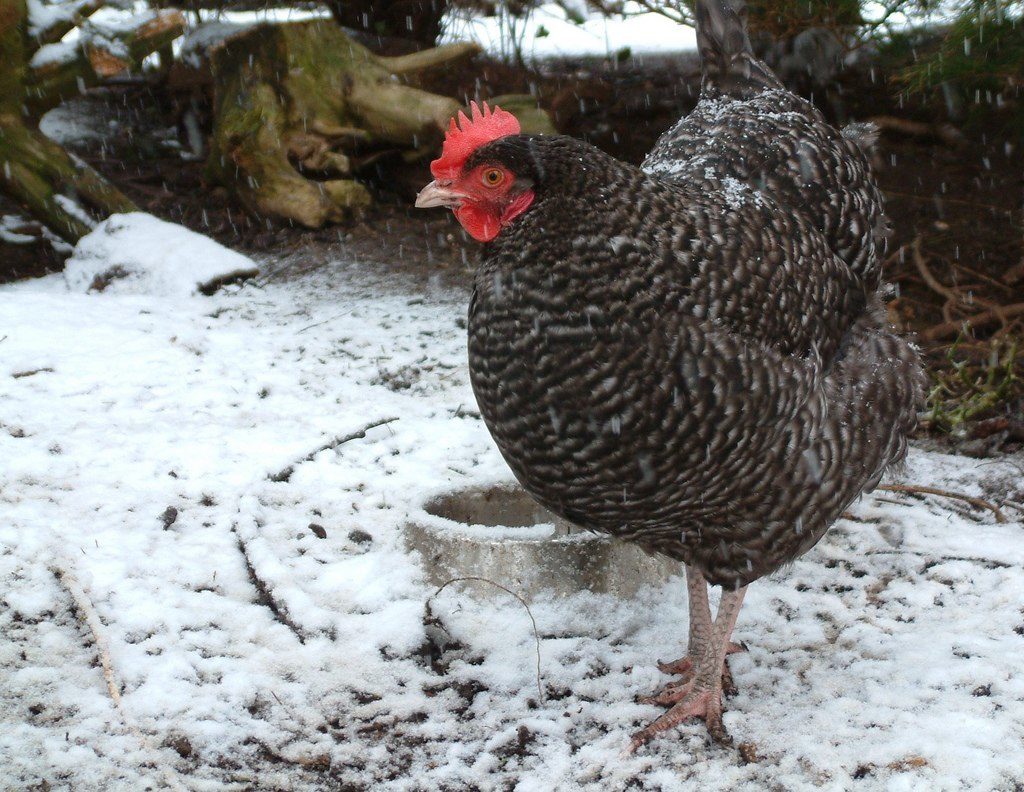
- Annual # of Eggs: 200
- Personality: Gentle but difficult to tame
- Appearance: Dark grey with white feathers
Marans are another egg laying chicken breed popular for backyard chicken flocks. These dual purpose birds are favored for their dark brown eggs and tasty quality of meat.
Most Marans will lay about 200 eggs each year – these tend to be medium-sized.
Originating in France, these chickens are renowned for their colorful plumage.
Marans are very easy to mistake for Plymouth Rocks, as they have dark grey bodies with white flutters.
However, their personalities are somewhat different. They aren’t quite as boisterous, requiring less space to roam around.
While they aren’t very aggressive and are actually remarkably gentle, they aren’t easy to tame.
This is not the chicken to adopt if you are looking for a pet!
16. New Hampshire Reds

- Annual # of Eggs: 200
- Personality: Aggressive
- Appearance: Light brownish red feathers with black tail feathers
New Hampshire Reds are one of the most popular dual-purpose breeds.
They may not be at the top of the list for egg production, laying about 200 eggs each year, but since they also can be raised for meat, they are a good choice if you are seeking a great overall value.
These chickens lay light brown eggs and start laying at 18 weeks of age.
New Hampshire Reds are one of the most cold-hardy breeds you can raise.
They can turn broody, but the positive side to this is that the hens make fantastic mothers.
If you decide to keep roosters, know that they can be aggressive if there aren’t enough hens in the flock.
17. Plymouth Rock
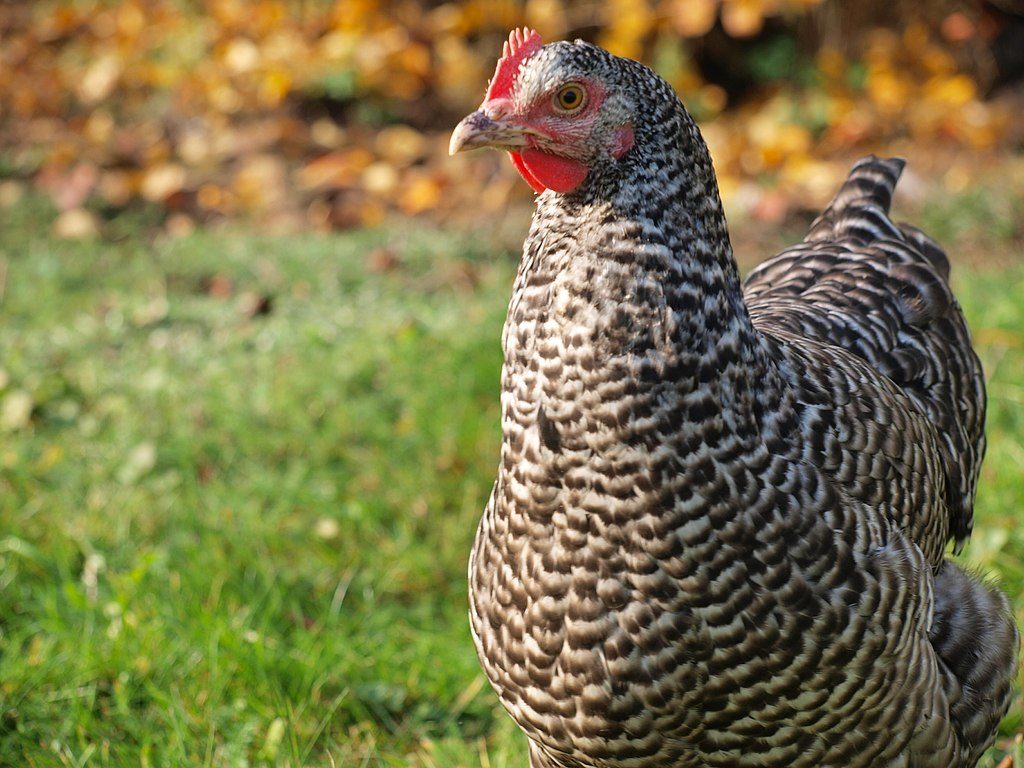
- Annual # of Eggs: 200
- Personality: Friendly and easily tamed
- Appearance: Grey with white stripes
Plymouth Rocks, also known as Barred Rocks, are a great choice for novice chicken keepers who want to raise hens that produce eggs about every other day.
These chickens lay about 200 eggs each year, and are usually small or medium-sized.
The eggs tend to be light brown in color but can also be peach.
You can find several variations of this chicken’s appearance, but usually, your hens will be grey with white stripes (which is where the term “Barred” comes from).
They are large birds that should be free ranged, but otherwise, are very friendly and easy to tame.
They integrate well in flocks of other breeds and are fantastic foragers. Growing to a whopping 6.5 lbs, these chickens start laying at around 18 weeks of age.
18. Buff Orpington
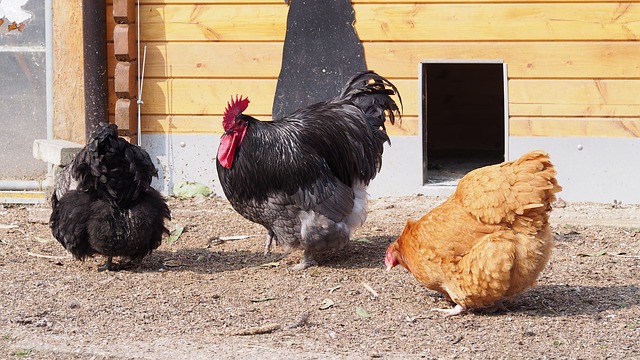
- Annual # of Eggs: 200
- Personality: Easy to tame
- Appearance: Thick, yellowish gold feathers
The Buff Orpington is another popular egg laying chicken breed.
This bird originated from Kent, England and is kept by chicken farmers all over the world.
These birds lay about 180-200 eggs each year, a number that would be higher except that the Buff Orpington has a tendency to get a bit broody during the summer.
Otherwise, these chickens are a treat to raise.
Offering a gorgeous appearance – luxurious golden feathers that are thick and soft to the touch – the Buff Orpington is easy to tame.
You can train this bird to eat from your hand and it also makes a great garden chicken.
If you have kids, the Buff Orpington is the breed you should consider raising.
Keep in mind that if you decide to raise these birds, you will need to provide them with a constant place of shelter.
Their fluffy coats have a tendency to retain moisture, so it is easy for them to become chilled.
In addition, they can’t fly well, so they will need somewhere to escape in case there are issues with predators.
19. Ameraucana
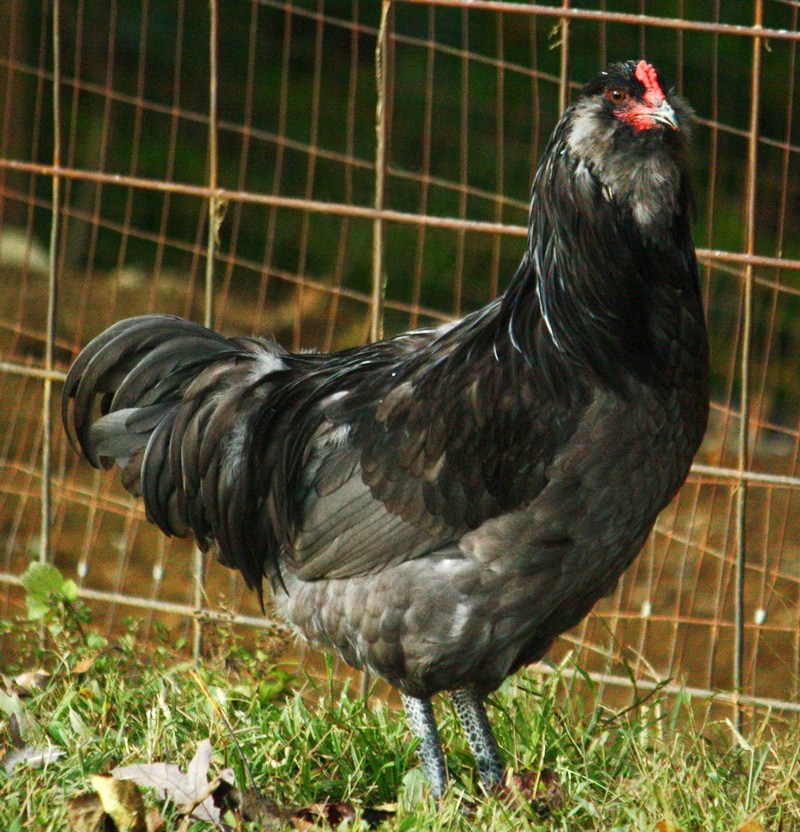
- Annual # of Eggs: 180
- Personality: Broody
- Appearance: Brownish red feathers and small bodies
The Ameraucana chicken is on the smaller side of the spectrum but is a great bird to have around if you’re hoping to increase your egg production.
This chicken lays multicolored eggs, contributing to the “Easter basket” effect that many chicken owners are after.
These birds are fun to raise and do well either raised in pens, coops, or free-range setups. They tolerate most climates and have minimal needs.
Growing to only about 5 lbs in weight, Ameraucanas start laying at about 27 weeks of age.
They do have a tendency to be broody – otherwise, their egg production would likely be much higher!
Something to note about this breed is that it is prone to a rare crossed beak genetic disorder.
This can affect about 1 in 100 chicks and can be a major problem in a flock, so it’s definitely something to be aware of when you are purchasing chicks or incubating your own.
20. Welsummer

- Annual # of Eggs: 160
- Personality: Active
- Appearance: Multicolored with glossy feathers and a high tail
This chicken has a unique appearance, with just one chicken colored with multiple shades of gold, black, and brown.
This attractive bird was developed in the Netherlands at the beginning of the 20th century, originating from a town named Welsum.
This chicken has glossy feathers and a high tail, and while it isn’t a star egg-layer (producing only about 160 eggs per year) the eggs are remarkable and gorgeous.
The eggs from a Welsummer chicken are a unique terracotta color and have a taste like none other.
In addition, Welsummer chickens are active foragers, alert at all times while working in your garden.
Unfortunately, this chicken needs to be busy at all times or their behavior will become destructive.
This makes the breed a great choice for free ranging, but not so ideal for being penned.
How to Encourage Your Hens to Lay Eggs
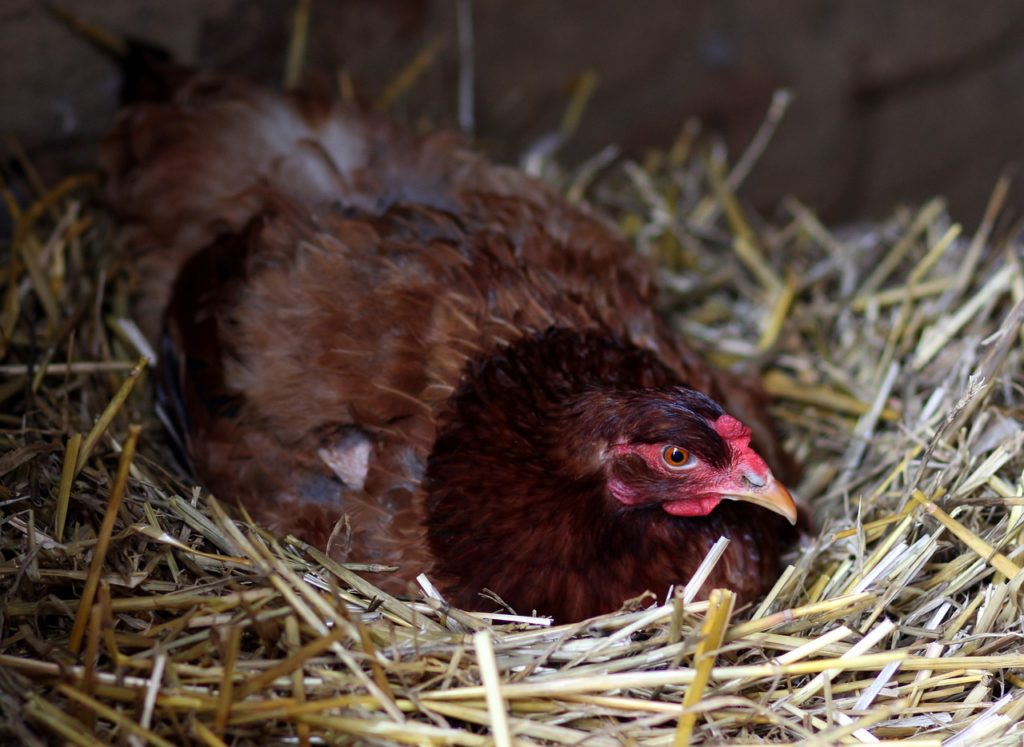
Your hens will lay – and will only lay – when they are absolutely ready to do so.
However, you can encourage your hens to lay by making sure conditions are ideal. Here is what to do.
Provide a Proper Diet
Chickens require about 20 grams of protein each day to lay eggs.
To ensure proper nutrition, make sure you are feeding your hens layer pellets.
These are engineered to contain all the vital nutrients your hens require to be happy and healthy.
You can also choose to supplement your hens’ diet with protein-rich treats.
You can make these at home or purchase them at the store. Some good options to consider include:
- Mealworms
- Pumpkin or sunflower seeds
- Cooked eggs
- Fish meal
- Sprouted lentils
- Garden peas
- Canned fish
- Oats
For more information about chicken feed and ensuring your chicken receives the perfect, balanced diet, check out our Complete Guide to Feeding Backyard Chickens.
Ensure Adequate Daylight
A healthy, nutritious diet often isn’t enough to encourage laying in some flocks.
If you live in an area that experiences harsh winters, your chickens will be less likely to lay during the colder months.
Not only will they burn more calories just trying to stay warm, but they also will have limited access to daylight.
Chickens need at least 14 hours of daylight in order to lay eggs.
This isn’t a problem exclusive to areas with harsh winters, but you need to make sure you let your chickens out as close to the sunrise as possible.
During the winter, you simply won’t get that 14 hours of sunlight.
Therefore, you may need to use artificial lighting to encourage your hens to continue laying.
This is a practice that is frowned upon by some backyard chicken farmers who believe that the birds need the winter hours to recover from an intense year of laying, but in many areas, the long winter hours are so restrictive that an artificial light becomes necessary.
Add Calcium
Hens who are laying eggs need additional calcium in their diets to support the development of a healthy, thick eggshell.
If your hens are calcium deficient, you can give them a boost by feeding them oyster shell or even ground-up eggshells.
Do not allow them to eat whole eggshells, as this can confuse them into trying to eat their own eggs later on.
Provide Appropriate Nesting Areas
Given the opportunity, a hen will lay an egg virtually anywhere that seems safe and private.
If you’re like most of us, you probably don’t want to spend time searching through your compost pile looking for the eggs laid by your opportunistic (yet confused) hen!
To help her out, provide her with convenient nesting areas long before she is ready to lay.
You should generally have one nest box for every four hen. It should be cushioned and filled with lots of bedding, like wood shaving or straw.
It’s also a good idea to hang a curtain over the nest box to give your hens extra privacy.
They prefer to lay in a secluded, darkened area, so the curtain will help keep them sequestered away.
To encourage your chickens to lay in the nest boxes – and to remind them that the nest boxes are for laying eggs only – you should place a couple of fake wooden eggs inside.
This will not only remind the hens of where they need to go to lay, but it will also discourage egg-eating behavior.

Compare estimates on the same basis
Ask whether a laying figure describes the first production year, a peak period, or a backyard average. A catalogue number assumes particular management and does not account for every molt or seasonal pause. Normal laying cycles and age at first egg explain why totals vary.
Use the shorter selection guide when choosing for a particular situation, then follow the dedicated breed pages. Keep balanced feed and appropriate calcium central to the plan; more treats or artificial light do not turn every hen into a commercial record layer.